Best Page-Turner Books: Novels You Can't Put Down
The best page-turner books — from Gone Girl and The Silent Patient to The Kite Runner and The Girl on the Train. Novels you absolutely cannot put down.
The best page-turners are books that make stopping feel impossible — where the question of what happens next overrides the natural human desire to sleep, eat, or attend to the ordinary business of life. They achieve this through different means: the calibrated mystery of the psychological thriller, the emotional momentum of the literary novel, the historical stakes of narrative nonfiction.
The books listed here represent the best of the form across several genres — from the modern psychological thriller to the literary novel that reads at thriller pace.
The Essential List
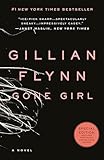
Gone Girl — Gillian Flynn (2012)
The modern archetype of the psychological thriller and the book that established Flynn as the defining figure in the genre. Nick Dunne reports his wife Amy missing on their fifth wedding anniversary; what follows is a structural tour de force — two unreliable narrators, a perfect twist, and a portrait of a marriage in which both partners are performing versions of themselves for each other. The reveal at the midpoint of the novel restages everything that preceded it; the second half is even more compelling than the first.
The Silent Patient — Alex Michaelides (2019)
The most accomplished debut thriller of recent years. Alicia Berenson shoots her husband five times and then refuses to speak; the psychotherapist Theo Faber becomes obsessed with uncovering her motive. Michaelides withholds and reveals information with surgical precision; the novel’s twist is among the most discussed in recent crime fiction. Read in one sitting if possible — the novel’s architecture rewards continuous reading.
The Kite Runner — Khaled Hosseini (2003)
The most emotionally compelling literary page-turner of the past two decades. Amir’s betrayal of his childhood friend Hassan — and his attempt, decades later, to atone for it — is driven by the same narrative mechanism as a thriller: the reader cannot stop reading because the question of whether redemption is possible cannot be answered until the final pages. Set against the history of Afghanistan from the Soviet invasion through the Taliban regime, the novel makes personal guilt and historical catastrophe inseparable.
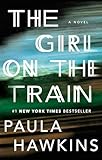
The Girl on the Train — Paula Hawkins (2015)
Hawkins’s debut follows Rachel, an alcoholic woman who commutes past a house whose occupants she has been fantasising about, and who is asked to testify when the woman she has been watching goes missing. The three female narrators — Rachel, Megan, Anna — provide different perspectives on the same events; the unreliability of all three is the engine of the novel’s suspense. The best British psychological thriller since before Flynn, and the book that established the ‘domestic noir’ subgenre.
It Ends with Us — Colleen Hoover (2016)
Hoover’s novel — which spent years on bestseller lists after going viral on BookTok — follows Lily Bloom, who falls for neurosurgeon Ryle Kincaid and discovers that the relationship mirrors the domestic violence she witnessed in her parents’ marriage. The novel’s emotional intelligence and its refusal to provide easy answers to the question of why women stay in abusive relationships have made it one of the most discussed contemporary novels. Compulsive not because of mystery but because of emotional stakes.
Behind Closed Doors — B.A. Paris (2016)
Paris’s debut follows Grace and Jack Angel, whose perfect marriage conceals a dark secret that unfolds gradually through alternating past and present chapters. The central mystery — what Jack is actually doing to Grace — is both more disturbing and more cleverly constructed than the typical domestic thriller. One of the most compulsive reads in recent crime fiction.
The Architecture of Suspense
A genuine page-turner is not an accident of exciting subject matter but a feat of construction, and understanding how these books work reveals the considerable craft that compulsive readability actually requires. The architecture of suspense is built from specific, learnable techniques deployed with precision: the chapter that ends mid-crisis so that stopping becomes almost physically difficult, the strategic withholding of information that keeps a question burning in the reader’s mind, the steady escalation of stakes that ensures each scene raises the pressure of the last. The best practitioners of the form understand pacing as a musician understands rhythm, controlling the alternation of tension and release, the acceleration toward a climax, the precisely timed revelation that reframes everything that came before. They plant questions early and answer them late, ensuring that curiosity — the most reliable engine of forward motion in fiction — is never allowed to rest. They manage information with a card player’s discipline, showing just enough to intrigue and concealing just enough to compel. This machinery is largely invisible to the absorbed reader, which is precisely the point: the craft conceals itself so that the experience feels effortless, the pages seeming to turn themselves. But the effortlessness is an illusion produced by enormous deliberate skill, and recognizing the architecture beneath the spell deepens rather than diminishes the appreciation. To see how suspense is built — how the hooks are set, the stakes raised, the revelations timed — is to understand that the page-turner, often dismissed as mere entertainment, is in fact one of the most technically demanding forms a writer can attempt, requiring a mastery of structure and pacing that many a more respected literary novel conspicuously lacks.
Why We Read Compulsively
There is a particular and somewhat mysterious pleasure in the book one cannot put down — the experience of being so gripped that meals are skipped, sleep is sacrificed, and the surrounding world dissolves until the final page is turned. This compulsive absorption is one of reading’s deepest satisfactions, and it is worth understanding what produces it and why it matters. At its root is the human appetite for story itself, the ancient and powerful pull of wanting to know what happens next, which the page-turner exploits with unusual directness and force. But there is more to it than curiosity. The state of total immersion these books induce is a form of flow — complete, effortless absorption in an activity that obliterates self-consciousness and the passage of time — and flow is among the most pleasurable and restorative states the mind can enter. To be lost in a gripping book is to receive a genuine respite from the fragmented, anxious, multitasking attention of ordinary life, a sustained focus that has become increasingly rare and increasingly precious in an age of constant distraction. This is why the page-turner deserves more respect than it often receives: the ability to command and hold a reader’s complete attention for hours is no small thing, and the books that achieve it provide an experience — deep, uninterrupted immersion — that is both delightful in itself and good for a mind worn thin by perpetual interruption. The compulsion to keep reading is not a guilty weakness but a sign that a book has succeeded at one of fiction’s primary tasks: to capture the reader so completely that, for the duration, nothing else exists.
When a Page-Turner Becomes Literature
The deepest pleasure this list has to offer is the discovery that compulsive readability and genuine literary quality are not opposites, and that the finest page-turners refuse the false choice between gripping the reader and rewarding them. There is a persistent snobbery that treats unputdownable books as necessarily shallow and serious literature as necessarily difficult, as though absorption and depth could not coexist. The best books on this list demolish that prejudice, demonstrating that a novel can keep the reader frantically turning pages while also offering rich characters, real moral complexity, beautiful prose, and lasting resonance. When the engine of suspense is harnessed to substantial material — when the question that compels us forward is not merely “what happens?” but “what does it mean?” — the result is fiction of the highest order, combining the primal satisfactions of story with the deeper rewards of literature. Such books prove that propulsive plotting is a tool that can serve any level of ambition, and that the techniques of suspense, far from being incompatible with depth, can actually intensify it by ensuring that the reader stays engaged long enough to absorb everything the book has to offer. This synthesis is, in fact, the original condition of the novel: many of the acknowledged classics were, in their day, irresistible page-turners that readers devoured serially and could not wait to continue. The artificial divorce between entertainment and art is a relatively recent and impoverishing development, and the books gathered here help to heal it, reminding us that the highest aspiration of fiction is not to be either gripping or profound but to be both at once.
Why These Books
The page-turner works by creating a question the reader cannot answer without continuing to read, and by making the characters’ fates matter enough that stopping feels like abandonment. The psychological thriller does this through mystery; the literary novel does it through emotional stakes. The best page-turners combine both — they have the structural efficiency of a thriller and the character depth that makes the reader care what happens. The books listed here are examples of each type at its best.
Frequently Asked Questions
What is the most unputdownable book ever written?
Gone Girl (2012) by Gillian Flynn is the modern archetype of the unputdownable thriller — the twists are so perfectly calibrated and the narrative voice so compelling that readers routinely describe finishing it in a single sitting. The Silent Patient (2019) by Alex Michaelides and The Girl on the Train (2015) by Paula Hawkins follow the same pattern: the thriller structured around a central mystery that the reader cannot resolve until the final pages. For literary fiction, The Kite Runner (2003) by Khaled Hosseini is the most compulsive — its narrative momentum combined with genuine emotional weight makes it impossible to abandon.
What makes a book a page-turner?
The best page-turners combine several elements: a central mystery or question that the reader cannot answer until the end; characters whose fates the reader cares about; a narrative pace that moves forward without pausing; and prose that is easy to read quickly without sacrificing clarity. Psychological thrillers achieve this through withholding information and unreliable narrators; literary fiction achieves it through emotional stakes. The best page-turners do both — they have the momentum of a thriller and the emotional depth of literary fiction.
What is The Silent Patient about?
The Silent Patient (2019) by Alex Michaelides follows Alicia Berenson, a famous painter who shoots her husband five times and then stops speaking entirely — for years. The psychotherapist Theo Faber becomes obsessed with uncovering her motive and takes a position at the secure psychiatric unit where she is held. The novel's twist is one of the most discussed in recent crime fiction; it depends entirely on the reader accepting certain assumptions, which Michaelides establishes with precision. The most accomplished debut thriller of recent years.
Is The Kite Runner a page-turner?
The Kite Runner (2003) by Khaled Hosseini is one of the most compulsive literary novels of the past two decades — a story that combines the narrative momentum of a thriller (driven by guilt, betrayal, and the possibility of redemption) with genuine emotional depth and historical sweep. The central act of betrayal that drives the novel occurs early; the rest of the book is about Amir's attempt to atone for it. Most readers describe being unable to stop reading it. It is not a thriller but it reads like one.