Best Books Set in Italy: Essential Fiction and Nonfiction
The best books set in Italy — from A Room with a View and The Talented Mr. Ripley to My Brilliant Friend and The English Patient. Essential reading for Italy lovers.
Italy has attracted English and American writers for centuries — as a space of sensory abundance, moral freedom, and historical weight that contrasts with the restraint and repressions of northern European culture. The best fiction set in Italy uses the country not merely as backdrop but as an active force: the light, the heat, the beauty, and the different moral atmosphere create characters who can do things — feel, desire, kill, transform — that they could not do at home.
The books listed here span the full range of the Italian literary tradition: from Forster’s Edwardian comedy to Ferrante’s unflinching contemporary realism, from Highsmith’s sun-soaked crime fiction to Ondaatje’s wartime Mediterranean.
The Essential List
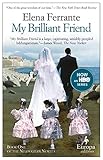
My Brilliant Friend — Elena Ferrante (2011)
The essential contemporary Italy novel. Ferrante’s Naples — the rione, the poverty, the violence, the specific social world of post-war southern Italy — is the most fully realised Italian setting in recent fiction. The friendship between Elena and Lila, the novel’s central subject, is the most honest account of female friendship in contemporary literature: rivalrous, dependent, loving, and never fully understood by either party. The first of four volumes; start here.
The Talented Mr. Ripley — Patricia Highsmith (1955)
The most atmospheric Italy novel ever written. Highsmith’s Mongibello and Rome in the 1950s — the quality of light, the slow pace of Mediterranean life, the ease with which an American can move through European society on sufficient funds — create the conditions for Ripley’s transformation. The novel is simultaneously a study of class desire (Ripley wants Dickie’s life, not merely his money), a portrait of the mid-century European American expatriate world, and a psychological thriller of the first order.
A Room with a View — E.M. Forster (1908)
The most charming of the English novels set in Italy. Forster’s contrast between the spontaneity of Florence (where people kiss in the wheat fields and life is lived at the surface) and the repression of Surrey (where convention governs everything) is the structural joke that carries the novel’s serious argument about authenticity. Lucy Honeychurch’s choice between the conventional Cecil Vyse and the passionate George Emerson is really a choice between two ways of life. Still irresistibly readable more than a century after publication.
Beautiful Ruins — Jess Walter (2012)
Walter’s novel moves between a small village on the Ligurian coast in 1962 (where American actress Dee Moray arrives, apparently dying, and local innkeeper Pasquale Tursi falls in love with her) and present-day Hollywood (where a film producer’s assistant discovers a connection to events of fifty years before). The novel is about the gap between the stories we tell about our lives and the lives we actually live; the Italian setting — the coastal village, the light, the specific beauty of the Ligurian coast — gives the 1962 sections their atmosphere.
The English Patient — Michael Ondaatje (1992)
Ondaatje’s novel is set partly in the Italian countryside in the final months of World War II — a ruined villa near Florence, where a badly burned man of uncertain identity lies dying and three others are waiting for the war to end. The novel’s meditation on memory, identity, desire, and betrayal is expressed through the physical landscape of wartime Italy: the mines, the crumbling frescoes, the combination of beauty and destruction that characterises the villa and its surroundings. Won the Booker Prize.
Under the Tuscan Sun — Frances Mayes (1996)
Mayes’s memoir of buying and restoring a farmhouse in Cortona — and her discovery of Tuscan food, wine, landscape, and social life — is the most widely read account of expatriate life in Italy. The book is neither literary fiction nor travel writing but something between: a sustained love letter to Tuscany, specific about the practical details of Italian rural life while lyrical about the landscape and culture. The source of the expat-in-Tuscany genre.
Eat, Pray, Love — Elizabeth Gilbert (2006)
Gilbert’s memoir follows her year-long trip to Italy, India, and Indonesia after a painful divorce and depression. The Italian section — four months in Rome, learning Italian, eating everything, refusing to be productive — is the most enjoyable: Gilbert’s account of Italian food, language, and the specific quality of Roman pleasure is warm and funny. The book’s enormous popularity (it remained on the New York Times bestseller list for years) reflects the appeal of its premise: the permission to stop performing and simply experience.
Death in Venice — Thomas Mann (1912)
Mann’s novella follows the ageing novelist Gustav von Aschenbach, who travels to Venice for rest and becomes fatally obsessed with the beautiful Polish boy Tadzio on the beach at the Lido. The novella is about the relationship between artistic discipline and Dionysian excess, between northern European repression and Mediterranean abandon — Venice itself, with its beauty and its cholera epidemic, is the symbol of the dissolution that destroys Aschenbach. The most compressed and formally perfect of the books listed here.
A Landscape of Beauty and Art
Italy holds a unique place in the literary imagination as a land of incomparable beauty and artistic richness, and the literature set there draws deeply on this heritage, using the Italian landscape, art, and history as more than mere setting, as a pervasive presence that shapes the mood, meaning, and sensibility of the work. Few places are as freighted with associations of beauty and art as Italy, a land of extraordinary natural beauty, of incomparable artistic and architectural heritage, and of a history and culture of profound richness, and the literature set in Italy draws deeply on this heritage. The Italian landscape, with its beauty of countryside and coast, its ancient cities and timeless light, provides the literature with a setting of incomparable beauty, a backdrop that shapes the mood and sensibility of the work. The artistic and architectural heritage of Italy, the incomparable wealth of art and architecture accumulated over centuries, provides the literature with a rich cultural presence, a setting saturated with beauty and artistic significance. And the depth of Italian history and culture, the layers of the past visible everywhere in the land, provides the literature with a sense of historical depth and cultural richness. This heritage of beauty and art is a pervasive presence in the literature set in Italy, shaping the mood, meaning, and sensibility of the work, and providing the literature with a setting of incomparable beauty and richness. To read the literature set in Italy is to enter this landscape of beauty and art, to feel the pervasive presence of the Italian landscape, art, and history, and to encounter a setting that is more than mere backdrop, shaping the very mood and sensibility of the work. The landscape of beauty and art is among the defining features of the literature set in Italy, drawing on the incomparable beauty and artistic richness of the land, and providing the literature with a setting that pervades and shapes the work. This heritage of beauty and art gives the literature set in Italy its distinctive atmosphere and appeal, and it is a large part of why Italy has held such a powerful place in the literary imagination.
The Foreigner’s Italy
A distinctive and recurring theme in the literature set in Italy, particularly in the work of foreign writers, is the experience of the outsider encountering the country, the transformative effect that Italy and its beauty, warmth, and way of life can have on visitors from colder and more constrained cultures, and the way that Italy functions, in this literature, as a place of liberation, awakening, and transformation. Much of the literature set in Italy has been written by foreign authors, and a recurring theme in this literature is the experience of the foreigner encountering Italy, the powerful and often transformative effect that the country can have on visitors from elsewhere. Italy has long functioned in the literary imagination, particularly that of writers from northern and more constrained cultures, as a place of liberation and awakening, a warmer, freer, more sensuous and vital land where the visitor may be released from the constraints of their own culture and awakened to new possibilities of life and feeling. The literature explores this transformative encounter, depicting foreigners whose experience of Italy and its beauty, warmth, and way of life liberates and awakens them, transforming their understanding of themselves and their lives. This theme of the foreigner’s Italy, of the country as a place of liberation and transformation, runs through much of the literature set in Italy, reflecting the powerful effect that the country has had on the imagination of visitors and the role it has played as a place of awakening and release. To read this literature is to encounter the foreigner’s Italy, the experience of the outsider transformed by the country, and the role of Italy as a place of liberation, awakening, and transformation. This theme of the foreigner’s Italy is among the most distinctive in the literature set in the country, reflecting the powerful and transformative effect that Italy has had on visitors from elsewhere, and the role it has played in the literary imagination as a place of liberation and awakening, where the visitor from a colder and more constrained culture may be released and transformed.
Beneath the Beautiful Surface
The richest literature set in Italy looks beneath the beautiful surface of the country, beyond the tourist’s Italy of art and beauty to the deeper and more complex realities of Italian life and history, exploring the darker currents, the social complexities, and the troubled history that coexist with the beauty and that the superficial vision overlooks. For all its associations with beauty and art, Italy is also a real country with a complex and often troubled reality, and the best literature set there looks beneath the beautiful surface to explore these deeper realities. Beyond the tourist’s Italy of art, beauty, and pleasant living lies a more complex country, marked by social realities, regional divisions, and economic disparities, by a history that includes conflict, oppression, and tragedy, and by the darker currents that coexist with the beauty. The best literature set in Italy explores these deeper realities, looking beyond the beautiful surface to the social complexities, the troubled history, and the darker currents of Italian life, and offering a fuller and more honest portrait of the country than the superficial vision of beauty and art allows. This exploration of the realities beneath the beautiful surface gives the literature its depth and its honesty, refusing the simplified and idealized vision of Italy in favor of a fuller engagement with the country’s complex reality. To read the best literature set in Italy is to look beneath the beautiful surface, beyond the tourist’s Italy to the deeper realities of Italian life and history, the social complexities, the troubled history, and the darker currents that coexist with the beauty. This attention to the realities beneath the beautiful surface is among the marks of the best literature set in Italy, lifting it above mere celebration of beauty into a fuller and more honest engagement with the country’s complex reality, and revealing the deeper and more complex Italy that the superficial vision overlooks. The richest literature set in Italy combines an appreciation of the country’s incomparable beauty with an honest engagement with its complex realities, looking beneath the beautiful surface to the deeper truths of Italian life and history.
Why Italy?
Italy has served as the great laboratory of English-language fiction because it offers the English-speaking imagination what the north cannot: excess, beauty, history, passion, and the possibility of transformation. The books listed here all use this possibility differently — Forster’s comedy, Highsmith’s crime, Ferrante’s realism, Ondaatje’s poetry — but they share the conviction that Italy does something to the people who encounter it, strips away the protections of northern habit and convention, and makes visible what was always most essential.
Frequently Asked Questions
What is the best book set in Italy to start with?
My Brilliant Friend (2011) by Elena Ferrante is the best starting point — the first volume of the Neapolitan Novels, following Elena and Lila's friendship from childhood in a poor Naples neighbourhood through their diverging lives. The novel is not conventionally beautiful writing about Italy but something more honest: a portrait of poverty, ambition, and the specific texture of post-war Neapolitan life. The Talented Mr. Ripley (1955) by Patricia Highsmith is the most atmospheric starting point — Tom Ripley's arrival in Italy, his obsession with Dickie Greenleaf, and the sun-drenched violence that follows.
What is My Brilliant Friend about?
My Brilliant Friend (2011) is the first volume of Elena Ferrante's Neapolitan Novels, following Elena Greco and Lila Cerullo from childhood in a poor Naples neighbourhood (the rione) in the 1950s. The novel traces the two girls' diverging trajectories — Elena who continues at school and eventually becomes a writer, and Lila who is kept at home and forced into marriage — and the complicated, rivalrous, deeply intimate friendship between them. Ferrante's Naples is vivid and specific: the violence, the poverty, the social pressures, the particular ways that being female in mid-century Italy constrained and defined lives.
What is The Talented Mr. Ripley about?
The Talented Mr. Ripley (1955) by Patricia Highsmith follows Tom Ripley, a small-time forger in New York, who is sent to Italy by a wealthy man to bring home his son Dickie Greenleaf. In Mongibello — a fictional village on the Bay of Naples — Ripley falls into Dickie's luxurious life, becomes obsessed with him, and when Dickie threatens to disengage, kills him and assumes his identity. The novel is a study of class envy, desire, and the specific quality of Italian light as the setting for moral darkness. The most influential crime novel of the twentieth century's second half.
What is A Room with a View about?
A Room with a View (1908) by E.M. Forster follows Lucy Honeychurch, a young Englishwoman on a chaperoned trip to Florence, who is taken by the landscape and the passionate, unconventional George Emerson but returns to England and a proper engagement. The novel is both a comedy of English manners (the contrast between the spontaneous Italian landscape and the repressed English drawing room is its central joke) and a serious argument about authenticity, social convention, and the suppression of genuine feeling. The most charming of the English novels set in Italy.