Best Books to Get Into Reading: Perfect Starting Points for New Readers
The best books to get into reading — from The Alchemist and Life of Pi to A Man Called Ove and The Hitchhiker's Guide to the Galaxy. Perfect starting points.

The best books for new readers are not the most prestigious or the most literary — they are the ones that make reading feel like a pleasure rather than an obligation. They tend to have strong narrative momentum (you want to know what happens next), warmly drawn characters (you want to spend time with them), and emotional resonance (you feel something). They are accessible without being simple; they take readers seriously.
The books listed here are the most reliable gateways to reading — the books that consistently bring reluctant or new readers to the habit of reading for pleasure, and that lead naturally to further reading.
The Essential List
Life of Pi — Yann Martel (2001)
The ideal first book for adults. Pi Patel’s 227 days on a lifeboat with a Bengal tiger is simultaneously a gripping adventure story, a meditation on faith and storytelling, and a formally inventive novel whose ending challenges the reader to think about what stories are for. The novel is not difficult to read — it moves fast, the prose is clear, and the story is compelling — but it rewards thinking about. The single best gateway to serious literary fiction.
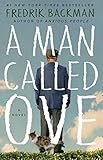
A Man Called Ove — Fredrik Backman (2012)
The most consistently recommended gateway novel of the past decade. Backman’s portrait of Ove, a curmudgeonly fifty-nine-year-old Swedish man whose carefully ordered life is disrupted by new neighbours, is simultaneously funny, warm, and deeply moving. The novel’s structure — revealing Ove’s history gradually, explaining the grief behind his rigidity — is emotionally intelligent; by the time the reader understands why Ove is the way he is, the affection for him is complete.
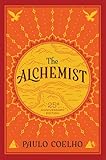
The Alchemist — Paulo Coelho (1988)
The most widely read book for adult readers who find fiction inaccessible. Coelho’s parable — a Spanish shepherd boy who travels to Egypt to find his treasure — is written with the directness and simplicity of a fable; its argument (that each person has a ‘Personal Legend,’ a purpose to pursue, and that the universe will conspire to help those who pursue it) is presented without irony or complexity. The novel has sold over 150 million copies; it is the book that most reliably brings non-readers to reading.
The Midnight Library — Matt Haig (2020)
The most emotionally accessible of the recent gateway novels. Nora Seed’s exploration of the lives she might have lived — in a library between death and life — is a warm argument for the value of the life you already have. Haig’s prose is clear and accessible; the novel’s structure (trying on different lives, one chapter at a time) creates natural narrative momentum. The most commercially successful literary novel of the early 2020s and the most frequently cited as ‘the book that got me back into reading.‘
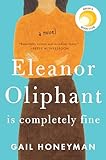
Eleanor Oliphant Is Completely Fine — Gail Honeyman (2017)
The novel that most consistently appears on lists of ‘books that made me love reading again.’ Eleanor’s social awkwardness is both funny and touching; the gradual revelation of her history is handled with intelligence and care. The novel is simultaneously a comedy of manners, a portrait of loneliness, and a story about recovery that never becomes sentimental. Accessible, engaging, and emotionally satisfying.
The Rosie Project — Graeme Simsion (2013)
Don Tillman, a genetics professor with what is clearly (though never named) Asperger’s syndrome, creates a questionnaire to find a scientifically optimal wife — and meets the entirely unsuitable Rosie. The novel is a romantic comedy, but it is also a sympathetic portrait of a mind that works differently from the social norm. Fast, funny, and warm; the most immediately engaging of the books listed here.
The Hitchhiker’s Guide to the Galaxy — Douglas Adams (1979)
The book most likely to convert readers who respond to comedy rather than emotion. Arthur Dent’s increasingly bewildered journey through the galaxy after Earth is destroyed to make way for a hyperspace bypass — accompanied by the alien Ford Prefect, the two-headed Zaphod Beeblebrox, and the perpetually depressed robot Marvin — is one of the funniest sustained performances in English fiction. Nothing else reads quite like it; it has a specific quality of cheerfully absurdist wit that either clicks immediately or doesn’t.
The Right Book at the Right Time
The single most important principle for anyone trying to get into reading, and the foundation on which any reading life is built, is the recognition that the right book at the right time can transform a reluctant non-reader into a passionate one, while the wrong book can confirm a person’s belief that reading is not for them — and that the key to becoming a reader is therefore finding the books that genuinely connect. Many people who believe they dislike reading have simply never found the right books, having been turned off by works that did not suit them, that were imposed rather than chosen, or that were encountered at the wrong moment, and having concluded from these unhappy experiences that reading itself is not for them. The truth is that there is a book for everyone, that the vast and various world of literature contains works to suit every taste, interest, and temperament, and that the path to becoming a reader lies in finding the books that genuinely engage and delight the individual reader rather than the books that others insist they ought to appreciate. This means giving oneself permission to read what one actually enjoys rather than what one feels one should read, to abandon books that fail to engage rather than slogging dutifully through them, and to seek out the genres, subjects, and styles that connect with one’s own interests and sensibility. The reluctant reader who finds the right book, the one that finally captivates them and reveals the pleasures that reading can offer, often undergoes a transformation, discovering that they are not a non-reader after all but simply someone who had not yet found their books. The principle of the right book at the right time is the foundation of any successful effort to get into reading, and the encouragement it offers is genuine: that the failure to enjoy reading is usually a failure to find the right books, and that the pleasures of reading are available to anyone willing to search until they discover the works that genuinely speak to them.
Removing the Barriers
For many would-be readers, the obstacle to a reading life is not a lack of desire but a set of self-imposed barriers and mistaken beliefs about reading — about what one must read, how one must read, and what reading is supposed to be — and a crucial step toward becoming a reader is recognizing and removing these barriers, freeing oneself from the misconceptions that stand in the way. Many people are held back from reading by false ideas: the belief that one must read difficult or prestigious books rather than the ones they would actually enjoy, the conviction that abandoning a book is a failure rather than a sensible choice, the guilt about reading genre fiction or light books rather than serious literature, the sense that reading must be a solemn and improving activity rather than a source of pleasure, or the feeling that one lacks the time, intelligence, or discipline that reading supposedly requires. These barriers, largely self-imposed and based on mistaken beliefs, prevent many people from discovering the pleasures of reading, burdening the activity with expectations and anxieties that drain it of joy. Removing them is liberating and essential: giving oneself permission to read for pleasure rather than improvement, to read whatever one enjoys rather than what one feels obligated to read, to abandon books that fail to engage, to read at one’s own pace and in one’s own way, and to approach reading as a source of delight rather than a duty to be discharged. Once these barriers are removed and the misconceptions dispelled, reading can become what it should be: a pleasure freely chosen rather than an obligation grimly endured, an activity shaped by one’s own genuine interests and enjoyment rather than by the expectations and judgments of others. The removal of these self-imposed barriers is a crucial step toward a reading life, freeing the would-be reader to discover the genuine pleasures that reading offers and to build a reading habit founded on enjoyment rather than obligation.
Reading as a Renewable Pleasure
The ultimate aim of getting into reading is not merely to finish a certain number of books or to acquire the cultural prestige of being a reader, but to discover in reading a renewable and lifelong source of pleasure, enrichment, and companionship — to find in books a wellspring of delight, insight, and consolation that will sustain and enrich the entire course of one’s life. Reading, once it becomes a genuine part of a person’s life, offers rewards that few other activities can match and that never exhaust themselves: the pleasure of being absorbed in a story, the enrichment of encountering new ideas and perspectives, the consolation of finding one’s own experiences and feelings reflected and understood, the companionship of books in solitude, the endless variety of worlds and lives that reading opens, and the lifelong growth of mind and heart that the reading life makes possible. These rewards are renewable, for the world of books is inexhaustible, offering always new works to discover, new pleasures to enjoy, and new depths to explore, so that the reading life never grows stale but continues to enrich and delight across an entire lifetime. To get into reading is therefore to gain access to a source of pleasure and enrichment that will never run dry, a lifelong companion that will accompany one through every season of life, offering entertainment in idleness, insight in confusion, consolation in sorrow, and companionship in solitude. The effort to become a reader is repaid not merely in the books one reads but in the acquisition of a lifelong source of pleasure and enrichment, a renewable wellspring of delight and growth that will sustain and accompany one throughout life. This is the ultimate reward of getting into reading, and the deepest reason for making the effort: not the prestige of being a reader but the lifelong pleasure, enrichment, and companionship that the reading life provides, a renewable source of joy and growth available to anyone who discovers the genuine delights of books.
How to Build a Reading Habit
The books listed here are designed to make reading enjoyable immediately — to make the experience of reading feel pleasurable rather than like work. Once that habit is established, the range of what feels accessible expands rapidly. From Life of Pi, readers typically move to Ishiguro or other literary fiction; from A Man Called Ove, to other Scandinavian fiction; from The Alchemist, to other Coelho or to Murakami. The gateway book does not define your eventual taste — it simply opens the door.
Frequently Asked Questions
What is the best book for someone who doesn't read much?
Life of Pi (2001) by Yann Martel is the ideal starting book — a boy stranded on a lifeboat with a Bengal tiger, which is both a gripping adventure story and a meditation on faith and storytelling. The novel is immediately engaging, emotionally resonant, and not difficult to read. A Man Called Ove (2012) by Fredrik Backman is equally accessible — a curmudgeonly Swedish man whose carefully ordered life is disrupted by new neighbours, and a warm, funny, and ultimately moving portrait of grief and community.
What book gets people into reading the most?
The books most frequently cited as 'the book that made me love reading' include Harry Potter (for those who started as children), The Alchemist by Paulo Coelho (for adults who find conventional literary fiction inaccessible), and The Hitchhiker's Guide to the Galaxy by Douglas Adams (for readers who respond to comedy). For literary fiction, The Midnight Library by Matt Haig and A Man Called Ove by Fredrik Backman consistently bring reluctant readers to books. Choose based on what sounds most appealing — any of these will work.
What is The Midnight Library about?
The Midnight Library (2020) by Matt Haig follows Nora Seed, a woman who finds herself in a library between life and death where each book represents a different version of her life — the life she would have had if she'd made different choices. By trying on different lives (Olympic swimmer, glaciologist, rock star), Nora discovers what she actually values and what makes a life worth living. The novel is warm, accessible, and emotionally resonant; it is also a gentle philosophical argument about regret, choice, and the value of the life you already have.
What is Eleanor Oliphant Is Completely Fine about?
Eleanor Oliphant Is Completely Fine (2017) by Gail Honeyman follows Eleanor, a woman in her early thirties who lives an extremely structured, socially isolated life in Glasgow — the same routine every week, no friends, no relationships — and the sequence of events (a friendship with a colleague named Raymond, a crush on a musician) that begins to disrupt her self-imposed isolation. The novel gradually reveals the trauma behind Eleanor's rigidity; it is simultaneously a comedy of social awkwardness, a portrait of loneliness, and a story about recovery. Enormously engaging.