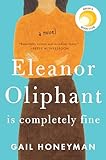
Editors Reads Verdict
Gail Honeyman's debut is a precise, darkly comic study of trauma's effects on personality and the ways that isolation becomes self-reinforcing — anchored by an unforgettable narrator whose peculiarity turns out to be the most comprehensible response imaginable to what happened to her.
What We Loved
- Eleanor's narrative voice is extraordinary — specific, funny, and heartbreaking in equal measure
- The revelation of Eleanor's past is handled with structural and emotional precision
- The friendship with Raymond is developed with genuine warmth and plausibility
- The mental health themes are treated seriously without becoming didactic
- The debut quality is exceptional — voice control this precise is rare in first novels
Minor Drawbacks
- The pacing flags slightly in the middle section
- Some readers find the twist visible from a distance
- The romance subplot is more conventional than Eleanor's character
Key Takeaways
- → Trauma shapes personality in ways that look eccentric until the cause is understood
- → Loneliness is not always visible from outside and is never the fault of the lonely person
- → Small acts of kindness from strangers can be genuinely life-changing
- → Connection requires risk, and risk requires some prior experience of safety
- → The structures we build to survive adverse circumstances can become the things that prevent us from living
| Author | Gail Honeyman |
|---|---|
| Publisher | HarperCollins |
| Pages | 327 |
| Published | May 9, 2017 |
| Language | English |
| Genre | Contemporary Fiction, Literary Fiction, Psychological Fiction |
| Difficulty | Beginner |
| Best For | Readers who enjoy character-driven fiction with psychological depth, dark comedy, and stories about unlikely friendship and trauma recovery. |
How Eleanor Oliphant Is Completely Fine Compares
Eleanor Oliphant Is Completely Fine at a glance against 3 similar books readers weigh alongside it.
| Book | Author | Rating | Best for |
|---|---|---|---|
| Eleanor Oliphant Is Completely Fine (this book) | Gail Honeyman | ★ 4.3 | Readers who enjoy character-driven fiction with psychological depth, dark |
| A Man Called Ove | Fredrik Backman | ★ 4.5 | Readers who enjoy character-driven comedy with emotional depth, particularly |
| Normal People | Sally Rooney | ★ 4.1 | Literary fiction readers interested in contemporary Irish society, millennial |
| The Midnight Library | Matt Haig | ★ 4.2 | Readers who enjoy philosophically engaged fiction with emotional warmth, |
“I’m Fine” as Character Study
Eleanor Oliphant is 29, works in accounts receivable at a Glasgow graphic design company, eats the same meals on the same days, and speaks to no one outside of work and her weekly phone calls with Mummy. She is, she insists, completely fine. The reader understands before Eleanor does that “completely fine” is not a description of her condition but a sentence she is constantly, exhaustedly working to make true.
Gail Honeyman’s debut novel is built on a central irony: Eleanor’s narration is so specific, so funny, and so full of confident observation that readers experience her as vivid and present — while she herself is living a life almost completely devoid of human contact. The gap between her interiority and her isolation is the novel’s engine.
Eleanor’s Voice
The technical achievement of Eleanor Oliphant Is Completely Fine is Eleanor’s narrative voice, which is the work of a writer who understood from the beginning exactly who this person is and how she would perceive the world. Eleanor interprets social conventions literally because she never learned them from the inside. She uses formal, precise language because warmth was never modeled for her. She is confused by behaviors everyone else performs unconsciously because everything she knows about how to be a person was self-taught, often incorrectly.
This voice is frequently hilarious — Eleanor’s take on office birthday cake protocol, on Internet dating, on the concept of “having a drink” — and becomes, as the novel progresses, increasingly poignant as we understand the depth of what it is protecting.
Raymond and the Emergence of Friendship
The IT technician Raymond Gibbons, who is ordinary in every specific way Eleanor is extraordinary, becomes her first real friend through sheer persistence and decency. Honeyman handles the friendship’s development with patience — it grows the way real friendship does, through accumulation of shared small experiences, rather than through a dramatic bonding moment.
The Revelation
Honeyman deploys Eleanor’s backstory with structural care. The novel gives readers enough to feel something is deeply wrong while withholding the specifics until the moment when understanding them will have maximum impact. The revelation when it comes reconfigures everything that preceded it.
The Architecture of Loneliness
Beneath its comedy, Eleanor Oliphant Is Completely Fine is one of contemporary fiction’s most precise studies of loneliness — not the temporary kind but the chronic, structural isolation that can become a way of life. Honeyman renders the texture of Eleanor’s solitude with uncomfortable accuracy: the rigid routines that fill empty time, the weekend silences broken only by vodka, the way an unaccustomed kindness can undo a person who has armored herself against needing anyone. The novel arrived amid growing public conversation about loneliness as a social and even medical problem, and it gave that abstraction a face. Crucially, Honeyman locates the source of Eleanor’s isolation not in personal failing but in damage done to her, transforming what could read as quirk into the entirely logical result of a life starved of love. The reader laughs, and then, gradually, understands what the laughter has been protecting.
Trauma and the Slow Reveal
The novel’s structural intelligence lies in how it withholds Eleanor’s history. From the start the reader senses that something is deeply wrong — the scarred face, the controlling weekly calls with “Mummy,” the total absence of family or friends — but Honeyman releases the specifics with great care, timing the full revelation for maximum impact. When it arrives, it recontextualizes everything: Eleanor’s literalism, her formality, her self-soothing rituals, her conviction that she is fine, all snap into focus as survival mechanisms developed in response to a childhood catastrophe. This is the architecture of trauma fiction done well — the present-day strangeness explained by a past the character cannot yet face — and it rewards rereading, as early scenes acquire new and painful meaning once the source of Eleanor’s condition is known.
Raymond and the Possibility of Repair
Against Eleanor’s isolation Honeyman sets Raymond, the unglamorous, kind-hearted IT technician whose persistent, undemanding decency becomes the lever that pries Eleanor’s life open. Their relationship is the novel’s quiet engine, and Honeyman’s wisdom is to let it grow the way real connection does — through the accumulation of small shared experiences, a sick old man helped on the street, a cat, a funeral, a cup of tea — rather than through a single dramatic bonding. Raymond is no rescuer and the book is careful not to make romance the cure for trauma; the harder, more necessary work of Eleanor’s healing is hers to do, with the help of therapy the novel takes seriously. But Raymond represents the possibility the book finally affirms: that even the most walled-off life can be reached by ordinary kindness, repeated and unforced.
A Debut Phenomenon
Eleanor Oliphant Is Completely Fine was Gail Honeyman’s first novel, published in 2017, and it became a word-of-mouth sensation — a Costa First Novel Award winner, a Reese Witherspoon Book Club pick, and an international bestseller with a film adaptation in development. Its success rested almost entirely on the strength of its central voice, proof that a character study with no high-concept hook could captivate a mass readership if the character was vivid enough. Honeyman, who began writing the book in her forties, created in Eleanor a heroine who is funny, exasperating, and ultimately deeply moving, and who gave countless readers a way to think about loneliness and trauma with both humor and compassion. It belongs to a wave of contemporary fiction about isolated, “difficult” women, and it remains one of the finest examples of the form.
Our rating: 4.3/5 — A debut of exceptional voice and structural intelligence, with a protagonist whose peculiarity turns out to be the most logical response imaginable to her history.
Reading Guides
- Books Like Eleanor Oliphant Is Completely Fine
- Books Like Lessons in Chemistry: 11 Novels of Wit, Ambition, and Women Who Refuse to Be Underestimated
- Books Like Remarkably Bright Creatures: 11 Novels of Grief, Warmth, and Unexpected Connection
- Normal People vs Beautiful World Where Are You: Which Sally Rooney Should You Read First?
Frequently Asked Questions
What is "Eleanor Oliphant Is Completely Fine" about?
A profoundly isolated young woman in Glasgow navigates her rigidly structured life while concealing a devastating past and slowly, almost accidentally, discovering what connection feels like.
Who should read "Eleanor Oliphant Is Completely Fine"?
Readers who enjoy character-driven fiction with psychological depth, dark comedy, and stories about unlikely friendship and trauma recovery.
What are the key takeaways from "Eleanor Oliphant Is Completely Fine"?
Trauma shapes personality in ways that look eccentric until the cause is understood Loneliness is not always visible from outside and is never the fault of the lonely person Small acts of kindness from strangers can be genuinely life-changing Connection requires risk, and risk requires some prior experience of safety The structures we build to survive adverse circumstances can become the things that prevent us from living
Is "Eleanor Oliphant Is Completely Fine" worth reading?
Gail Honeyman's debut is a precise, darkly comic study of trauma's effects on personality and the ways that isolation becomes self-reinforcing — anchored by an unforgettable narrator whose peculiarity turns out to be the most comprehensible response imaginable to what happened to her.
Ready to Read Eleanor Oliphant Is Completely Fine?
Check the current price on Amazon.
Check Price on Amazon (paid link)Prices and availability are subject to change. See Amazon for current price.
Review last updated: