Best Books About Loneliness: Essential Reading List
The best books about loneliness — from Stoner and The Bell Jar to Eleanor Oliphant and Norwegian Wood. Literature that understands what it means to feel alone.
By Lena Fischer

Loneliness in literature is not simply being alone — solitude is a chosen condition, often pleasurable. Literary loneliness is the experience of not being known: of being present among others and feeling entirely unreached, of having an interior life that the exterior world never meets. The novels that explore this most honestly tend to be the ones that make the reader feel, paradoxically, less alone.
The list below covers the full range: from the dignified professional loneliness of Stoner to the illness-induced isolation of The Bell Jar, from the grief-loneliness of Norwegian Wood to the socially constructed isolation of Eleanor Oliphant.
The Definitive Novels
Stoner — John Williams (1965)
The most complete literary account of loneliness. William Stoner grows up on a Missouri farm, becomes an English professor, marries badly, loves once in secret, and dies without distinction. Williams renders this quiet, ordinary, largely joyless life with a precision and sympathy so extreme that the reader comes to care about Stoner more than about almost any more conventionally dramatic character. The loneliness is not self-pity — Stoner is not given to self-pity — but a structural fact of his life: the people around him never quite reach him, and he never quite reaches them.
The novel was overlooked on publication in 1965 and rediscovered in the 2000s and 2010s, becoming one of the most beloved literary recoveries in recent memory. It is among the finest American novels of the twentieth century.
The Bell Jar — Sylvia Plath (1963)
The most psychologically precise account of the loneliness of mental illness. Esther Greenwood, a talented young woman at the cusp of a promising future, descends into depression and attempts suicide — and the novel’s central image is the bell jar: the glass enclosure through which she can see the world normally proceeding, while remaining sealed off from it, unable to touch or be touched. Plath’s rendering of how illness creates isolation is unlike anything else in the literature of mental health.
Published under a pseudonym in Plath’s lifetime and republished under her own name after her death, the novel has sold millions of copies and remains the most important literary account of depression and female ambition.
Grief and Loss
Norwegian Wood — Haruki Murakami (1987)
Murakami’s most realistic novel, and the one that made him famous. Toru Watanabe narrates from middle age, looking back at his years as a Tokyo student after the suicide of his best friend Kizuki — and the novel is the account of his navigation of grief, of his relationships with two women who represent different modes of living with or transcending loss, and of the specific loneliness of being nineteen and unsure how to carry what you’ve been given.
The setting — late 1960s Japan, the student protest movement on the edges of the story — gives the personal grief a historical context that deepens it.
Contemporary Isolation
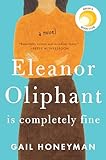
Eleanor Oliphant Is Completely Fine — Gail Honeyman (2017)
The most commercially successful novel about social isolation in recent years — and legitimately one of the most moving. Eleanor has constructed a life of rigid routine and careful distance: the same meals every week, weekly phone calls to ‘Mummy’, the office as her only social contact. The novel reveals gradually what trauma lies behind these walls, and its account of how a single friendship begins to crack them is rendered with both comedy and genuine emotional weight.
The first-person narration — Eleanor’s voice is precise, formal, and occasionally startling — is the novel’s greatest achievement.
Never Let Me Go — Kazuo Ishiguro (2005)
Ishiguro’s most unsettling novel treats loneliness as a structural condition of existence. Kathy, Tommy, and Ruth grow up at Hailsham, a seemingly idyllic English school, without knowing the specific nature of what awaits them — and the novel’s central tragedy is not the revelation (which the reader grasps before Kathy does) but the characters’ passive acceptance of it, their inability to imagine or demand a different life. The loneliness is civilisational: these are people who have never been taught to want more than they were given.
Loneliness and Connection
A Man Called Ove — Fredrik Backman (2012)
The novel about loneliness that ends most hopefully. Ove, a recently widowed, deeply rigid Swedish man who has alienated almost everyone around him, finds his plans for ending his life repeatedly interrupted by the arrival of new neighbours who need help. Backman’s treatment of grief-loneliness — the specific isolation of losing the person who understood you — is genuinely moving, and his account of how connection finds its way around even the most determined resistance is one of the most humane in contemporary fiction.
The Paradox of Modern Loneliness
One of the most striking and troubling features of contemporary life, which the literature of loneliness illuminates with particular force, is the paradox of modern loneliness — the fact that in an age of unprecedented connectivity, when human beings are more able than ever to communicate across any distance and are surrounded by more people than at any point in history, loneliness has become a pervasive and even epidemic affliction. This paradox is at the heart of much contemporary writing on loneliness, which confronts the strange and disturbing reality that the technologies and conditions of modern life, for all their promise of connection, have produced not greater intimacy but greater isolation, not the alleviation of loneliness but its intensification. The sources of this paradox are various and revealing. The digital connectivity that promises to bring people together often substitutes shallow virtual contact for the deep, embodied connection that human beings actually need, leaving people more connected and yet more alone. The conditions of modern life, with its mobility, its breakdown of traditional community, its emphasis on individualism and self-sufficiency, and its erosion of the bonds and institutions that once connected people, have undermined the deep social connections that protect against loneliness. And the very abundance of superficial contact and stimulation can mask and even deepen the absence of genuine intimacy and belonging. The literature of loneliness explores this modern paradox, illuminating the disturbing reality that the age of connectivity has become an age of isolation, and confronting the question of why, surrounded by people and connected as never before, so many people feel so profoundly alone. This exploration of the paradox of modern loneliness gives the literature a particular urgency and relevance, for it speaks to a pervasive affliction of contemporary life and illuminates the troubling gap between the connectivity that modern life provides and the genuine connection that human beings need and increasingly lack.
Fiction as Companionship in Isolation
A profound and somewhat paradoxical truth about the literature of loneliness is the way that reading about loneliness can itself alleviate it — that the experience of encountering one’s own isolation reflected and understood in literature offers a form of companionship and consolation, breaking the deepest cruelty of loneliness, which is the sense of being alone in one’s aloneness. Loneliness is intensified by the feeling that one’s isolation is unique and unshared, that no one else understands or experiences the particular ache of one’s own solitude, and this sense of being alone even in one’s loneliness is among the affliction’s cruelest features. The literature of loneliness counters this isolation directly, for in reading about characters who experience the same loneliness, in finding one’s own isolation given voice and understood in fiction, the lonely reader discovers that they are not alone in their aloneness, that their experience is shared and understood, and that the ache they feel is a common human reality rather than a unique affliction. This recognition offers a genuine consolation and a form of companionship, for the book that understands and articulates one’s loneliness becomes a kind of companion, a presence that meets one in one’s isolation and assures one that the experience is shared. There is a deep paradox here, that reading, a solitary activity, and reading about loneliness in particular, can alleviate the very isolation it depicts, but the paradox dissolves in the recognition that the deepest cure for the feeling of being alone is the discovery that one’s experience is shared and understood, and that literature, by giving voice to loneliness and reflecting it back to the reader, provides exactly this discovery. The literature of loneliness thus offers not merely the depiction of isolation but a remedy for it, the companionship and consolation that come from finding one’s own loneliness understood and shared, and the lonely reader who encounters their experience reflected in these books discovers that the solitary act of reading can break the isolation of loneliness and offer the companionship that the lonely most need.
The Difference Between Solitude and Loneliness
An important distinction that the best literature of loneliness illuminates, and one essential to understanding the subject, is the difference between solitude and loneliness — between the chosen and often nourishing state of being alone and the painful and unwanted condition of feeling isolated and disconnected — for these are frequently confused, yet they are profoundly different, even opposite, states. Solitude, the condition of being alone, is not in itself painful and can in fact be deeply valuable, a chosen and nourishing state that offers rest, reflection, creativity, and the restoration of the self, and many of the most fulfilling human experiences and achievements depend on the capacity to be alone. Loneliness, by contrast, is the painful and unwanted experience of feeling isolated, disconnected, and bereft of the human connection one needs and desires, a state of suffering rather than nourishment, of deprivation rather than restoration. The crucial difference lies not in the mere fact of being alone but in the quality and the choice of the experience: solitude is a chosen and often nourishing aloneness, while loneliness is an unwanted and painful isolation, and one can be lonely in a crowd or content in solitude, for the states depend not on the presence or absence of others but on the quality of one’s connection and the satisfaction of one’s need for it. The best literature of loneliness illuminates this crucial distinction, exploring both the painful reality of loneliness and the valuable possibility of solitude, and helping the reader to understand the difference between the isolation that afflicts and the aloneness that nourishes. This distinction is important not only for understanding loneliness but for addressing it, for the recognition that solitude can be valuable and that the cure for loneliness lies not in the mere presence of others but in genuine connection offers a more sophisticated understanding of the affliction and its remedy. By illuminating the difference between solitude and loneliness, the literature deepens our understanding of both, revealing the value of chosen aloneness and the nature of the isolation that afflicts, and offering a more nuanced understanding of the human need for connection and the difference between nourishing solitude and painful loneliness.
Reading Order
Start literary: Stoner → The Bell Jar → Norwegian Wood.
Contemporary first: Eleanor Oliphant → A Man Called Ove → Never Let Me Go.
By tone: A Man Called Ove (warmest) → Norwegian Wood → Stoner → The Bell Jar (most intense).
Frequently Asked Questions
What is the best novel about loneliness?
Stoner by John Williams is the definitive literary novel about loneliness — the quiet, dignified account of a man who lives most of his life without being fully known by anyone, including himself, and whose story Williams renders with such precision and sympathy that the book has become one of the most beloved rediscoveries in literary history. The Bell Jar by Sylvia Plath is the most psychologically precise novel about the specific loneliness of depression — the way that illness creates a glass barrier between the self and everyone else. Eleanor Oliphant Is Completely Fine is the most accessible contemporary novel about social isolation and its causes.
What is Stoner about?
Stoner by John Williams (1965) is the life of William Stoner — a Missouri farm boy who becomes an English professor, has a failed marriage, a suppressed love affair, and an undistinguished career, and dies quietly. That description makes it sound bleak, but the novel's effect is the opposite: Williams renders Stoner's small, honest life with such care that the reader comes to understand what it means to live with quiet dignity under conditions that never quite match your deepest nature. The novel was overlooked on publication and rediscovered after Williams's death; it is now recognised as one of the finest American novels of the twentieth century.
What is Norwegian Wood about?
Norwegian Wood by Haruki Murakami (1987) is a coming-of-age novel set in late 1960s Tokyo, following Toru Watanabe as he navigates grief, first love, and the suicide of his best friend. The novel is unusual for Murakami in being entirely realistic — no magical elements, no surrealism — and its treatment of loss and the loneliness of grief is among the most honest in Japanese literature. It became Murakami's first bestseller in Japan and remains his most accessible novel.
What is Eleanor Oliphant Is Completely Fine about?
Eleanor Oliphant Is Completely Fine by Gail Honeyman follows Eleanor, a young woman who has constructed a life of rigid routine that keeps other people at a safe distance — social meals on Fridays, weekly phone calls with 'Mummy', and the conviction that she is fine. The novel reveals gradually why Eleanor has needed such walls, and its account of how one unexpected friendship begins to crack them is both funny and deeply moving. It is the most accessible contemporary novel about the specific loneliness that comes from a traumatic past.