Where to Start with Gail Honeyman: A Reading Guide
Where to start with Gail Honeyman — how to approach Eleanor Oliphant Is Completely Fine, her essential debut novel. A complete reading guide.
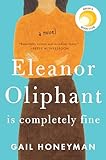
Gail Honeyman is a Scottish author whose debut novel Eleanor Oliphant Is Completely Fine (2017) was selected for Reese Witherspoon’s Hello Sunshine book club, sold over four million copies internationally, and became one of the most widely recommended contemporary literary novels of recent years. A planned film adaptation with Witherspoon attached has been in development. Honeyman has not published a second novel.
Where to Start: Eleanor Oliphant Is Completely Fine (2017)
The essential and only Honeyman — and one of the finest debuts in recent literary fiction. The novel’s challenge is to present, in the first person, a narrator who is fundamentally strange in ways she cannot see — and to make that strangeness both comic and eventually heartbreaking without tipping into caricature or sentimentality. Honeyman manages this with precision that suggests far more than a first-time novelist’s craft.
Eleanor Oliphant is twenty-nine years old, works in accounts receivable at a graphic design company in Glasgow, and runs her life according to rigidly organised routines: the same food every week, Dictaphone vodka bought on Fridays and drunk alone, a weekly phone call from “Mummy” who is not kind. Her commentary on social situations — colleagues’ small talk, dating conventions, office birthday cakes — is delivered with the directness of someone who learned social norms academically rather than by absorption, and it is very funny. She is not stupid; she is severely isolated, and the isolation has produced a relationship to social convention that is simultaneously logical and entirely off.
The reader begins to understand before Eleanor does that the routines and the isolation are protective structures built around something that cannot be examined directly. The gradual revelation — managed through Eleanor’s own narration, which cannot be trusted on the subject of her past — is handled with structural care. What happened to Eleanor is not revealed in a single scene but assembled from fragments: the scarring on her face, her oblique references to “Mummy,” the very specific ways her social estrangement manifests.
The friendship with Raymond — a standard-issue, kind, unheroic IT department colleague — is the novel’s emotional centre. Raymond’s ordinariness is deliberately chosen: Eleanor does not need rescuing by someone exceptional, but encountering genuine ordinary kindness, which she has never been offered before. His response to her strangeness is not correction or pity but simple companionship, and Honeyman renders its slow effect on Eleanor with both accuracy and warmth.
The final sections, which must handle both the revelation and Eleanor’s response to it, are the novel’s most difficult and most impressive achievement.
Why Eleanor Oliphant Is Completely Fine Is the Ideal First Book
For a reader new to Gail Honeyman, Eleanor Oliphant Is Completely Fine is the ideal and essential first book because it is her singular work, a phenomenally successful debut, and the full expression of her distinctive gifts. Eleanor Oliphant Is Completely Fine tells the story of a socially isolated, eccentric woman whose carefully managed solitary life conceals a deep loneliness and a hidden history of trauma, and it traces her gradual movement, through unexpected kindness and connection, toward healing. As an entry point, it is the natural and essential place to begin, for it is Honeyman’s defining and only book, the beloved debut that made her name. It welcomes the newcomer with its unforgettable protagonist, its blend of humor and sadness, and its ultimately hopeful vision, drawing the reader into a deeply affecting novel. It is her singular work and the fullest expression of her gifts, so that the new reader encounters Honeyman directly. For the newcomer, then, Eleanor Oliphant Is Completely Fine is the natural and ideal starting point, the beloved debut that became a phenomenon.
What to Expect as a New Reader
As a new reader, you can expect Eleanor Oliphant Is Completely Fine to be a deeply affecting novel, blending humor and sadness in the story of a lonely woman’s movement toward healing. You can expect an unforgettable protagonist, for Eleanor Oliphant, a socially isolated, eccentric woman with rigid routines and a distinctive voice, is a memorable and endearing character. You can expect a blend of humor and sadness, for the novel is by turns funny and heartbreaking, finding comedy in Eleanor’s eccentricity while attending to the deep loneliness and the hidden trauma beneath it. You can expect a profound exploration of loneliness and the hidden wounds of trauma, rendered with insight and compassion. You can expect, ultimately, a hopeful vision, for the novel traces Eleanor’s gradual movement, through unexpected kindness and human connection, toward healing, affirming the redemptive power of kindness. Expect, in short, a deeply affecting novel that blends humor and sadness in a story of loneliness and healing, a moving and ultimately hopeful introduction to Honeyman’s gifts.
Going Deeper After Your First Book
Once Eleanor Oliphant Is Completely Fine has introduced you to Honeyman’s gifts, there is, for now, no further book to turn to within her own work, for it is her singular debut, the beloved novel on which her reputation rests, and it stands complete and self-sufficient. The reader who has been moved by Eleanor Oliphant Is Completely Fine and wishes for more might turn to other fiction that explores loneliness, eccentric and endearing protagonists, and the redemptive power of kindness and connection, reading in the light of the pleasures that Honeyman’s novel offers. Such reading can complement the experience of her debut while you await any future work from its author. Within Honeyman’s own output, however, Eleanor Oliphant Is Completely Fine is the whole, the single deeply affecting novel that made her name. Building your reading journey from Eleanor Oliphant Is Completely Fine is a matter of carrying its blend of humor, sadness, and hope into the wider world of fiction about loneliness and connection. The reader who begins with Eleanor Oliphant Is Completely Fine will have encountered one of the most beloved debuts of recent years, complete in itself.
Reading Gail Honeyman
Eleanor Oliphant Is Completely Fine is Honeyman’s debut and only novel to date. It stands alone and requires no prior reading.
For the full Gail Honeyman bibliography, reviews, and biography, visit the Gail Honeyman author page on Editors Reads.
Affiliate disclosure: Links to Amazon on this page are affiliate links. We earn a small commission at no extra cost to you.
Frequently Asked Questions
Where should I start with Gail Honeyman?
Eleanor Oliphant Is Completely Fine (2017) is Honeyman's debut and only novel — a darkly comic, precise study of a profoundly isolated young woman in Glasgow who conceals a devastating past behind rigid social routines and a peculiar relationship to social convention. A word-of-mouth phenomenon that sold over four million copies.
What is Eleanor Oliphant Is Completely Fine about?
Eleanor Oliphant Is Completely Fine follows Eleanor, a twenty-nine-year-old accounts receivable clerk in Glasgow who buys the same meals every week, drinks Dictaphone vodka alone on Friday nights, and speaks to her 'mummy' by phone every Wednesday. Her isolation is absolute and her social behaviour profoundly strange — as becomes clear, these are the results of a trauma she has survived and sealed over, rather than natural peculiarity. The novel follows her gradual, reluctant opening to connection, triggered by an unexpected friendship with a colleague named Raymond.
Is Eleanor Oliphant Is Completely Fine a mystery?
Eleanor Oliphant Is Completely Fine is primarily a character study and a novel about trauma and recovery, not a mystery in the conventional sense. There is a revelation about Eleanor's past that is withheld from the reader until the later sections of the book, and the novel builds toward this revelation with structural care. But the engine of the book is Eleanor's voice and character — the comedy of her social estrangement and the growing understanding of what produced it — rather than a plot puzzle.
What should I read after Eleanor Oliphant Is Completely Fine?
After Eleanor Oliphant Is Completely Fine, Rachel Joyce's The Unlikely Pilgrimage of Harold Fry covers similar territory — an isolated, damaged person taking unexpected steps toward connection — with a different structure. Deborah Levy's Hot Milk and Swimming Home offer literary fiction about damaged women with comparable European sensibility. For American literary fiction in the same vein, Emma Donoghue's Room explores trauma and recovery from an unusual perspective.


