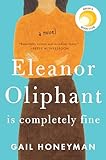
Gail Honeyman is a Scottish author whose debut novel Eleanor Oliphant Is Completely Fine became a global bestseller for its compassionate, darkly funny portrait of loneliness and trauma.
Gail Honeyman published Eleanor Oliphant Is Completely Fine in 2017 to immediate and widespread acclaim. The novel’s narrator — Eleanor, a deeply eccentric office worker who buys the same ready meals each week, drinks vodka alone on weekends, and navigates the social world with a baffled formality that is frequently funny and quietly heartbreaking — is one of the more memorable characters in recent British fiction. Honeyman manages the difficult task of making Eleanor both comedic and genuinely moving without allowing either register to undermine the other.
The novel is structured as a slow revelation: Eleanor’s present-day life is described in precise, often hilarious detail, while the backstory that explains her extraordinary isolation is released carefully across the narrative. When it arrives, it reframes everything that has come before, and Honeyman’s control of this structure is confident. The friendship that develops between Eleanor and IT technician Raymond functions as the novel’s emotional core — warm, unforced, and earned.
Eleanor Oliphant has occasionally been criticised for the tidiness of its redemptive arc and for a psychological backstory some readers found melodramatic. The ending is perhaps more resolved than the novel’s earlier tonal complexity strictly requires. But as a debut novel, it is exceptionally accomplished — genuinely funny, emotionally honest about the mechanics of loneliness, and structured with care. Honeyman’s control of her narrator’s voice is the book’s greatest technical achievement.
An Unforgettable Narrator
The achievement on which the entire novel rests is the voice of Eleanor Oliphant herself, one of the most distinctive and memorable narrators in recent popular fiction. Eleanor’s formal, precise, often archaic diction, her literal interpretations of social conventions, her bafflement at the small rituals others take for granted, and her deadpan observations on the absurdities of modern life combine to create a character who is at once hilarious and profoundly poignant. Honeyman sustains this voice with remarkable consistency, mining it for comedy without ever turning Eleanor into a mere object of ridicule, and gradually allowing the reader to perceive the deep loneliness and trauma beneath the eccentric surface. The genius of the technique is that Eleanor’s very oddness, initially a source of amusement, becomes the vehicle for the novel’s emotional power, as the reader comes to understand that her rigid routines and social isolation are not quirks but survival mechanisms. This careful calibration of comic and tragic registers, held together by an utterly convincing first-person voice, is what lifts the book above sentimental women’s fiction and accounts for the fierce attachment readers feel toward its protagonist. Eleanor has entered the small company of characters readers genuinely love.
Loneliness as a Subject
What gives Eleanor Oliphant Is Completely Fine its resonance beyond its comic charm is its serious and compassionate engagement with loneliness, a subject of growing cultural and public-health concern that fiction has rarely treated so directly. Honeyman has spoken about being struck by accounts of how some people, particularly in cities, can go for long stretches without meaningful human contact, and the novel makes this experience vivid and affecting through Eleanor’s meticulously described isolation: the structureless weekends, the vodka, the absence of anyone who would notice if she disappeared. Crucially, the book locates the antidote not in romance but in friendship and small, ordinary acts of kindness, particularly through the gentle, unforced relationship that develops between Eleanor and her kindly colleague Raymond. This insistence that connection and recovery come through human warmth and community rather than romantic rescue distinguishes the novel from conventional love stories and gives its message a quiet seriousness. By dramatising loneliness with such specificity and empathy, and by suggesting that healing is possible through the slow accumulation of genuine relationships, Honeyman struck a chord with readers across the world who recognised something of the condition she portrayed, whether in themselves or in others.
A Singular Literary Success
The trajectory of Honeyman’s debut is itself a remarkable publishing story, a testament to the power of a distinctive voice to find an audience. The manuscript was recognised early, winning a prize for unpublished writers before publication, and on release the novel became a word-of-mouth phenomenon, winning the Costa First Novel Award, topping bestseller lists internationally, and being selected for influential book clubs that propelled it to even wider readership. Its success was driven not by genre conventions or marketing formulas but by the genuine affection readers felt for Eleanor and by the novel’s rare combination of humour, heart, and emotional honesty. Film rights were acquired by a major production company, further extending its reach. As a debut from a writer who came to fiction later in life and worked on the book while holding other employment, the novel’s triumph carried an additional inspirational dimension, demonstrating that a fresh, fully realised voice can break through regardless of an author’s prior credentials. While Honeyman has published relatively little since, the enduring popularity of Eleanor Oliphant has secured her a notable place in contemporary fiction, and the novel continues to be discovered and cherished by new readers drawn to its unforgettable protagonist and its tender treatment of isolation and recovery.
Where to Start with Honeyman
The answer is straightforward, since Honeyman’s reputation rests on a single novel: read Eleanor Oliphant Is Completely Fine, her acclaimed and bestselling debut. It requires no preparation and rewards the reader immediately with its distinctive narrator, its blend of comedy and pathos, and its compassionate exploration of loneliness, trauma, and the redemptive power of ordinary kindness. New readers should come to it ready to be charmed and amused by Eleanor’s formal, idiosyncratic voice before the novel gradually reveals the darker history beneath her eccentric surface, a structure that rewards patience and pays off powerfully. The book works equally well for readers seeking an entertaining, character-driven contemporary novel and for those drawn to more serious themes of isolation and recovery, and its popularity with book clubs reflects how much there is to discuss. Those who love it and wish to experience the story in another form can anticipate the film adaptation in development. For now, Eleanor Oliphant Is Completely Fine is both the beginning and essentially the entirety of Honeyman’s published fiction, and it stands as a complete and self-sufficient introduction to one of contemporary fiction’s most beloved characters.
Reading Guides