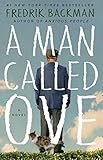
Editors Reads Verdict
Fredrik Backman's international breakthrough is a masterclass in using comedy as emotional trojan horse — a novel that is frequently hilarious and ultimately heartbreaking, built around a protagonist so convincingly unlikeable that readers spend hundreds of pages falling in love with him against their will.
What We Loved
- Ove is one of the most original and endearing protagonists in contemporary European fiction
- The comedy and grief coexist without either canceling the other
- Backman's backstory reveals are perfectly timed for maximum emotional impact
- The supporting cast — especially Parvaneh — is vivid and fully realized
- The novel generates genuine tears through earned character investment rather than manipulation
Minor Drawbacks
- Some find the comic exaggeration tips into caricature in the early chapters
- The plot relies heavily on coincidence and convenient arrivals
- The novel is emotionally predictable in its arc, even if its specifics surprise
Key Takeaways
- → The people who appear most hostile to community are often the ones who need it most
- → Grief concealed as anger is still grief, and requires tenderness rather than confrontation
- → The rituals of daily life are often the structures keeping someone alive
- → Community and belonging can be found at any age if someone is stubborn enough to offer them
- → The rules and standards that make someone seem rigid are often evidence of the values they live by
| Author | Fredrik Backman |
|---|---|
| Publisher | Washington Square Press |
| Pages | 337 |
| Published | August 27, 2012 |
| Language | English |
| Genre | Contemporary Fiction, Literary Fiction, Humor |
| Difficulty | Beginner |
| Best For | Readers who enjoy character-driven comedy with emotional depth, particularly those who love books about unlikely found families and human persistence. |
How A Man Called Ove Compares
A Man Called Ove at a glance against 3 similar books readers weigh alongside it.
| Book | Author | Rating | Best for |
|---|---|---|---|
| A Man Called Ove (this book) | Fredrik Backman | ★ 4.5 | Readers who enjoy character-driven comedy with emotional depth, particularly |
| Eleanor Oliphant Is Completely Fine | Gail Honeyman | ★ 4.3 | Readers who enjoy character-driven fiction with psychological depth, dark |
| Lessons in Chemistry | Bonnie Garmus | ★ 4.5 | Readers who enjoy historical fiction with a feminist perspective, literary |
| The Midnight Library | Matt Haig | ★ 4.2 | Readers who enjoy philosophically engaged fiction with emotional warmth, |
Against His Will and Ours
Fredrik Backman’s debut novel, originally published in Swedish in 2012 and translated into dozens of languages, introduced one of contemporary fiction’s most beloved grumpy men. Ove is introduced as the worst neighbor imaginable: a retired 59-year-old who monitors the housing association’s rules with ferocious attention, who antagonizes every delivery van that enters the estate, who has strong views about Saabs versus Volvos and acts on them, and who has decided, since his wife Sonja’s death six months earlier, that he no longer has any reason to continue existing.
His suicide attempts — three in the novel’s first third — are rendered in a tone so comic that readers simultaneously laugh and feel the weight of what is being attempted. This is Backman’s greatest tonal achievement: making Ove’s death wish feel both genuinely sad and genuinely funny without trivializing either quality.
The Backstory as Emotional Architecture
The novel is structured around the contrast between the present-day Ove — cantankerous, rule-obsessed, apparently friendless — and the backstory Ove, revealed in alternating chapters: the boy who lost his father too early, the young man who met Sonja and was rebuilt by her, the man whose capacity for love and loyalty is enormous but has been expressed only in specific, limited ways.
Backman times these revelations with precision. Each backstory chapter arrives at the moment when a present-day event requires the context only the past can provide. By the time we understand what Sonja was to Ove, we have already watched him sabotage every opportunity to connect with the people around him — and we understand both the loss that drives this and the love that might still reclaim him.
Parvaneh and Community
Parvaneh, the young Iranian-Swedish woman who moves in next door with her clumsy husband and two daughters, is the novel’s counterforce to Ove’s withdrawal. She is loud, intrusive, warm, and entirely unwilling to accept Ove’s hostility as a final verdict on whether he is worth knowing. Their unlikely friendship — initiated entirely on her side — is the novel’s emotional engine.
The Swedish Specificity
The housing association setting, the Saab loyalty, the particular texture of Swedish community life — these are specific enough to feel authentic and universal enough to translate completely across cultures. The 2022 Tom Hanks film adaptation replaced the Swedish setting with an American one, which makes different points while serving the same emotional purpose.
Our rating: 4.5/5 — A brilliantly calibrated comedy of grief and community that deploys its humor in service of one of the most unexpectedly moving character studies in contemporary fiction.
The Grump as a Study in Grief
It would be easy to file A Man Called Ove under feel-good comedy, and it is genuinely funny, but the engine beneath the humour is grief. Ove’s rigidity, his fury at incompetence, his running feud with the world’s bureaucrats and bad drivers, all turn out to be the armour of a man who has lost the wife who was his one connection to warmth and is quietly trying to follow her. Backman structures the novel so that each comic confrontation with his new neighbours peels back another layer of this sorrow, until the reader understands that the curmudgeon and the bereaved husband are the same man. The comedy and the heartbreak are not alternating modes but the same thing seen from two sides.
Why It Became a Phenomenon
The novel’s enormous international success rests on a simple, durable idea executed with great warmth: that community is something that happens to us against our will, and that the people who most insist they want to be left alone are often the ones most in need of being claimed. Ove is redeemed not by changing his nature but by being drawn, complaining all the way, back into the messy obligations of neighbourliness. Some readers find the sentiment laid on thickly, and the emotional beats are not subtle — but the book earns its tears through real feeling rather than mere manipulation, and its portrait of loneliness, grief, and the slow reopening of a closed heart has made it one of the most beloved novels of its decade.
Why It Travelled So Far
Translated into dozens of languages and adapted for the screen more than once, A Man Called Ove became a global success on the strength of a deceptively simple emotional formula handled with unusual sincerity. Backman understood that the prickly, rule-bound neighbour everyone tries to avoid is often a person in pain, and he built a whole novel on the slow, comic, and moving work of reaching such a person. The book’s warmth never quite curdles into mere sentimentality because the grief at its centre is real and unresolved. For readers who want a story that makes them laugh and cry in roughly equal measure, and that takes loneliness seriously while insisting on the possibility of connection, it has become a modern favourite.
Reading Guides
- Books Like A Man Called Ove: 11 Novels About Grief, Grumpiness, and Found Family
- Books Like The Midnight Library: 11 Novels About Second Chances and Unlived Lives
- Books Like Lessons in Chemistry: 11 Novels of Wit, Ambition, and Women Who Refuse to Be Underestimated
- Books Like Remarkably Bright Creatures: 11 Novels of Grief, Warmth, and Unexpected Connection
- Fredrik Backman Books in Order: Complete Reading Guide
- 20 Best Funny Books: Novels and Non-Fiction That Are Genuinely Comic
- 20 Best Cozy Mystery Books to Read Next
Frequently Asked Questions
What is "A Man Called Ove" about?
A grumpy, recently widowed Swedish man who has given up on life encounters a series of intrusive neighbors who accidentally give him reasons to stay.
Who should read "A Man Called Ove"?
Readers who enjoy character-driven comedy with emotional depth, particularly those who love books about unlikely found families and human persistence.
What are the key takeaways from "A Man Called Ove"?
The people who appear most hostile to community are often the ones who need it most Grief concealed as anger is still grief, and requires tenderness rather than confrontation The rituals of daily life are often the structures keeping someone alive Community and belonging can be found at any age if someone is stubborn enough to offer them The rules and standards that make someone seem rigid are often evidence of the values they live by
Is "A Man Called Ove" worth reading?
Fredrik Backman's international breakthrough is a masterclass in using comedy as emotional trojan horse — a novel that is frequently hilarious and ultimately heartbreaking, built around a protagonist so convincingly unlikeable that readers spend hundreds of pages falling in love with him against their will.
Ready to Read A Man Called Ove?
Check the current price on Amazon.
Check Price on Amazon (paid link)Prices and availability are subject to change. See Amazon for current price.
Review last updated: