20 Best Funny Books: Novels and Non-Fiction That Are Genuinely Comic
The best funny books — genuinely comic novels, satirical non-fiction, and memoirs that are laugh-out-loud without sacrificing intelligence. Books that are funny because they are also true.
Genuine comic writing is harder than it looks. The joke has to work on the page — without timing, without delivery, without the performer’s body — which means the comedy has to be embedded in the structure, the rhythm, the specific word choice. Books that are described as “funny” often aren’t, not really; they are pleasant, or warm, or light, which is a different thing.
The books on this list are actually funny. Most of them are also true about something, which is usually where the comedy comes from. The funniest books tend to be the ones whose humour is not a decoration on top of serious content but the vehicle through which the serious content is delivered.
Quick answer: For the most reliably funny, The Hitchhiker’s Guide to the Galaxy or A Man Called Ove. For comic satire, Good Omens. For memoir, look for David Sedaris.
Funniest Books at a Glance
| Book | Author | Best for |
|---|---|---|
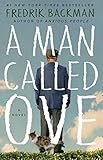
| A Man Called Ove | Fredrik Backman | Readers who enjoy character-driven comedy |
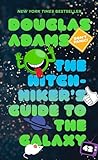
| The Hitchhiker’s Guide to the Galaxy | Douglas Adams | Anyone who needs to laugh |
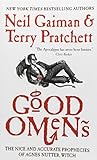
| Good Omens | Terry Pratchett & Neil Gaiman | Fans of Pratchett, Gaiman, or British comedy |
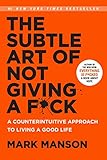
| The Subtle Art of Not Giving a F*ck | Mark Manson | Anyone exhausted by relentless optimism culture |
Comic Novels: Prose That Is Funny
A Man Called Ove by Fredrik Backman
Ove is a Swedish pensioner — curmudgeonly, rule-bound, deeply set in his ways — who has lost his wife and his reason to continue. His repeated attempts to die are interrupted by the arrival of a chaotic young family next door. Backman’s comedy is character-based: Ove is funny because he is entirely himself, because his rigidity is the same quality as his love, and because the situations he encounters require him to be more of himself rather than less. The novel is also genuinely moving, which is not a contradiction — the best comedy often coexists with genuine feeling.
The Hitchhiker’s Guide to the Galaxy by Douglas Adams
Arthur Dent’s house is being demolished to make way for a bypass. Moments later, the Earth is demolished to make way for a hyperspace expressway. Adams’s novel is funny because its comedy is philosophically grounded — the joke about Earth being an insignificant planet in an unimportant corner of the galaxy is also a genuine argument about human self-importance. The prose is the joke: Adams writes in a style where the comedy is in the observation, not in the plot. The series that follows (The Restaurant at the End of the Universe, Life, the Universe and Everything) maintains the quality across five books.
Good Omens by Terry Pratchett and Neil Gaiman
An angel and a demon, friends since the beginning of time, conspire to prevent the apocalypse they are both technically supposed to want. Pratchett and Gaiman’s collaboration is the funniest theological comedy since Life of Brian — its comedy is precise (it knows exactly which theological ideas it is mocking and why) and its invention is continuous. The Antichrist is an eleven-year-old boy in the English countryside who has been misplaced by a Satanic nurse. It becomes more plausible as you read.
Satire: Comedy With an Argument
The Complete Works of P.G. Wodehouse (Jeeves and Wooster)
Bertie Wooster, the most amiable and least capable man in England, and Jeeves, his unflappable valet, navigate a series of romantic entanglements and social disasters. Wodehouse’s prose is the most sustained comic achievement in English — every sentence is constructed with a precision that makes the comedy seem effortless and makes any individual line quotable. The Jeeves novels are technically inexhaustible: Right Ho, Jeeves, The Code of the Woosters, and The Inimitable Jeeves are usually recommended as starting points.
Non-Fiction: Comedy as Argument
The Subtle Art of Not Giving a F*ck by Mark Manson
Manson’s anti-self-help self-help book is genuinely funny — its energy comes from the pleasure of watching someone demolish the genre’s conventions from inside. The argument (that improvement culture’s relentless positivity is itself a form of suffering, and that the productive response to difficulty is to choose what to care about rather than to feel good about everything) is coherent, and the comedy makes it readable in a way that more earnest versions of the same argument are not.
Memoir: Funny People Writing About Their Lives
Born a Crime by Trevor Noah
Noah’s memoir of growing up mixed-race in apartheid and post-apartheid South Africa is funny and serious in exactly equal measure — the comedy comes from the absurdity of the specific situations he describes, and the seriousness comes from what those situations reveal about the systems that produced them. The chapter on his mother is among the finest pieces of writing about parental love in recent memoir. For the full post, see our books like Born a Crime guide.
What to Read Next
For books that blend comedy with genuine ideas, the Pratchett/Gaiman partnership is the most reliable source — Pratchett’s Discworld series (forty-one novels) maintains quality across its length in a way unusual in any genre. For comic memoir, David Sedaris has six collections that sustain the quality of Me Talk Pretty One Day.
For the Best Fiction Books
For the definitive guide to fiction — the greatest novels across literary fiction, classics, and contemporary writing — see our Best Fiction Books of All Time list.
The Difficulty of Being Funny
There is a widespread and mistaken assumption that comic writing is easier or less serious than other kinds, a lighter and lesser achievement than the work of tragedy or high seriousness, but the truth, which the best funny books demonstrate, is precisely the opposite: that to be genuinely funny on the page is among the most difficult things a writer can attempt, demanding a mastery of timing, language, and human observation that few possess. Comedy is hard, far harder than its effortless effect suggests, for the writer who would make a reader laugh must achieve a precise and demanding mastery that the appearance of easy hilarity conceals. There is the matter of timing, the exact placement and pacing of words and revelations on which comic effect depends, a sense of rhythm as exacting as any in writing. There is the mastery of language, the precise and inventive use of words on which so much humor turns, the exact word in the exact place that makes the difference between the funny and the flat. There is the acute observation of human nature, for the deepest comedy arises from the precise and recognizable rendering of human folly, vanity, and absurdity, demanding a sharp eye for the truth of human behavior. And there is the sheer difficulty of the effect itself, for laughter cannot be forced or faked but must be genuinely earned, and the writer who fails to be funny fails completely and obviously, with none of the cover that vaguer effects allow. The best funny books demonstrate this difficulty by triumphing over it, achieving a genuine and apparently effortless hilarity that conceals the mastery of timing, language, and observation that produced it. Far from being easier or less serious than other kinds of writing, comic writing is among the most difficult a writer can attempt, and the funny books that succeed are achievements of real and rare mastery, demonstrating that to be genuinely funny on the page is one of the hardest and most impressive things a writer can do.
What We Laugh At, and Why
The humor of the best funny books rewards reflection not only for its pleasure but for what it reveals, for comedy is a profound and revealing response to the human condition, and the question of what we laugh at, and why, opens onto deep truths about human nature and the absurdities of existence. Laughter is never merely frivolous, for what we find funny reveals much about ourselves and our condition, and the humor of the best comic writing arises from a genuine engagement with the realities of human life. Much of the deepest comedy arises from the recognition of human folly, vanity, and absurdity, from the precise rendering of the gap between human pretension and human reality, between what people imagine themselves to be and what they actually are. We laugh at the comic exposure of vanity and self-deception, at the puncturing of pretension, at the recognition of the absurdities and contradictions that mark human nature and human life. Much comedy arises, too, from the absurdities of existence itself, from the gap between human aspiration and the often ridiculous or disappointing realities of the world, from the incongruities and contradictions that mark the human condition. And humor often expresses a particular stance toward the difficulties and absurdities of life, a way of acknowledging and responding to the gap between how things ought to be and how they are. The best funny books engage these deep sources of comedy, deriving their humor from a genuine engagement with human folly, the absurdities of existence, and the contradictions of the human condition, so that their laughter, however delightful, arises from and reveals genuine truths about human nature and human life. To reflect on what we laugh at, and why, is to recognize that comedy is a profound and revealing response to the human condition, that the humor of the best funny books arises from a genuine engagement with the realities of human life, and that laughter, far from being merely frivolous, opens onto deep truths about human nature and the absurdities of existence.
The Consolation of Laughter
Beyond the pleasure it provides, humor offers a genuine consolation, a way of facing and enduring the difficulties of existence, and the best funny books, in making us laugh, perform a service of real value, offering not mere escape but a means of meeting the hardships and absurdities of life with resilience and grace. Laughter is, among other things, a consolation and a coping mechanism, one of humanity’s oldest and most effective responses to the difficulties of existence. To laugh at the hardships and absurdities of life is not to deny them but to gain a measure of mastery over them, to refuse to be crushed by them, and to meet them with a resilience and a perspective that humor provides. The capacity to find comedy even in difficulty, to laugh in the face of the hardships and absurdities of existence, is a form of strength and a source of endurance, allowing human beings to bear what might otherwise be unbearable and to meet the difficulties of life with grace rather than despair. The best funny books offer this consolation, providing not mere escape from the difficulties of life but a means of facing and enduring them, a way of meeting the hardships and absurdities of existence with laughter, resilience, and perspective. There is real value in this consolation, for the capacity to laugh, even and especially in difficulty, is a precious resource, a means of maintaining one’s spirit and perspective in the face of the hardships of life. The laughter that the best funny books provide is therefore more than mere amusement; it is a consolation and a source of resilience, a way of facing and enduring the difficulties of existence with grace. To read a genuinely funny book in a difficult time is to be reminded of the consolation that laughter provides, the way that humor allows us to meet the hardships and absurdities of life with resilience and perspective rather than despair. The consolation of laughter is among the deepest values of the best funny books, which, in making us laugh, offer not mere escape but a genuine means of facing and enduring the difficulties of existence, and a reminder of the strength and grace that humor can provide.
More Essential Reading Lists
- Best Books to Read on a Plane
- Discworld Books in Order: How to Read Terry Pratchett
- Books Like The Hitchhiker’s Guide to the Galaxy
Affiliate disclosure: Links on this site are affiliate links. We earn a small commission at no extra cost to you. This does not influence our editorial recommendations.
Frequently Asked Questions
What is the funniest book ever written?
P.G. Wodehouse's Jeeves and Wooster novels are the most sustained comic achievement in English — every line serves the joke and the prose itself is part of the comedy. Douglas Adams's The Hitchhiker's Guide to the Galaxy is the funniest science fiction novel. For American humour, David Sedaris's Me Talk Pretty One Day is the most reliably funny memoir. For contemporary literary comedy, Fredrik Backman's A Man Called Ove.
What funny books are also worth reading as literature?
Evelyn Waugh's Scoop and Decline and Fall are genuinely great satires, not just comic entertainments. Douglas Adams is philosophically interesting as well as funny. Catch-22 is one of the finest anti-war novels as well as one of the funniest. Good Omens (Pratchett and Gaiman) is properly imagined and properly comic. The best comedy tends to be comedy that is true about something.
What funny books are best for people who don't normally read comedy?
A Man Called Ove by Fredrik Backman — genuinely comic and also genuinely moving, with a coherent story rather than a series of jokes. The Hitchhiker's Guide to the Galaxy for science fiction readers. Born a Crime by Trevor Noah for memoir readers. All are funny in ways that don't require previous familiarity with comic conventions.
What are the funniest memoirs?
David Sedaris's Me Talk Pretty One Day and Dress Your Family in Corduroy and Denim are the canonical comic memoirs in English — precise, self-deprecating, and structurally brilliant. Trevor Noah's Born a Crime is funny and serious simultaneously. Tina Fey's Bossypants is reliably cited for its workplace comedy.
Are there funny books that also make you think?
Yes — the best comedy tends to. The Hitchhiker's Guide to the Galaxy is a genuine philosophical inquiry into meaning and insignificance. Catch-22 is one of the most serious anti-war arguments ever made, delivered through absurdity. Mark Manson's The Subtle Art of Not Giving a F*ck is funnier than most self-help and makes a coherent argument. Good comedy and good ideas are not in tension.