Best Satirical Novels and Dark Comedy: Essential Reading
The best satirical novels and dark comedies — from Catch-22 and Candide to We Need to Talk About Kevin and American Psycho. Essential satirical fiction.
The best satirical fiction does two things simultaneously: it makes you laugh, and it makes the laughter uncomfortable, because you recognise the target as real. The novels below range from the oldest Western satire (Voltaire) to contemporary dark comedy (Shriver), and together they cover the major targets of modern satire: institutional optimism, political corruption, bourgeois conformity, and the American Dream.
The Essential Satires
Candide — Voltaire (1759)
The most concentrated satirical novel in Western literature — Candide, raised by a philosopher who teaches that this is ‘the best of all possible worlds,’ is expelled from his paradise and subjected to earthquake, war, the Inquisition, and slavery. Each disaster is an argument against Leibnizian optimism; the final line (‘We must cultivate our garden’) is Voltaire’s conclusion: abandon grand philosophical systems and attend to the work in front of you. At 100 pages, the fastest and funniest novel in this list.
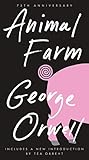
Animal Farm — George Orwell (1945)
Orwell’s political fable — the animals of Manor Farm overthrow their human farmer, establish a republic with the maxim ‘All animals are equal,’ and watch the pigs gradually rewrite that maxim to read ‘but some animals are more equal than others.’ The most perfect political satire in English: every move in the revolution’s betrayal is recognisable from actual historical revolutions, and the allegory is transparent enough to be unmistakeable and specific enough to be exact.
Satire of Bourgeois America
Babbitt — Sinclair Lewis (1922)
Lewis’s portrait of the American businessman — George F. Babbitt of Zenith, whose entire inner life is constituted by the conformist commercial culture around him. Lewis’s satire of ‘boosterism,’ the American belief that civic participation, business success, and social conformity are synonymous virtues, is the most sustained attack on the American middle class in the twentieth-century novel. The character gave his name to a type: a ‘babbitt’ is now a conformist, an uncritical adherent to middle-class values.
Rabbit, Run — John Updike (1960)
Updike’s portrait of Harry ‘Rabbit’ Angstrom, a former high school basketball star whose adult life as a Toyota salesman and husband has nothing to offer the version of himself he remembers — and who repeatedly runs away from his responsibilities. Updike’s satire of American suburban life is more melancholy than Lewis’s and more psychologically complex; Rabbit is both a critique of American masculine fantasy (the conviction that a man should always have the option to start over) and a sympathetic portrait of a man who cannot live in the life he has.
Dark Comedy
We Need to Talk About Kevin — Lionel Shriver (2003)
The darkest and most uncomfortable novel in this list — Eva’s retrospective account of her son Kevin, who committed a school massacre at sixteen, is a dark comedy of motherhood (Eva has never felt what she was supposed to feel; Kevin has always seemed to know this) and an interrogation of the relationship between a mother’s ambivalence and her child’s violence. Shriver’s prose is sharp and self-aware; the novel is disturbing precisely because it is also very funny about how inadequate the available scripts for motherhood are.
American Dream Satire
The Human Stain — Philip Roth (2000)
The third novel of Roth’s American Trilogy — Coleman Silk, a classics professor accused of racism who is eventually revealed to have spent his life passing as white (he is Black), is Roth’s most complex satirical figure: a man who chose to live inside the American myth of self-invention, and who is destroyed by the same political culture that the myth produces. Less immediately comic than Babbitt but the most structurally complex satire in this list.
How Satire Tells the Truth by Lying
Satire is the strangest of literary modes: it lies in order to tell the truth, exaggerating and distorting reality so that we can finally see it clearly. The satirist takes some feature of the world — a war, a social pretension, a cruelty we have grown used to — and pushes it past the point of plausibility until its absurdity, previously hidden by familiarity, becomes impossible to ignore. Heller’s Catch-22 does not describe war as it literally is; it builds a machine of bureaucratic insanity so perfect that it captures a truth about institutional logic that sober realism could never reach. This is satire’s central paradox and its great power: by departing from literal accuracy, it arrives at a deeper accuracy, the kind that lodges in the reader’s mind and changes how they see. The exaggeration is not a flaw to be excused but the very mechanism of insight, a way of making the invisible visible by enlarging it. We accept the distortion because we recognize, underneath it, the thing being distorted — and the shock of that recognition is what satire is for. It is a fundamentally moral mode, even when it appears flippant or cruel, because it depends on the reader sharing, at some level, the satirist’s sense that things ought to be otherwise. To laugh at a great satire is to assent to a judgment about the world. That is why the form has endured from Swift to the present: it offers a kind of truth-telling that direct statement cannot, smuggling serious indictment past our defences inside the Trojan horse of comedy.
The Uses of Dark Comedy
Dark comedy occupies the unsettling territory where laughter and horror meet, and its existence raises an obvious question: why would anyone want to laugh at death, cruelty, despair, and the bleakest facts of human existence? The answer is that dark comedy is one of the oldest and most effective human responses to the unbearable — a way of confronting what would otherwise overwhelm us by refusing it the dignity of solemnity. To laugh at horror is not to deny it but to gain a measure of mastery over it, to assert the human spirit’s stubborn refusal to be crushed even by the things that ought to crush it. The gallows humour that flourishes in war, in hospitals, in oppressive regimes, is not callousness but survival, and the dark comedies on this list channel that same impulse into art. They let readers approach subjects — futile death, systemic absurdity, private despair — that earnest treatment would make too painful to bear, and the laughter they provoke is a release valve that makes the underlying truth endurable. There is also a sharp honesty in the mode: it refuses the consolations of sentiment and insists on looking directly at the worst, finding in it not meaning, necessarily, but at least the grim comedy of incongruity. This is why dark comedy so often feels truer than tragedy or triumph; it matches the actual texture of a world that is, by turns, terrible and ridiculous. The best of it leaves the reader laughing and disturbed in equal measure — which is exactly the complex, clear-eyed response that the human condition, examined honestly, tends to produce.
What Satire Indicts
Every satire is aimed at a target, and reading these books well means recognizing what each one is attacking — for satire is never merely playful but always an act of criticism, a weapon pointed at some folly, vice, or injustice the writer finds intolerable. The targets gathered here form a kind of catalogue of modern discontents. There is the satire of institutional and bureaucratic madness, exemplified by the war machine of Catch-22, in which the systems built to serve human ends acquire a deranged logic of their own and grind the individuals caught in them to nothing. There is the satire of social pretension and bourgeois hypocrisy, which skewers the vanities, snobberies, and self-deceptions of the comfortable classes and exposes the gap between what people profess and what they do. And there is the satire of national myth and the corrupted dream of success, which turns its irony on the very ideals a society tells itself it lives by, revealing the emptiness or cruelty beneath the slogans. Identifying the target sharpens the reading, because it reveals the moral seriousness underneath the comedy: the satirist mocks because they care, and the laughter is in the service of a judgment about how things ought to be. To read satire passively, for the jokes alone, is to miss half of it; to read it actively, attentive to what is being indicted and why, is to receive the full charge of its argument. The books on this list endure because their targets endure — bureaucracy, pretension, hypocrisy, and the hollowing of ideals are perennial, and so the satires aimed at them never go out of date.
Reading Order
Start accessible: Candide → Animal Farm → Babbitt.
Dark and complex: We Need to Talk About Kevin → Rabbit, Run → The Human Stain.
Complete: Candide → Animal Farm → Babbitt → Rabbit, Run → We Need to Talk About Kevin → The Human Stain.
Frequently Asked Questions
What is the best satirical novel to start with?
Candide (1759) by Voltaire is the most concentrated satire in Western literature — Candide's education in the idea that 'this is the best of all possible worlds' is tested by earthquake, war, inquisition, and slavery, and Voltaire's mockery of complacent optimism is still the most devastating philosophical comedy in the language. Animal Farm (1945) by George Orwell is the most widely read political satire — ninety pages, a simple allegory, and one of the clearest statements of how revolutions reproduce the oppression they overthrow. Both can be read in a single sitting.
What is We Need to Talk About Kevin about?
We Need to Talk About Kevin (2003) by Lionel Shriver is narrated by Eva, whose sixteen-year-old son Kevin committed a school massacre, and is structured as letters she writes to her estranged husband about Kevin's childhood. Shriver's novel is a dark comedy of motherhood — Eva has never loved Kevin in the way she felt she should, has always suspected something was wrong with him, and is now left to survive in a community that blames her for what he did. The novel asks whether Kevin was born evil or made evil, whether Eva's ambivalence made him what he is, and whether a mother can be honestly held responsible for her child's choices.
What makes a good satirical novel?
The best satirical novels combine two things: a specific, recognisable target (institutional optimism, political corruption, bourgeois conformity, bureaucratic absurdity) and a formal strategy that makes that target ridiculous. Voltaire uses the philosophical picaresque (Candide blunders from one absurdity to another, each of which disproves his mentor's optimism). Orwell uses the fable (animals with human vices in transparent disguise). Shriver uses the epistolary novel (letters that gradually reveal what the writer is unable to say directly). The target and the form are inseparable in the best satire.
What is Babbitt about?
Babbitt (1922) by Sinclair Lewis follows George F. Babbitt, a real estate agent in the fictional Midwestern city of Zenith — a man so thoroughly shaped by the conformist values of his commercial culture (boosters, Rotary clubs, the belief that business success is the highest human good) that he has no inner life that does not echo those values. His brief, unsuccessful rebellion against his conformity — a half-hearted affair, some liberal politics — is the novel's subject, and Lewis's satire of American middle-class culture is the most sustained and most accurate in American fiction. Lewis won the Nobel Prize in 1930.