Best Scottish Fiction: Essential Novels from Scotland
The best Scottish fiction — from Shuggie Bain and The Prime of Miss Jean Brodie to The Wasp Factory and Eleanor Oliphant Is Completely Fine. Essential Scottish novels.
Scottish literature has produced some of the most distinctive voices in British fiction — from the Edinburgh precision of Muriel Spark and the Glasgow social realism of James Kelman and Douglas Stuart to the Gothic psychological horror of Iain Banks and the contemporary wit of Gail Honeyman. The city of Glasgow — post-industrial, economically devastated, darkly comic in its self-presentation — has been particularly productive as a literary setting, generating a tradition of realist fiction about poverty, masculinity, and survival that has no equivalent in English literature.
The Essential List
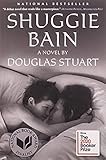
Shuggie Bain — Douglas Stuart (2020)
The defining contemporary Scottish novel. Stuart’s debut — set in the Glasgow schemes and tower blocks of the 1980s — follows the relationship between Agnes Bain, whose alcoholism is destroying her family, and her youngest son Shuggie, whose love for her is the most sustained and unrewarded devotion in recent fiction. The novel is simultaneously a social document (the devastation of deindustrialisation, the destruction of working-class community, the specific gendered violence of deprivation) and an intensely personal narrative: Stuart based it on his own childhood. Its combination of tenderness and horror, beauty and degradation, is unlike anything else in contemporary British fiction. Won the Booker Prize.
The Prime of Miss Jean Brodie — Muriel Spark (1961)
The essential Edinburgh novel and the most formally accomplished Scottish work of the twentieth century. Miss Jean Brodie, a teacher at the Marcia Blaine School for Girls in 1930s Edinburgh, selects a group of girls to be her ‘Brodie set’ — educated in her particular vision of beauty, culture, and fascism. The novel is structured around the revelation (given at the outset) that one of the girls will eventually betray Brodie, and the mystery of which girl and why. Spark’s method — multiple time scales, repeated ironic juxtapositions — is a miniature masterpiece of formal intelligence. The most influential Scottish novel of the mid-twentieth century.
The Wasp Factory — Iain Banks (1984)
The most disturbing debut in contemporary Scottish fiction. Frank Cauldhame, a sixteen-year-old on a Scottish island, has killed three younger relatives, maintains an elaborate ritual device that predicts the future, and is awaiting the return of his imprisoned brother. Banks’s novel is Gothic horror grounded in the specifics of a remote Scottish landscape; its revelation of Frank’s secret is one of the most shocking endings in British fiction. The novel demonstrates the dark, psychologically extreme imagination that Banks would deploy throughout his career in both literary and science fiction.
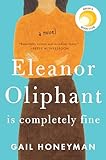
Eleanor Oliphant Is Completely Fine — Gail Honeyman (2017)
The most commercially successful Scottish literary novel of the 2010s. Eleanor’s extreme social awkwardness, her rigid routines, and the trauma that explains them are revealed gradually through her narration, which is simultaneously funny and heartbreaking. Honeyman’s Glasgow is less violent and more socially observed than Stuart’s — the specific world of urban professional loneliness, the difficulty of human connection in modern city life — but no less precisely rendered. The novel’s balance of comedy and compassion is the most accomplished aspect of its craft.
Piranesi — Susanna Clarke (2020)
The most formally original Scottish fantasy of its decade. Piranesi lives alone in a House of infinite halls filled with statues, where tides flood the lower floors and birds nest in the upper ones. He has been told there are only two people in the world. His investigation into the nature of his world — and his own identity — unfolds as a mystery that gradually reveals itself as something more disturbing than a puzzle. Clarke’s novel is short (272 pages), quietly written, and deeply strange; it is the only fantasy novel that is also a meditation on amnesia, identity, and the nature of the self. Clarke was born in Nottingham but lives in Edinburgh; the novel’s Scottish landscape is present, if hidden, in its atmosphere.
A Literature of Distinct Identity
Scottish fiction occupies a fascinating and sometimes fraught position — a literature written largely in English yet insistently distinct from the English tradition, the expression of a nation with its own history, languages, and identity that has long existed in a complex relationship with its more powerful neighbor to the south. To read Scottish fiction is to encounter a body of work that refuses to be subsumed into a generic British literature, that asserts its own concerns, voices, and sensibility, and that draws on cultural and linguistic resources unavailable to writers elsewhere. The distinctiveness has many sources: Scotland’s separate history and the long memory of its independence and its loss; the presence of the Scots language and dialect, which Scottish writers have used to render a voice quite unlike standard literary English; the particular landscapes, from Highland wilderness to industrial Lowland city, that have shaped the national imagination; and the recurring preoccupations — with class, with national identity, with the tension between Scotland and England, with a certain hard-edged realism and dark humor — that mark the tradition. This insistence on distinctness is itself part of the literature’s meaning, a refusal of cultural absorption and an assertion of a separate identity through the act of writing. For readers, the reward is an encounter with a tradition that feels genuinely its own, neither English nor merely regional but the literature of a nation, carrying the texture of a specific place and people and offering a perspective unavailable elsewhere in the English-speaking world. Scottish fiction proves that a shared language need not mean a shared literature, and that a distinct national voice can flourish within, and against, the dominant tradition that surrounds it.
The Voice of the Vernacular
One of the most distinctive and powerful features of Scottish fiction is its embrace of the vernacular — the use of Scots dialect, idiom, and the rhythms of actual Scottish speech to create a voice unmistakably its own and to assert the literary worth of a way of speaking long dismissed as inferior. Where much literary fiction defaults to a standard, neutral English, many of the most important Scottish writers have insisted on rendering the language as it is actually spoken in Scotland, with all its particular words, cadences, and grammar, and this choice carries enormous significance. It is, first, a matter of authenticity and power: the vernacular captures the reality of Scottish life and character with an immediacy and vigor that standard English cannot match, giving the fiction a voice that is vivid, distinctive, and alive. But it is also a political and cultural assertion, a refusal of the long-standing hierarchy that treated Scots as a degraded form of English fit only for comedy or condescension, and a claim that this language is fully capable of carrying serious literature and conveying the full range of human experience. By writing in the vernacular, Scottish authors validate the speech of ordinary Scottish people, dignify a culture and a class that literature had often ignored or patronized, and create work that could not have been written in any other idiom. The challenge this poses to some readers — the unfamiliar words, the phonetic spellings — is part of the point, requiring the reader to enter the world of the language rather than having it translated into the comfortable standard. The reward is access to a voice of extraordinary power and authenticity, and to a literature that has reclaimed its own tongue.
Hard Cities, Hard Truths
A significant strand of modern Scottish fiction is marked by an unflinching engagement with the harsher realities of Scottish life — particularly the experience of the post-industrial urban working class, with its poverty, addiction, violence, and struggle, rendered with a gritty realism and a black humor that have become hallmarks of the tradition. The decline of Scotland’s industrial economy left behind communities scarred by unemployment, deprivation, and despair, and a powerful current of Scottish writing has taken these realities as its subject, refusing to look away from the bleakness and instead confronting it directly, with honesty and often with a savage comic edge. This literature does not romanticize or sentimentalize; it shows the damage that economic and social forces inflict on individuals and communities, the cycles of poverty and addiction, the violence and hopelessness that can pervade lives lived at the margins. Yet it does so with a distinctive Scottish quality that lifts it above mere misery: a mordant, defiant humor that finds black comedy in the darkest circumstances, a refusal of self-pity, and a fierce humanity that insists on the dignity and complexity of even the most damaged lives. This combination of unsparing realism and dark wit gives modern Scottish fiction its particular power and its authenticity, capturing the texture of contemporary Scottish experience for those whom prosperity has passed by. It also performs an important function of witness, documenting lives and communities that more comfortable literatures ignore, and insisting that their hardships and their humanity deserve serious artistic attention. The hard truths of post-industrial Scotland, rendered with honesty and saving humor, are among the tradition’s most significant contributions to contemporary literature.
Glasgow vs. Edinburgh
Scottish fiction tends to divide between Glasgow and Edinburgh — not merely geographically but culturally. Glasgow fiction (Shuggie Bain, James Kelman’s How Late It Was, How Late, Alasdair Gray’s Lanark) is characterised by working-class realism, industrial darkness, and a prose style that insists on the vernacular. Edinburgh fiction (Spark, Stevenson, Conan Doyle) tends toward the formal, the Gothic, and the doubled — the city that presents its Georgian respectability while hiding its dark history. Both traditions are vital; together they represent the range of Scottish literary achievement.
Frequently Asked Questions
What is the best Scottish novel?
Shuggie Bain (2020) by Douglas Stuart is the defining contemporary Scottish novel — a portrait of Glasgow in the 1980s and of the love between a gay boy and his alcoholic mother that is simultaneously a social document and an intensely personal narrative. It won the Booker Prize. The Prime of Miss Jean Brodie (1961) by Muriel Spark is the essential Edinburgh novel and the most formally accomplished Scottish work of the twentieth century.
What is Shuggie Bain about?
Shuggie Bain (2020) by Douglas Stuart follows Hugh 'Shuggie' Bain, a sensitive, probably gay boy growing up in Glasgow's deprived estates in the 1980s, and his fierce love for his mother Agnes — beautiful, charismatic, alcoholic, unable to stay sober despite Shuggie's devotion. The novel is a portrait of Thatcherite Glasgow (the deindustrialisation, the unemployment, the destroyed communities), a study of alcoholism's effects on a family, and a love story between a mother and son. Douglas Stuart based it on his own childhood; it won the Booker Prize for Fiction in 2020.
What is The Wasp Factory about?
The Wasp Factory (1984) by Iain Banks is the debut novel that announced one of the most significant Scottish writers of his generation. Frank Cauldhame, a sixteen-year-old on a Scottish island, is a strange, violent child who has killed three younger relatives and who maintains an elaborate ritualistic 'wasp factory' — a device that predicts the future through the deaths of wasps. The novel's revelation of Frank's secret is one of the most disturbing endings in contemporary British fiction. Banks went on to write both mainstream literary fiction (as Iain Banks) and science fiction (as Iain M. Banks); The Wasp Factory demonstrates the Gothic imagination that runs through both.
What is Eleanor Oliphant Is Completely Fine about?
Eleanor Oliphant Is Completely Fine (2017) by Gail Honeyman — a Scottish novel set in Glasgow — follows Eleanor, a woman in her early thirties who lives an extremely structured, socially isolated life, and the sequence of events (a friendship with a colleague, a crush on a musician) that begins to disrupt her self-imposed isolation. The novel gradually reveals the trauma behind Eleanor's rigidity. It is simultaneously a comedy of social awkwardness, a portrait of loneliness, and a story about recovery that never becomes sentimental. One of the most commercially successful British novels of the 2010s.