Best Scandinavian Crime Fiction: Essential Nordic Noir Reading List
The best Scandinavian crime fiction — from The Girl with the Dragon Tattoo and A Man Called Ove to Anxious People. The essential Nordic noir reading guide.
Scandinavian crime fiction — Nordic noir — became a global phenomenon in the 2000s, driven by Stieg Larsson’s Millennium trilogy and quickly followed by translations of a rich tradition that had been building in Sweden and Norway since the 1960s. What distinguishes Nordic noir from Anglo-American crime fiction is its social and political engagement: the crimes are symptoms of systemic failures in the welfare state, and the investigators are often themselves damaged by the systems they work within.
Swedish and Norwegian crime fiction in particular has shaped what English-language readers expect from the genre: atmospheric winter settings, psychologically complex detectives, violence against women as a systemic rather than individual problem, and a political seriousness that genre fiction in other traditions rarely achieves.
The Defining Work
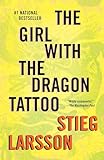
The Girl with the Dragon Tattoo — Stieg Larsson (2005)
The novel that made Nordic noir a global genre. Journalist Mikael Blomkvist, hired by the patriarch of a wealthy Swedish family to investigate a decades-old disappearance, teams with Lisbeth Salander — one of the most distinctive characters in contemporary crime fiction: a brilliant researcher with photographic memory, a survivor of systematic institutional abuse, and a capacity for revenge that is both terrifying and (in context) comprehensible. Larsson’s portrait of Sweden’s elite — its corruption, its violence against women, the gap between its progressive image and its reality — is the political core beneath the compelling mystery.
The Millennium trilogy (Dragon Tattoo → The Girl Who Played with Fire → The Girl Who Kicked the Hornet’s Nest) is best read in order.
Contemporary Swedish Fiction
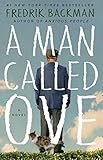
A Man Called Ove — Fredrik Backman (2012)
The most widely read contemporary Swedish novel outside crime — a comedy about a grumpy, suicidal widower in a Swedish suburb who cannot die because his neighbours keep needing him. The novel is about grief and love; Ove’s irascibility is a form of loyalty to his dead wife, and the novel’s warmth comes from showing what this man, who appears merely difficult, is actually preserving. The most accessible starting point for Swedish literary fiction generally.
Anxious People — Fredrik Backman (2020)
Backman’s third major novel — a comedy that begins with a botched bank robbery and a hostage situation in an apartment viewing, and becomes a meditation on the anxiety, loneliness, and unexpected connection of contemporary Swedish life. More formally inventive than A Man Called Ove, with a non-linear structure that serves the comedy.
Why the Welfare State Makes the Best Crime Scene
The paradox at the heart of Nordic noir is that the world’s most peaceful, prosperous, egalitarian societies produce its bleakest crime fiction, and the paradox is the point. In American noir, violence is expected — the system is openly brutal, and crime fiction documents it. In the Scandinavian tradition, the social-democratic state has promised to abolish the very conditions that produce crime, so every murder is also an indictment: evidence that beneath the immaculate surface of the welfare state, something has been left to rot. This is why the genre’s investigators spend as much time exposing institutions — guardianship systems, psychiatric authorities, security services, respectable industrial dynasties — as catching killers. Larsson’s trilogy is the purest case: Salander’s real antagonist is not any individual but the Swedish state apparatus that abused her under the cover of protecting her, and the crimes of the Vanger family are inseparable from the country’s buried fascist history. The genre’s famous bleakness, in other words, is not an aesthetic of weather and darkness, though the long winters help; it is the bleakness of betrayed idealism. Readers raised on Anglo-American crime fiction often notice that Nordic noir feels angrier — that anger is political, and it is the tradition’s engine.
Backman and the Other Sweden
Including Fredrik Backman on a Nordic noir list is a deliberate act of triangulation rather than a category error, because his comedies are built from exactly the same material as the crime novels — they simply process it differently. The suicidal grief at the centre of A Man Called Ove, the bank robbery and hostage standoff that open Anxious People, the failing social safety nets and lonely apartment blocks that populate both: in a Nesbø novel this is the setup for atrocity, and in Backman it is the setup for reluctant community. Reading Backman alongside Larsson shows you the two faces of the same society — the noir tradition documenting where the Swedish social contract fails catastrophically, and Backman documenting where ordinary, irritable, grieving people quietly repair it themselves. The pairing also corrects the impression, common among readers who know Sweden only through its crime exports, that Scandinavian fiction is monotonally grim. The same culture that produced Lisbeth Salander produced Ove, and both characters answer the same question — what happens to people the system fails? — one with vengeance, one with neighbours.
Where to Go Deeper into Nordic Noir
The three books above are an entry point to a tradition with real depth behind it. The genre’s modern foundations were laid in the 1960s and 70s by Maj Sjöwall and Per Wahlöö, whose ten-novel Martin Beck sequence invented the template — the procedural as decade-long social autopsy — that everything since has followed. Henning Mankell’s Inspector Wallander series carried that template to international success in the 1990s, pairing methodical investigation with a melancholy, diabetic, opera-listening detective who has become the archetype of the damaged Nordic investigator. Jo Nesbø’s Harry Hole novels represent the tradition’s commercial peak after Larsson — darker, faster, more violent, and best begun with The Redbreast rather than the first two books. Beyond these pillars, the genre rewards exploration by country: Iceland’s Arnaldur Indriðason for the most desolate atmospheres, Denmark’s Peter Høeg for the literary high-water mark in Smilla’s Sense of Snow, Norway’s Karin Fossum for psychological close-ups, Sweden’s Camilla Läckberg for the domestic-thriller strain. The reliable pattern across all of them: start with the series detective’s defining case rather than strict publication order, and expect the real subject to be the society, not the corpse.
Reading Order
Crime start: The Girl with the Dragon Tattoo (Millennium trilogy) → explore Mankell’s Wallander series.
Literary start: A Man Called Ove → Anxious People → The Girl with the Dragon Tattoo.
Nordic noir foundation: The Girl with the Dragon Tattoo → A Man Called Ove → Anxious People.
Frequently Asked Questions
What is Nordic noir?
Nordic noir (also called Scandinavian crime fiction) refers to the tradition of crime and thriller fiction from Sweden, Norway, Denmark, Finland, and Iceland that rose to global popularity in the 2000s with Stieg Larsson's Millennium trilogy. The genre is characterised by dark, atmospheric settings (often in winter), psychologically complex investigators, social critique of the welfare state and its failures, a focus on violence against women and children as a systemic problem rather than individual aberrations, and a tone that is bleaker and more politically engaged than British or American crime fiction.
What is The Girl with the Dragon Tattoo about?
The Girl with the Dragon Tattoo (2005) by Stieg Larsson is the first novel in the Millennium trilogy. Journalist Mikael Blomkvist is commissioned by Henrik Vanger to investigate the forty-year-old disappearance of his grandniece from a family island. He is assisted by Lisbeth Salander, a brilliant but socially unconventional researcher who has been under state guardianship since childhood. The novel is a complex mystery, a portrait of a corrupt Swedish establishment, and the introduction of one of the most compelling characters in contemporary crime fiction.
What is A Man Called Ove about?
A Man Called Ove (2012) by Fredrik Backman is not a crime novel but a Swedish literary comedy about a curmudgeonly widower who finds himself unable to die despite repeated attempts, because the neighbourhood keeps needing him. The novel is a portrait of grief, loneliness, and the unexpected bonds that form between people who think they want to be left alone. It is the most widely read contemporary Swedish novel outside the crime genre and the most accessible starting point for readers new to Scandinavian fiction.
Who are the most important Scandinavian crime writers?
Stieg Larsson (Sweden) created the Millennium trilogy and is credited with the global popularity of Nordic noir. Jo Nesbø (Norway) is the most commercially successful Norwegian crime writer, with his Harry Hole series. Henning Mankell (Sweden) established the international template with his Inspector Wallander series. Camilla Läckberg (Sweden), Gunnar Staalesen (Norway), and Ann Cleeves (UK, Shetland series) extended the form. More literary Nordic crime is represented by writers like Karin Fossum (Norway) and Peter Høeg (Denmark, Smilla's Sense of Snow).