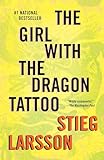
Editors Reads Verdict
Larsson's posthumous debut is a sprawling, compulsively readable thriller whose real engine is Lisbeth Salander — one of crime fiction's most original and compelling creations — whose righteous fury at institutional violence against women gives the book its moral core.
What We Loved
- Lisbeth Salander is a genuinely original creation in crime fiction
- The locked-room family mystery is clever and satisfying
- The Swedish corporate and political milieu is richly and accurately rendered
- The critique of institutional misogyny is explicit and unflinching
Minor Drawbacks
- The opening section — Blomkvist's financial journalism story — is slow and demanding
- At 672 pages, the novel is longer than its story requires
- Some sexual violence sequences are more graphic than necessary
Key Takeaways
- → Institutional systems designed to protect women consistently fail them
- → Competence and trauma are not mutually exclusive — in fact, they often coexist
- → Financial journalism and investigative crime overlap more than their practitioners admit
- → Family secrets sustained across generations require active maintenance and willing complicity
- → Hacker ethics and journalistic ethics share a commitment to truth over authority
| Author | Stieg Larsson |
|---|---|
| Publisher | Knopf |
| Pages | 672 |
| Published | September 16, 2008 |
| Language | English |
| Genre | Mystery, Thriller, Crime Fiction |
| Difficulty | Intermediate |
| Best For | Crime and thriller readers who enjoy complex investigations, morally compelling characters, and fiction that takes seriously the structural dimensions of violence against women. |
How The Girl with the Dragon Tattoo Compares
The Girl with the Dragon Tattoo at a glance against 3 similar books readers weigh alongside it.
| Book | Author | Rating | Best for |
|---|---|---|---|
| The Girl with the Dragon Tattoo (this book) | Stieg Larsson | ★ 4.2 | Crime and thriller readers who enjoy complex investigations, morally compelling |
| Gone Girl | Gillian Flynn | ★ 4.2 | Readers who want their thrillers to also function as literary fiction and |
| In the Woods | Tana French | ★ 4.2 | Literary fiction readers who enjoy crime, fans of psychologically complex |
| The Girl on the Train | Paula Hawkins | ★ 3.9 | Thriller readers who enjoy unreliable narrators, domestic suspense, and |
Sweden’s Hidden Violence
The original Swedish title — Men Who Hate Women — is more honest than the international marketing version. Stieg Larsson’s first novel is explicitly about the violence that Swedish society (and by extension all Western societies) directs at women: the violence of individual attackers, but more importantly the violence of institutions that systematically fail to protect, believe, or advocate for female victims.
Larsson spent his career as a journalist investigating far-right extremism in Sweden. He wrote the Millennium trilogy in his spare time and died before any of it was published. The books became a global phenomenon partly because of their craft — Lisbeth Salander is one of the most compelling characters in recent crime fiction — and partly because Larsson understood something that most crime novels are content to ignore: the crimes aren’t random. They have a social architecture.
Lisbeth Salander
Everything in The Girl with the Dragon Tattoo that endures is Lisbeth. She is a genius-level hacker, a ward of the state due to a verdict of mental incompetence that is itself a form of institutional violence, and a person who has developed extraordinary survival mechanisms in response to a life of being harmed by those who were supposed to help her.
She is not likable in any conventional sense. She is brilliant, socially alien, physically dangerous when provoked, and entirely uninterested in performing the emotional availability others expect from her. She is also, finally, someone who imposes costs on the men who harm women — and that righteous capacity is the source of the extraordinary reader investment she generates.
The Investigation
The mystery — what happened to Harriet Vanger on the day she disappeared from a family island decades ago? — is well-constructed and satisfying. The Vanger family, wealthy and dysfunctional, maps onto the novel’s broader themes about institutional complicity and family silence.
The book’s opening section, tracking Mikael Blomkvist’s financial journalism career, is the weakest: dense with Swedish business politics and slow to generate forward momentum. Readers who persist are well rewarded.
A Legacy
The Millennium trilogy spawned countless imitators, a film series in two languages, and a genuine cultural conversation about crime fiction’s relationship to gender politics. The franchise’s success fundamentally shifted what publishers believed readers wanted from the genre.
Two Investigators, Two Methods
The novel’s structure depends on the pairing of its two leads, and the contrast between them is much of its pleasure. Mikael Blomkvist is a disgraced financial journalist, methodical and principled, who approaches the decades-old disappearance of Harriet Vanger with the patient document-sifting of his trade; Lisbeth Salander is a feral, brilliant hacker who attacks the same mystery through illicit surveillance and pure pattern recognition. Larsson plays their methods against each other — the establishment investigator working within the rules and the outsider working entirely outside them — and the case cracks open only when their approaches combine. The partnership also generates the series’ emotional charge, as the deeply guarded Salander warily lets a trustworthy man into her orbit. Their collaboration, unequal and uneasy, is the engine that converts a slow-building procedural into a genuinely gripping one, and it sets up the dynamic that drives the entire Millennium trilogy.
The Locked-Room Mystery
At its core, the Harriet Vanger case is a classic closed-circle, locked-room mystery transplanted into the chilly precincts of Nordic noir, and Larsson constructs it with real care. A girl vanishes from an island while a bridge accident has sealed off all exits; the suspects are the members of a single wealthy, dysfunctional family, the Vangers, whose secrets reach back to the Second World War and Sweden’s quiet history of Nazi sympathy. Larsson uses the family as a microcosm of his larger themes — institutional rot, buried violence, the corruption that festers behind respectable facades — so that solving the puzzle means excavating a hidden national history as much as a personal crime. The mystery is genuinely satisfying, its clues fairly laid and its solution disturbing, and it demonstrates that beneath the social commentary Larsson was a skilled practitioner of traditional detective-story mechanics.
The Flawed but Forceful Whole
It would be dishonest not to note the novel’s real flaws, which are as conspicuous as its strengths. The opening hundred pages, dense with the minutiae of Swedish financial journalism and Blomkvist’s libel case, are notoriously slow, and Larsson’s prose — at least in translation — is functional rather than elegant, prone to exhaustive detail about coffee, sandwiches, and IKEA furniture. The book is overlong and occasionally lurid in its depiction of the violence it means to condemn. Yet these weaknesses are overwhelmed by the propulsive force of the central mystery and, above all, by Salander. Larsson’s journalistic instinct for the social architecture of crime gives the thriller a weight and seriousness that most of its genre lacks, and once the engine turns over, the book becomes genuinely difficult to put down. It is imperfect and compulsive in equal measure.
A Posthumous Phenomenon
The story behind The Girl with the Dragon Tattoo is nearly as remarkable as the novel itself. Stieg Larsson, a Swedish journalist who spent his career investigating right-wing extremism, wrote the Millennium trilogy in his spare time and died of a heart attack in 2004, before any of the books were published and before he could witness their staggering success. The trilogy went on to sell tens of millions of copies worldwide, spawn Swedish and Hollywood film adaptations, and help ignite the global boom in Scandinavian crime fiction. Its commercial impact fundamentally reshaped what publishers believed thriller readers wanted, demonstrating an appetite for crime novels with explicit social politics and morally complex, damaged protagonists. The series was later continued by another author, but Larsson’s original remains the definitive work, and Lisbeth Salander endures as one of the most original and influential characters in twenty-first-century popular fiction.
Our rating: 4.2/5 — A sprawling, compulsive crime thriller whose flaws are real but whose central creation — Lisbeth Salander — is one of the most original characters in contemporary fiction.
Reading Guides
- Books Like The Girl with the Dragon Tattoo
- Books Like And Then There Were None: Island Mysteries, Closed Circles, and Ingenious Plots
- Books Like Tana French: 12 Literary Crime Novels for Dublin Murder Squad Fans
- Books Like The Silence of the Lambs: 12 Psychological Thrillers to Read Next
- 15 Books Like The Girl with the Dragon Tattoo: Best Thrillers to Read Next
- Stieg Larsson Books in Order: Millennium Series Reading Guide (2026)
- Best Thriller Books of All Time: 20 You Won
Frequently Asked Questions
What is "The Girl with the Dragon Tattoo" about?
Disgraced journalist Mikael Blomkvist investigates the decades-old disappearance of a wealthy family's niece, partnering with the brilliant and deeply damaged Lisbeth Salander.
Who should read "The Girl with the Dragon Tattoo"?
Crime and thriller readers who enjoy complex investigations, morally compelling characters, and fiction that takes seriously the structural dimensions of violence against women.
What are the key takeaways from "The Girl with the Dragon Tattoo"?
Institutional systems designed to protect women consistently fail them Competence and trauma are not mutually exclusive — in fact, they often coexist Financial journalism and investigative crime overlap more than their practitioners admit Family secrets sustained across generations require active maintenance and willing complicity Hacker ethics and journalistic ethics share a commitment to truth over authority
Is "The Girl with the Dragon Tattoo" worth reading?
Larsson's posthumous debut is a sprawling, compulsively readable thriller whose real engine is Lisbeth Salander — one of crime fiction's most original and compelling creations — whose righteous fury at institutional violence against women gives the book its moral core.
Ready to Read The Girl with the Dragon Tattoo?
Check the current price on Amazon.
Check Price on Amazon (paid link)Prices and availability are subject to change. See Amazon for current price.
Review last updated: