Books Like Tana French: 12 Literary Crime Novels
Tana French writes crime fiction that reads like literary fiction. These books share her atmospheric prose, psychologically complex detectives, and moral ambiguity.

There is a standard against which crime fiction is often measured — plot mechanics, body count, twist frequency — and Tana French is not especially interested in it. Her Dublin Murder Squad novels are literary novels first: they are built around consciousness rather than event, around what it costs a detective to pursue a case rather than simply whether the case is solved. The prose is dense and atmospheric. The narrators are unreliable not through authorial manipulation but through self-deception — each detective is the last to understand their own blind spots. Ireland is not a backdrop in these novels. It is a presence: the weight of its history, the specific psychic weather of its post-boom crisis years, the way its social configurations enforce silence and complicity.
What makes French unusual is the structure of the series itself. Each novel is narrated by a different detective from the squad, and the narrator of one novel often appears as a secondary character in another — sometimes in a damaging light. Reading the series in order creates a cumulative portrait of an institution and its human cost that no single novel could achieve alone.
If you haven’t read French yet, start with In the Woods. It is the entry point, the novel that establishes the Dublin Murder Squad and introduces the series’ central concerns. The six novels form a natural reading journey; the recommendations below are for readers who want to find the same quality of experience elsewhere.
For the Unreliable Narrator
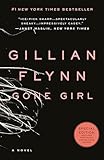
#1 — Gone Girl by Gillian Flynn
The most formally dazzling unreliable-narrator thriller of the past twenty years. Amy Dunne disappears on her wedding anniversary; her husband Nick becomes the prime suspect; the narrative alternates between Nick’s present-tense account and Amy’s diary. What French does through psychological accumulation and self-deception, Flynn does through structural engineering — the reader is deceived at the level of form, and the mid-book revelation is earned rather than merely surprising. The portrait of a marriage as a system of mutual performance has the same unflinching quality as French’s portraits of institutional life. Flynn understands, as French does, that people construct narratives about themselves that protect them from what they actually are.
#2 — The Secret History by Donna Tartt
A group of classics students at a small Vermont college, under the influence of a charismatic professor, commit a murder. The novel tells you this on the first page. What follows is the excavation of how it happened and what it does to each of them. Tartt’s closed-world setting — the insular academic community with its own moral atmosphere — maps almost exactly onto French’s boarding school in The Secret Place and the manor house of The Likeness. Both writers are interested in the same question: what happens to individual conscience when group loyalty becomes its own ethics. The Secret History is the obvious companion to any reader who found the psychological claustrophobia of French’s closed-world novels more compelling than the detective plots that contain them.
For the Literary Crime Quality
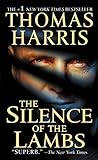
#3 — The Silence of the Lambs by Thomas Harris
French has cited Harris as an influence, and the connection is legible: both writers use the procedural investigation as a vehicle for something more unsettling — a portrait of a mind being opened and altered by what it encounters. FBI trainee Clarice Starling negotiating with Hannibal Lecter for case insights is the same dynamic as French’s detectives negotiating with hostile witnesses, with institutional superiors, with their own pasts: an intelligence operating under pressure in a context designed to constrain it. Harris’s novel has the psychological depth that most crime fiction gestures toward without achieving. The Lecter-Clarice dynamic is not a thriller device; it is a study of two people reading each other with extraordinary care.
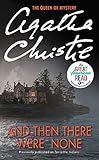
#4 — And Then There Were None by Agatha Christie
Ten strangers are invited to a remote island and begin to die one by one. Christie’s most formally perfect novel, and the foundation of an entire architecture of closed-world crime fiction. French’s use of closed or semi-closed settings — the boarding school, the ghost estate, the manor house — inherits directly from the tradition Christie established here. What And Then There Were None offers that Christie’s other novels do not is genuine psychological unease alongside the puzzle. The suspects are not drawing-room types to be sorted; they are people being destroyed by guilt, and the atmosphere of the island as a moral trap is something French readers will recognize immediately. It is also among the most technically astonishing crime novels ever written: a puzzle that genuinely cannot be predicted.
For the Detective Procedural
#5 — The Black Echo by Michael Connelly
LAPD Detective Harry Bosch operates in a world of institutional resistance and personal damage that French readers will recognize. The first Bosch novel — a body in a drainage tunnel, a Vietnam veteran, a case that expands to something much larger — establishes the template: a detective defined by his wounds, an investigation that requires him to spend himself to complete it. Connelly’s Los Angeles has the same atmospheric specificity that French’s Dublin does. Both writers understand that setting is psychology — that where a detective works shapes what kind of case they can see. The procedural infrastructure in Connelly is impeccable; the emotional cost to Bosch is French’s territory transplanted to the American West Coast.
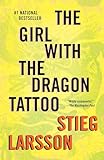
#6 — The Girl with the Dragon Tattoo by Stieg Larsson
The investigation of a forty-year-old disappearance in a locked-island family compound is one of the great cold-case procedurals, and Lisbeth Salander is one of the most psychologically distinctive investigators in contemporary crime fiction. What French readers will find here is the same quality of character study embedded in procedural investigation: the case matters because of what it reveals about the people pursuing it. Larsson’s anger at institutional violence against women — the state that failed Lisbeth, the family that concealed its crimes — has the same moral urgency as French’s portraits of institutional corruption in the murder squad. The novel is denser and longer than French’s work, but the rewards for patient reading are comparable.
The Dublin Murder Squad: A Reading Map
For readers who want to complete the full French experience, the six Dublin Murder Squad novels form a sequence best read in order.
#7 — In the Woods by Tana French
The entry point. Rob Ryan, a Dublin detective, investigates a murder in the wood where he survived a childhood trauma he cannot remember. French establishes all the series’ central concerns here: the unreliable detective-narrator, Ireland as psychological landscape, the investigation that opens old wounds rather than closing them. The ending remains one of the most discussed in contemporary crime fiction. Some readers find it unsatisfying; this is intentional — French does not offer the resolutions that the genre conventionally promises.
#8 — The Likeness by Tana French
Detective Cassie Maddox finds a dead woman using an identity she once used undercover. To investigate, she goes back undercover in the dead woman’s life. The most formally inventive of the series and the closest to literary Gothic fiction — the decaying manor house, the tight-knit household, the question of what it costs a self to inhabit another identity for long enough.
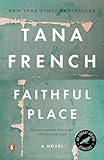
#9 — Faithful Place by Tana French
Frank Mackey, the most controlled and combative of French’s narrators, is pulled back into the Dublin family he escaped. The most emotionally intense novel in the series — French’s portrait of the working-class Liberties, of the violence families do to themselves, of a detective who cannot see his own blind spots, is among her finest work.
#10 — Broken Harbor by Tana French
Detective Mick Kennedy, French’s most rule-bound and ostensibly stable narrator, investigates a family attacked in a ghost estate. The most plot-driven entry in the series and the most topically specific — the ghost estate as physical evidence of Ireland’s economic collapse is one of the great settings in contemporary crime fiction.
#11 — The Secret Place by Tana French
A Dublin girls’ boarding school, a year-old murder, a secret-sharing board. French’s study of adolescent female loyalty and its moral limits. The dual timeline — the day of the investigation and the year before the murder — builds to a conclusion that retroactively recasts everything that came before.
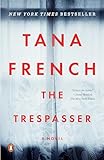
#12 — The Trespasser by Tana French
Detective Antoinette Conway, the most isolated and combative of French’s narrators, investigates what looks like a routine domestic murder. The most overtly thriller-paced novel in the series and the most explicit about institutional hostility — Conway’s experience of the murder squad as a hostile environment gives this novel a political anger that the earlier books carry more quietly.
The Wider French Universe
French has written two standalone novels outside the Dublin Murder Squad. The Witch Elm (2018) is narrated not by a detective but by a victim — a charming, privileged man whose certainty about himself is dismantled by violence and its aftermath. It is the most formally experimental of her novels, and the darkest in its conclusions about class and luck. The Searcher (2020) follows a retired Chicago cop who has moved to rural Ireland and cannot escape either his past or a neighbor’s request. It is the most understated of her novels, closer to Western in tone than to the Gothic of the earlier work. Neither is in this catalog, but both are essential reading for anyone who has exhausted the Murder Squad.
How to Choose Your Next Read
If you want the closest structural match: The Secret History — closed world, group psychology, a crime already named.
If you want literary procedural depth: The Silence of the Lambs or The Black Echo.
If you want the unreliable narrator at full force: Gone Girl.
If you want the puzzle architecture French inherits: And Then There Were None.
If you want to complete the French universe: read the six Murder Squad novels in order, starting with In the Woods.
For the Best True Crime Books
For the best true crime books — from In Cold Blood to contemporary investigative narrative — see our Best True Crime Books list.
For the full Tana French bibliography, reviews, and biography, visit the Tana French author page on Editors Reads.
Affiliate disclosure: Links to Amazon on this page are affiliate links. We earn a small commission at no extra cost to you. This does not influence our editorial recommendations.
Frequently Asked Questions
What books are most similar to Tana French?
The authors most similar to Tana French are Kate Atkinson for literary crime with structural ambition, Donna Tartt for psychological depth and prose quality, and Laura Lippman for character-driven American crime fiction. French occupies a rare space where literary fiction and crime fiction overlap, and Atkinson and Tartt come closest to matching that.
What crime novels have the same literary quality as Tana French?
Crime novels with the same literary quality as Tana French include The Secret History by Donna Tartt (psychological and beautifully written), A Fatal Grace and the Three Pines series by Louise Penny (character-driven, emotionally intelligent), and The Long Goodbye by Raymond Chandler (the gold standard of literary crime writing).
What should I read after completing the Dublin Murder Squad?
After the Dublin Murder Squad, most Tana French readers move to her standalone novels The Witch Elm and The Searcher. Beyond French, the Three Pines series by Louise Penny is the most recommended continuation for readers who want literary crime with strong sense of place. Kate Atkinson's Jackson Brodie series is another strong next step.
Who writes crime fiction similar to Tana French that I might have missed?
The most underrated authors writing in a similar vein to Tana French are Adrian McKinty (Belfast, The Chain), Jane Casey (London, Maeve Kerrigan series), and Steve Cavanagh (courtroom thrillers with literary ambition). All three combine strong sense of place with genuinely complex characters who carry the investigation beyond the puzzle.