Tana French Books in Order: Complete Dublin Murder Squad Reading Guide (2026)
All 8 Tana French books in order — the complete Dublin Murder Squad series plus her two standalones. Which book to start with, what order to read them, and why French is unlike any other crime writer.

Most crime fiction tells you how a murder happened. Tana French’s Dublin Murder Squad series tells you something far more uncomfortable: what a murder does to the detective who investigates it. This distinction explains everything about why French has earned a reputation among literary readers who would never ordinarily pick up a crime novel, and why the series occupies a position in contemporary fiction that goes well beyond genre.
French writes in first person, always from the perspective of a Dublin Murder Squad detective who is in some way compromised before the case begins. Her narrators are unreliable not in the cheap thriller sense — not concealing information to manufacture a twist — but in the way that real people are unreliable: they are blind to their own motivations, shaped by trauma they cannot fully access, and convinced they are more objective than they are. Reading a French novel is an exercise in reading between the lines of a narrator who is telling you everything except what they cannot bring themselves to say.
The result is crime fiction with the texture and ambition of literary fiction, set against an Ireland that functions almost as a character in its own right — its ancient landscape, its institutional failures, its specific social claustrophobia.
Quick answer: Read the six Dublin Murder Squad novels in publication order, starting with In the Woods. The two standalones — The Witch Elm and The Searcher — can be read at any point. If you only read two: start with In the Woods, then The Likeness.
All Tana French Books at a Glance
| # | Title | Year | Series | Narrator |
|---|---|---|---|---|
| 1 | In the Woods | 2007 | Dublin Murder Squad | Rob Ryan |
| 2 | The Likeness | 2008 | Dublin Murder Squad | Cassie Maddox |
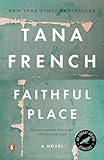
| 3 | Faithful Place | 2010 | Dublin Murder Squad | Frank Mackey |
| 4 | Broken Harbor | 2012 | Dublin Murder Squad | Mick Kennedy |
| 5 | The Secret Place | 2014 | Dublin Murder Squad | Stephen Moran |
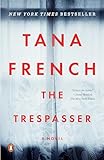
| 6 | The Trespasser | 2016 | Dublin Murder Squad | Antoinette Conway |
| 7 | The Witch Elm | 2018 | Standalone | Toby |
| 8 | The Searcher | 2020 | Standalone | Cal Hooper |
Best starting point: In the Woods — it introduces the world and the tone that defines the entire series.
Do You Have to Read the Series in Order?
The short answer is: it depends, but reading in order is recommended.
The Dublin Murder Squad novels are not tightly sequential in the way that most series are. Each book has a new first-person narrator, a new murder case, and a largely self-contained plot. You do not need to know what happened in book four to follow book five. That said, here is the nuance:
Books 1 and 2 (In the Woods and The Likeness) share a character — Detective Cassie Maddox — and reading book 1 first gives you crucial context for Cassie’s situation in book 2. French herself has said that The Likeness is a direct sequel in terms of emotional stakes, even if the plot is independent.
Books 3 through 6 each introduce an entirely new protagonist from the squad, with minimal continuity from earlier books. You could technically begin the series with Faithful Place or Broken Harbor without being lost. But reading in order gives you the cumulative texture of French’s world — you recognise names, understand the institutional culture of the squad, and arrive at each book with a richer sense of how its narrator fits into the larger portrait. It also rewards you with small connections and callbacks that do not affect comprehension but deepen the experience.
Recommendation: Start with In the Woods, read in order, and do not skip books.
Start with In the Woods — But Know This First
In the Woods is the right place to begin, and it is a remarkable novel. It is also, by design, a novel that will frustrate you — and French intends this.
The ending of In the Woods does not resolve everything it sets up. The childhood mystery at the book’s heart remains officially unsolved, because that is what French is exploring: the cases that cannot be closed, the past that cannot be recovered, the damage that does not get repaired. Some readers feel cheated. They are not wrong to feel this — French is withholding a traditional resolution deliberately. If you go in knowing that this is a feature, not a flaw, the novel becomes more powerful rather than less.
Start with In the Woods. Adjust your expectations accordingly. The second book will reward you for having done so.
The Dublin Murder Squad in Order
#1 — In the Woods
Detective: Rob Ryan
In 1984, three children went into the woods outside Dublin. Two were never found. One emerged hours later, alone, with bloody shoes and no memory of what happened. That child grew up to become Rob Ryan, Murder Squad detective — who has told no one about his past and has changed his name to protect his secret.
Twenty years later, a twelve-year-old girl is found dead in those same woods. Rob is assigned the case.
In the Woods is simultaneously a murder investigation and a meditation on memory, trauma, and the stories we tell ourselves to function. French’s prose announces immediately that this is a different kind of crime novel — dense, atmospheric, psychological. The relationship between Rob and his partner Cassie Maddox is one of the finest partnerships in crime fiction, and watching it fracture is the book’s true emotional subject. The novel won the Edgar Award for Best First Novel and remains one of the best debuts in modern crime writing.
#2 — The Likeness
Detective: Cassie Maddox
The fan favourite — and for good reason. A woman is found dead in a cottage outside Dublin. She has been living under a false identity: the same false identity that Cassie Maddox used years earlier for an undercover operation. The dead woman looks exactly like Cassie.
The investigation that follows is built on a premise so audacious that it should not work: Cassie goes undercover as her own dead double, moving into the cottage where the victim lived with four PhD students in a strange, isolated world of their own making. The novel is about identity, belonging, and the seductive pull of a life that is not yours.
The Likeness is the book that French’s readers most often call their favourite, and it is easy to understand why — the premise is irresistible, the execution is controlled, and the portrait of the cottage’s communal life has a fairy-tale quality that French deliberately undercuts. It is also the book that requires reading In the Woods first, because Cassie’s emotional state is shaped by events in book one.
#3 — Faithful Place
Detective: Frank Mackey
Frank Mackey runs an undercover unit and appears briefly in The Likeness as a secondary character. Here, he becomes the narrator — and he is among French’s most compelling creations: harder, angrier, and more self-aware of his own damage than any of her other detectives.
At nineteen, Frank was set to run away from his working-class Dublin family with his girlfriend Rosie Daly. Rosie never showed up. Frank assumed she had left without him, and he spent the following decades building a life away from Faithful Place — the street where he grew up — and telling himself he had moved on. Then a suitcase is found in a derelict house, and with it evidence that Rosie never left at all.
Faithful Place is French’s most purely noir novel — a locked-room mystery set in a social world rather than a physical space, where every member of Frank’s family is both suspect and victim. It is also her sharpest class portrait, with the Mackey family’s claustrophobic dynamics rendered with almost anthropological precision.
#4 — Broken Harbor
Detective: Mick “Scorcher” Kennedy
The financial crisis of 2008 destroyed many things in Ireland. It also left behind ghost estates — half-built housing developments abandoned when the money ran out — and these spectral landscapes are the backdrop for Broken Harbor, French’s most harrowing novel.
Mick Kennedy is the squad’s most successful detective, famous for his conviction rate and his rigorous self-discipline. He is assigned a case in a ghost estate outside Dublin where a family has been found: a father dead, the mother and children near death, and the husband the obvious suspect. What Kennedy finds when he investigates is a family that had done everything right — bought the house, followed the rules, believed in the system — and been destroyed by forces they could not control.
Broken Harbor is the Dublin Murder Squad book that sits most heavily after you finish it. It is about the specific Irish trauma of the Celtic Tiger collapse, and it is also about how ordinary people come apart under economic pressure in ways that no detective’s procedural framework can adequately address.
#5 — The Secret Place
Detective: Stephen Moran (with Antoinette Conway)
A year after a student at an elite Dublin boarding school was found murdered on the grounds, a girl arrives at the Murder Squad carrying a card she found on a school notice board. The card says: I know who killed him.
The Secret Place is French’s most formally ambitious novel — it moves between two time periods simultaneously, one tracking the original investigation and one following the reopened case. It is also her most sustained portrait of female adolescence: the loyalties, the cruelties, and the specific intensity of girl friendships in enclosed environments.
The novel introduces Antoinette Conway, a detective who will carry the next book, and uses the partnership between the calculating Conway and the more intuitive Moran to dramatise a clash between different investigative philosophies. The boarding school setting allows French to revisit the enclosed, claustrophobic world of The Likeness — another community with rules and secrets of its own — in a very different register.
#6 — The Trespasser
Detective: Antoinette Conway
The final Dublin Murder Squad novel is its most political. Antoinette Conway is the only woman of colour on the Murder Squad, and The Trespasser is explicitly about what it costs her to be there: the casual hostility, the assumptions, the way her competence is constantly interpreted through a lens of suspicion.
When Conway and her partner Steve Moran investigate what looks like a straightforward domestic murder, Conway’s instinct tells her something is wrong — but she cannot trust her own instincts, because she is aware that the squad’s hostility has made her paranoid. The investigation becomes a process of her trying to determine whether she is seeing clearly or whether institutional misogyny has warped her judgment.
The Trespasser is the series at its most self-aware: a crime novel about the costs of being the kind of person who investigates crime. It is a fitting conclusion to a series whose central subject was always the damage the work does to the worker.
What Makes French Exceptional
Prose quality. French writes at a level that has no equivalent in genre crime fiction. Her sentences are long and precise, her imagery is specific to place and character, and she builds atmosphere through accumulation rather than shortcut. Readers who approach the series from literary fiction rather than crime fiction will feel immediately at home.
The moral ambiguity of the detectives. French’s investigators are not heroes. They lie, manipulate, and make decisions that harm the people around them. Their unreliability is not a narrative device — it is a moral position. French is interested in what the work of detection requires of a person and what it costs.
Ireland as character. The specific texture of Irish society — its relationship with institutional authority, its class dynamics, its landscape — is present in every book without being decorative. The ghost estates of Broken Harbor could only be Irish; the dynamics of Faithful Place are rooted in a particular Dublin working-class culture; the boarding school of The Secret Place reproduces a specifically Irish middle-class aspiration.
Each book as a complete first-person account. Because each narrator is different, and because French is writing from inside their head, each book has a completely different emotional register. In the Woods is melancholic and dreamlike. Faithful Place is hard-boiled and angry. The Trespasser is taut and politically alert. They share a world but not a mood.
The Unreliable Narrator Warning
This point deserves its own section, because French’s use of the unreliable narrator is more radical than it first appears.
In a conventional crime novel, the detective is the reader’s guide to the truth. Their observations can be trusted; their conclusions, however wrong initially, are correcting themselves toward accuracy. French’s detectives are doing neither. Rob Ryan cannot access what happened in the woods because he genuinely does not know. Frank Mackey misreads Faithful Place because his hatred of his family corrupts his investigation. Scorcher Kennedy in Broken Harbor is the most dangerous kind of unreliable narrator: one who is deeply committed to a framework that cannot accommodate what he is actually seeing.
French’s readers need to read against the narrator as well as with them — tracking what the detective notices, what they do not notice, and what their attention patterns reveal about their blind spots. This is demanding reading, and it is part of why the series has attracted literary readers alongside crime fiction fans.
Tana French Books Ranked
Ranking French is subjective — each book has a strong constituency — but this reflects the general consensus among the series’ most devoted readers:
| Rank | Book | Why |
|---|---|---|
| #1 | The Likeness | The most irresistible premise, the most controlled execution, and the book most readers call their all-time favourite |
| #2 | Faithful Place | The most satisfying standalone crime novel in the series; Frank Mackey is French’s most fully realised narrator |
| #3 | In the Woods | The essential starting point; the unreliable narrator and the Rob/Cassie partnership are among the best in crime fiction |
| #4 | The Trespasser | The most politically acute, and the most honest portrait of institutional misogyny in French’s work |
| #5 | Broken Harbor | The most harrowing; its portrait of financial crisis and collapse carries weight beyond the genre |
| #6 | The Secret Place | The most formally ambitious; the dual timeline works, but the boarding school world is less distinctive than the earlier settings |
| #7 | The Searcher | Slower and more pastoral than the Murder Squad novels; rewarding but clearly minor French |
| #8 | The Witch Elm | The most divisive — deliberately slow, concerned with male privilege, not a conventional crime novel; either brilliantly controlled or frustrating depending on expectations |
Dublin Murders: The TV Adaptation
The Dublin Murder Squad was adapted as Dublin Murders, a BBC/Starz co-production first broadcast in 2019. The series is unusual in that it combines elements from the first two novels — In the Woods and The Likeness — into a single eight-episode season, running both storylines in parallel rather than adapting them separately.
Sarah Greene plays Cassie Maddox and Killian Scott plays Rob Ryan. The casting is strong, and the production captures the atmospheric, rain-soaked Ireland of French’s imagination more faithfully than most literary adaptations manage. The tone is correct: slow, psychological, and uncomfortable in the way that the novels are uncomfortable.
The adaptation does not resolve the childhood mystery from In the Woods, which is the right decision. It condenses and reorders elements from both books, which works better than expected given how different the two source texts are in structure and emotional register.
Recommendation: Read In the Woods and The Likeness before watching. The series rewards knowing both novels; it is also, on its own terms, one of the better literary crime adaptations of recent years.
After the Dublin Murder Squad
French has published two standalone novels that are worth reading after completing the series.
The Witch Elm (2018) takes the unusual step of centering a narrator who is a victim rather than a detective — a young man whose assault has disrupted his sense of himself as a lucky, privileged person. It is slower than the Murder Squad books and more explicitly concerned with privilege and male entitlement.
The Searcher (2020) moves to rural Ireland and an American ex-cop who retires to a small town only to find himself drawn into a missing-persons investigation. It is French’s most deliberately pastoral novel and sits closer to the literary thriller than the police procedural.
What to Read After French
Once you have finished the Dublin Murder Squad, the following are natural next reads:
- Gone Girl — Gillian Flynn’s unreliable narrator domestic thriller; shares French’s interest in first-person deception
- The Girl with the Dragon Tattoo — Stieg Larsson’s Swedish crime epic, for readers who want the same institutional corruption in a Scandinavian setting
- The Secret History — Donna Tartt’s novel about a group of students who commit a murder; the closest literary equivalent to French’s enclosed-community novels
- The Silence of the Lambs — Thomas Harris’s FBI procedural, for readers who want the same intensity of psychological investigation
- The Shining or Misery — Stephen King’s most psychologically controlled novels reward the same close reading French requires; our Stephen King books in order guide covers where to start
Frequently Asked Questions
Do I have to read Tana French in order?
You can read books 3 through 6 without having read the earlier ones. But reading In the Woods before The Likeness is strongly recommended — they share a protagonist and The Likeness depends emotionally on what happens in book one. Reading the full series in order gives the richest experience.
Why doesn’t In the Woods resolve the childhood mystery?
Because French is making a point about the cases that cannot be solved and the damage that cannot be undone. The unresolved mystery is deliberate. It is the most controversial decision in the series and also, in retrospect, the most honest one.
Is Tana French a crime writer or a literary writer?
Both. The Dublin Murder Squad books have plots that follow crime fiction conventions — there is a murder, an investigation, a resolution — but they are written with the interiority, prose quality, and moral ambiguity of literary fiction. French is the writer who most successfully occupies the space between these categories.
What to Read After Tana French
If you enjoyed the Dublin Murder Squad series, these guides cover closely related territory:
- Books Like Tana French — the closest reads to the Dublin Murder Squad: literary crime fiction with the same psychological depth and atmospheric precision
- Books Like The Girl with the Dragon Tattoo — Scandinavian noir and psychological thrillers that share French’s darkness and social intelligence
- Best Mystery Books of All Time — the wider genre, with French placed in context alongside Christie, Highsmith, and Lehane
- Karin Slaughter Books in Order — another author who occupies the same territory between literary fiction and crime, set in Georgia
- Ann Cleeves Books in Order — the Vera and Shetland series; similar police procedural intelligence in a British setting
For the full Tana French bibliography, reviews, and biography, visit the Tana French author page on Editors Reads.
Affiliate disclosure: Links to Amazon on this page are affiliate links. We earn a small commission at no extra cost to you. This does not influence our editorial recommendations.
Frequently Asked Questions
What order should I read Tana French books?
Read the Dublin Murder Squad in publication order: In the Woods, The Likeness, Faithful Place, Broken Harbor, The Secret Place, and The Trespasser. Each book has a different narrator drawn from the squad, but characters from previous books appear and the emotional impact depends on knowing them. The Witch Elm and The Searcher are standalone novels that can be read at any point.
Do Tana French books need to be read in order?
The Dublin Murder Squad books work best in order because each narrator was a secondary character in the previous book. Reading them in sequence allows you to know a character before they become the protagonist, which deepens the experience considerably. The two standalones are genuinely independent and can be read at any time.
What is the best Tana French book to start with?
In the Woods is the best starting point for the Dublin Murder Squad series. It introduces the world, the squad, and the tone that defines the rest of the series. The Likeness and Faithful Place are considered equally strong, but they reward prior investment in the characters introduced in In the Woods.
How many books are in the Dublin Murder Squad series?
There are six books in the Dublin Murder Squad series: In the Woods, The Likeness, Faithful Place, Broken Harbor, The Secret Place, and The Trespasser. Tana French has also published two standalone novels set in Ireland: The Witch Elm (2018) and The Searcher (2020). All eight novels are set in Ireland and share French's distinctive literary approach.
What is Tana French's most recent novel?
Tana French's most recent novel is The Searcher (2020), a standalone set in rural Ireland following an American ex-cop drawn into a missing-persons investigation. As of 2026 she has not announced a new novel. The Searcher can be read without any prior knowledge of the Dublin Murder Squad series.
Which Tana French books can be read as standalones?
The Witch Elm (2018) and The Searcher (2020) are Tana French's only true standalones — both set in Ireland but with no plot connections to the Dublin Murder Squad. Of the six Murder Squad novels, each has its own protagonist and self-contained case, so books 3 through 6 can technically be read independently, though reading in order gives the richest experience.
Is there a Tana French TV series?
Yes. The Dublin Murder Squad was adapted as Dublin Murders, a BBC/Starz co-production released in 2019. The series blends elements from In the Woods and The Likeness into a single season, with Sarah Greene as Cassie Maddox and Killian Scott as Rob Ryan. It is reasonably faithful to the tone and atmosphere of French's novels. Reading the first two books before watching is recommended — the adaptation benefits from knowing the source material.
Which is the best Tana French book?
Most readers consider The Likeness or Faithful Place the series peak. The Likeness has the most inventive premise — Cassie goes undercover as her own dead double — and is the book French fans most often cite as their favourite. Faithful Place is the most purely satisfying as a standalone crime novel, with Frank Mackey one of French's most complex and compelling narrators. In the Woods is the essential starting point regardless of which you ultimately prefer.