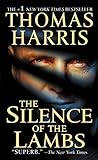
Editors Reads Verdict
The Silence of the Lambs is a near-perfect thriller — the rare genre novel that also stands as genuine literature. Its central relationship, between Clarice Starling and Hannibal Lecter, is one of the most extraordinary in American fiction: a transaction in which knowledge is exchanged across a gulf of moral impossibility.
What We Loved
- Clarice Starling is one of American fiction's finest protagonists — competent, vulnerable, and morally serious
- The Lecter-Starling exchanges are extraordinary: sinister, psychologically acute, and genuinely moving
- Harris's prose achieves an almost forensic clarity that makes horror more effective by understatement
- Buffalo Bill is rendered with clinical precision that makes him terrifying without reducing him to a cartoon
Minor Drawbacks
- The novel assumes some familiarity with FBI procedure that occasional readers may find disorienting
- Some of the forensic and behavioral science is dated by subsequent research
- The story moves so fast that minor characters rarely get full development
Key Takeaways
- → Quid pro quo is the structure of nearly every significant relationship — what makes Lecter extraordinary is what he demands in exchange
- → The most effective insight into evil often comes from people who understand it from the inside
- → Institutional condescension toward women creates blind spots that a genuine investigator must work around, not through
- → Empathy and danger are not opposites — the capacity to understand is also the capacity to be reached
| Author | Thomas Harris |
|---|---|
| Publisher | St. Martin's Press |
| Pages | 352 |
| Published | August 29, 1988 |
| Language | English |
| Genre | Thriller, Crime Fiction, Psychological Thriller |
| Difficulty | Intermediate |
| Best For | Any serious reader of fiction; thriller readers who want the genre at its absolute apex; fans of the film who want to understand how it was built. |
How The Silence of the Lambs Compares
The Silence of the Lambs at a glance against 3 similar books readers weigh alongside it.
| Book | Author | Rating | Best for |
|---|---|---|---|
| The Silence of the Lambs (this book) | Thomas Harris | ★ 4.6 | Any serious reader of fiction |
| Gone Girl | Gillian Flynn | ★ 4.2 | Readers who want their thrillers to also function as literary fiction and |
| In the Woods | Tana French | ★ 4.2 | Literary fiction readers who enjoy crime, fans of psychologically complex |
| The Girl with the Dragon Tattoo | Stieg Larsson | ★ 4.2 | Crime and thriller readers who enjoy complex investigations, morally compelling |
A Thriller That Became Literature
Thomas Harris published The Silence of the Lambs in 1988, seven years after Red Dragon. The novel won the Bram Stoker Award, became a nationwide bestseller, and was adapted into a film that won all five major Academy Awards — a feat achieved by only two other films in history. None of that context explains what the novel actually is, which is something rarer than a cultural phenomenon: a genre novel that transcends its genre without abandoning it.
The premise is clean. FBI trainee Clarice Starling, working at Quantico under Jack Crawford, is sent to interview Dr. Hannibal Lecter — a forensic psychiatrist and cannibal imprisoned in the Baltimore State Hospital for the Criminally Insane — in hopes that he can provide insight into a new active killer the FBI is calling Buffalo Bill. Buffalo Bill is kidnapping and murdering heavy-set women and removing large patches of their skin. He appears to be making something. The FBI needs to understand what before the count rises further.
Clarice Starling: A Portrait of Competence Under Pressure
Clarice Starling is among the finest protagonists in American crime fiction. She is a West Virginia coal miner’s daughter, raised poor, educated on scholarship and will, working in a male-dominated institution that treats her as simultaneously exceptional and diminished. Harris renders her interior life with extraordinary precision — her dreams, her memories of her father, her relationship to the lambs she couldn’t save as a child, her acute awareness of every social dynamic in every room she enters.
She is not a superhero. She is a trainee who makes mistakes, who sometimes has less information than the reader, who succeeds through intelligence and stubbornness rather than special powers. Harris respects her enough not to protect her from difficulty.
Lecter and Starling: The Central Relationship
The heart of the novel is the series of exchanges between Starling and Lecter across the glass of his cell. Lecter will provide insight into Buffalo Bill, but he will not do so for nothing. He wants pieces of Clarice: her history, her fears, her memories. He offers information in exchange for access to her interior life. The transaction is simultaneously clinical, intimate, and deeply unsettling — Lecter is genuinely interested in Clarice in a way that is distinct from how he views everyone else, and that interest is not entirely malevolent.
Harris gives Lecter an aesthetic sensibility, a sense of humor, and a contempt for rudeness that is almost comic in its refinement. He is one of fiction’s great monsters precisely because he is so legible as a personality — his values are simply ordered in a way that makes him lethal.
Buffalo Bill: Evil Without Mythology
If Lecter is the novel’s cognitive threat, Buffalo Bill — Jame Gumb — is its physical one. Harris chose deliberately not to mythologize him. He is not a genius or a creature of legend. He is a deeply damaged person with a specific delusion, specific methods, and a specific victim who is still alive in a pit in his basement when Clarice finally locates him. The novel’s climax — Clarice alone in the dark, Buffalo Bill wearing night-vision goggles — is one of the most frightening sequences in popular fiction.
Our rating: 4.6/5 — A masterpiece of American crime fiction: tautly constructed, psychologically profound, and anchored by one of literature’s great heroines and its most compelling villain.
A Thriller That Transcended Its Genre
The Silence of the Lambs is that rare thing — a thriller so well made that it crossed over into literature, won a devoted readership, and produced one of the most iconic characters in modern fiction. Its engine is the uneasy collaboration between Clarice Starling, a young FBI trainee, and Hannibal Lecter, the brilliant, cannibalistic psychiatrist whose insight she needs to catch another killer. Harris’s masterstroke is that the real suspense lies less in the manhunt than in the psychological duel between Starling and Lecter, a series of conversations in which each tries to read and use the other. It is meticulously researched, genuinely frightening, and far more intelligent than its lurid premise suggests.
Clarice Starling, the Real Centre
For all that Lecter dominates the cultural memory, the novel belongs to Clarice. Harris builds her with unusual care — a working-class woman clawing her way up in an institution run by men, haunted by the childhood memory that gives the book its title, driven by a need to save someone that she cannot fully name. The genius of the central relationship is that Lecter, in exchange for his help, demands that she reveal herself, so that the hunt for the killer becomes inseparable from her own painful self-examination. She is one of the great heroines of the genre precisely because her vulnerability and her courage are the same thing.
Why Lecter Works
Hannibal Lecter became a cultural touchstone because Harris resisted the obvious. Rather than a snarling monster, Lecter is cultured, witty, almost seductive — a creature of taste and intellect whose menace lies in how reasonable and perceptive he seems. The horror is that the reader, like Clarice, half wants his approval. That uncomfortable charm, the sense that evil might be charismatic and even insightful, is what lifted the character above the standard serial-killer villain and into permanent cultural life.
A Model of Its Form
What keeps The Silence of the Lambs on shelves decades later is its craftsmanship. Harris researched FBI profiling and forensic procedure deeply, and the realism grounds the gothic horror so that the frightening parts feel possible. The prose is taut, the structure relentless, and the psychological depth genuine. Readers should be prepared for disturbing, violent material, but as a benchmark for the intelligent psychological thriller — a book that is both a page-turner and a serious study of two extraordinary minds — it has rarely been equalled.
Reading Guides
- Books Like The Silence of the Lambs: 12 Psychological Thrillers to Read Next
- Books Like And Then There Were None: Island Mysteries, Closed Circles, and Ingenious Plots
- Books Like In Cold Blood: True Crime, Narrative Journalism, and the Criminal Mind
- Books Like Sharp Objects: Gothic Small Towns, Dark Families, and Female Wounds
- Books Like The Girl on the Train: Unreliable Narrators, Suburban Secrets, and Twists
- Books Like Tana French: 12 Literary Crime Novels for Dublin Murder Squad Fans
- 22 Best Mystery Books of All Time: Essential Reads From Christie to Flynn (2026)
Frequently Asked Questions
What is "The Silence of the Lambs" about?
FBI trainee Clarice Starling is sent to interview the imprisoned Dr. Hannibal Lecter — brilliant psychiatrist and cannibalistic serial killer — hoping to gain insight into a new killer called Buffalo Bill, who is making suits of human skin.
Who should read "The Silence of the Lambs"?
Any serious reader of fiction; thriller readers who want the genre at its absolute apex; fans of the film who want to understand how it was built.
What are the key takeaways from "The Silence of the Lambs"?
Quid pro quo is the structure of nearly every significant relationship — what makes Lecter extraordinary is what he demands in exchange The most effective insight into evil often comes from people who understand it from the inside Institutional condescension toward women creates blind spots that a genuine investigator must work around, not through Empathy and danger are not opposites — the capacity to understand is also the capacity to be reached
Is "The Silence of the Lambs" worth reading?
The Silence of the Lambs is a near-perfect thriller — the rare genre novel that also stands as genuine literature. Its central relationship, between Clarice Starling and Hannibal Lecter, is one of the most extraordinary in American fiction: a transaction in which knowledge is exchanged across a gulf of moral impossibility.
Ready to Read The Silence of the Lambs?
Check the current price on Amazon.
Check Price on Amazon (paid link)Prices and availability are subject to change. See Amazon for current price.
Review last updated: