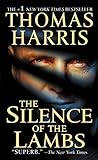
Books Like The Silence of the Lambs: 12 Thrillers
If you loved The Silence of the Lambs, these psychological thrillers deliver the same combination of brilliant detective work, unforgettable villains, and creeping dread.

Thomas Harris’s The Silence of the Lambs belongs to a very small category of novels that genuinely changed their genre. Published in 1988, it assembled a set of elements — a young female FBI trainee, a captive monster of terrifying intellect, a killer still at large — and fused them into something that felt unlike anything before it. The Clarice Starling and Hannibal Lecter dynamic is not a standard detective-informant relationship. It is a negotiation between unequal intelligences in which neither party is fully honest, and in which Clarice’s professional formation and personal survival are in constant, intertwined tension. The gothic horror of Lecter’s subterranean cell, the procedural rigour of the FBI Behavioral Science Unit, and the psychological cat-and-mouse between Clarice and Buffalo Bill combine into a novel that operates on several frequencies at once.
What the books below share with Harris is not a formula but a sensibility: a detective who is changed, perhaps damaged, by what they pursue; an antagonist of unusual psychological depth; procedural detail that deepens rather than slows the story; and the particular unease that comes when brilliant minds turn toward terrible ends.
The Harris Universe
#1 — Red Dragon by Thomas Harris
The novel that introduced Will Graham, the FBI profiler who caught Hannibal Lecter and was nearly destroyed by it, and who is reluctantly pulled back into service to hunt a killer called the Tooth Fairy. Red Dragon predates The Silence of the Lambs and in some ways surpasses it in controlled horror. Harris’s central insight — that to catch a monster, you must understand a monster, and that understanding has costs — is fully established here. Lecter appears in a smaller role, locked away and consulting, but his presence saturates the novel. The portrait of Will Graham’s psychological exposure is among the finest in crime fiction.
#2 — Hannibal by Thomas Harris
A decade after the events of The Silence of the Lambs, Lecter is living in Florence under a false identity, and Clarice is in trouble with the FBI. Hannibal is the most operatic entry in the trilogy: grand in its European settings, extreme in its violence, and genuinely strange in the direction of its ending. Harris refuses the expected conclusions, and the result is a novel that divides readers sharply. Those who accept it on its own terms will find it a remarkable piece of dark fiction. Read it last, and read it knowing that Harris is not trying to comfort you.
The Unreliable Narrator, Psychologically Exposed
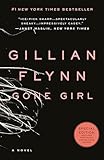
#3 — Gone Girl by Gillian Flynn
Amy Dunne disappears on the morning of her fifth wedding anniversary. Her husband Nick becomes the prime suspect. Gone Girl operates on a different register from Harris — the violence is domestic, the villain is hidden in plain sight — but the psychological architecture is comparable: two extremely intelligent people in a contest of control, and a narrative structure that forces the reader to revise everything they thought they knew. Flynn’s dissection of performed femininity and performed innocence has the same unsettling quality as Lecter’s dissection of Clarice’s ambitions. A thriller that knows exactly what it is doing at every moment.
The Literary Crime Cluster: Tana French
Tana French is the writer most consistently mentioned alongside Harris by readers who care about psychological depth in crime fiction. Her Dublin Murder Squad series gives each novel to a different detective narrator, none of whom emerge from their case unchanged.
#4 — In the Woods by Tana French
Rob Ryan, a Dublin Murder Squad detective, is assigned to a murder case in the same wood where he survived a childhood trauma that he cannot remember. The investigative plot is rigorous and satisfying; the psychological undertow is something else entirely. French does something Harris does too: she makes the detective’s inner life as much the subject of the novel as the crime itself. The atmosphere — the wood as a presence, the past as a wound that reopens — gives the novel a texture closer to gothic fiction than standard procedural.
#5 — The Likeness by Tana French
Detective Cassie Maddox is called to a murder scene and finds a body that looks exactly like her. The dead woman was living under an identity Cassie once used undercover. To find the killer, Cassie goes back undercover, taking the dead woman’s place inside a tight-knit household of graduate students in a crumbling Irish manor house. The psychological stakes — what happens to a self when it inhabits another identity for long enough — are pure French, and the novel’s closed-world, character-study structure gives it a quality closer to Donna Tartt than to standard crime fiction.
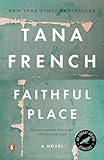
#6 — Faithful Place by Tana French
Frank Mackey is the most guarded of French’s detectives, a man who escaped his working-class Dublin family by force of will and has not looked back. When a suitcase belonging to his first love — who disappeared the night they planned to run away together — turns up behind a fireplace in the Liberties, Frank is pulled back into everything he left behind. French’s portrait of a Dublin street, a family held together by mutual resentment, and a detective who cannot see his own blind spots is among her best work. The procedural plot is almost secondary to the psychological archaeology.
#7 — Broken Harbor by Tana French
A family has been attacked in a ghost estate on the Irish coast — a half-built development abandoned when the property market collapsed. The father is the only survivor. Detective Mick “Scorcher” Kennedy, French’s most controlled and rule-bound narrator, takes the case, and the investigation dismantles his certainties one by one. Broken Harbor is French’s most plot-driven novel and one of her most disturbing. The ghost estate as a setting — the physical wreckage of economic catastrophe — gives the book a historical specificity that deepens the horror.
#8 — The Secret Place by Tana French
A year after a boy was murdered on the grounds of a Dublin girls’ boarding school, a card appears on the school’s secret-sharing board: I know who killed him. Detective Stephen Moran teams with Antoinette Conway to interview the students — a tight group of sixteen-year-old girls whose loyalty to each other is fierce, opaque, and possibly murderous. French captures the psychological climate of adolescent female friendship with extraordinary precision. The novel shifts between the day of the investigation and the year before the murder, and the two timelines converge in ways that are genuinely unexpected.
The Procedural LA Detective: Michael Connelly
#9 — The Black Echo by Michael Connelly
LAPD Detective Harry Bosch finds a body in a drainage tunnel in the Hollywood Hills — a Vietnam veteran, like Bosch himself, with fresh needle marks that suggest murder staged as an overdose. The first Harry Bosch novel establishes the template: a detective defined by his past, an institutional context that is as much obstacle as resource, and a plot that widens from a single body to something much larger. Connelly’s procedural detail has the same authority as Harris’s FBI sequences, and Bosch’s psychological damage — survivor’s guilt, institutional distrust, a compulsion to pursue cases no one else will — echoes the cost Clarice pays for her vocation.
#10 — The Lincoln Lawyer by Michael Connelly
Mickey Haller is a defense attorney who works from the back of a Lincoln Town Car. When a wealthy client insists he is innocent of the sexual assault he is charged with, Haller begins to suspect that he is defending a guilty man — and that the case is connected to something much darker in his past. Connelly shifts to the defense side of the criminal justice system and the result is a thriller of genuine moral complexity. The question of what a lawyer does when he realizes he has been complicit in an injustice drives the novel with the same urgency that the Clarice-Lecter dynamic drives Harris.
The Female Investigator Fighting Institutional Violence
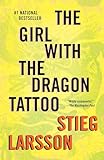
#11 — The Girl with the Dragon Tattoo by Stieg Larsson
Journalist Mikael Blomkvist is hired by an aging industrialist to investigate the forty-year-old disappearance of his great-niece. Alongside him, inexorably, is Lisbeth Salander — hacker, ward of the state, survivor of institutional violence, and one of the most compelling investigators in modern crime fiction. Larsson’s novel shares with The Silence of the Lambs both the procedural satisfaction of a cold case cracked open and the political anger at systems that fail and exploit women. Lisbeth and Clarice operate in very different registers, but both are women who refuse to be what the institutions around them require.
The Trespasser and the Dublin Murder Squad’s Finale
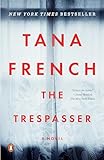
#12 — The Trespasser by Tana French
Detective Antoinette Conway, the most isolated and combative of French’s narrators, is assigned what looks like a straightforward domestic murder — a young woman killed by her boyfriend. Conway’s certainty that the case is being pushed at her as a brush-off leads her to dig deeper, and the novel becomes a study in institutional hostility, paranoia, and the question of whether the protagonist can trust her own perception. It is the most overtly thriller-paced of the Dublin Murder Squad novels, and the institutional psychology — the murder squad as a closed society with its own hidden hierarchies — has the same texture as the FBI procedural elements in Harris.
If You Want More Hannibal Lecter
The three Harris novels form a complete arc: Red Dragon (Will Graham catches Lecter), The Silence of the Lambs (Clarice and Buffalo Bill, Lecter advising), Hannibal (the aftermath, years later). A fourth novel, Hannibal Rising, covers Lecter’s childhood and wartime trauma and is the weakest of the four — most readers consider the original trilogy self-contained.
The order of reading matters. Red Dragon first, The Silence of the Lambs second, Hannibal third. If you want the Lecter of maximum ambiguity and menace, that sequence preserves the full psychological accumulation of what he is.
How to Choose Your Next Read
If you want the closest match in tone and world: Red Dragon, then Hannibal.
If you want literary psychological depth: start with In the Woods, then follow Tana French.
If you want hard procedural craft: The Black Echo or The Lincoln Lawyer.
If you want the female investigator at the centre: The Girl with the Dragon Tattoo.
If you want the unreliable narrator version: Gone Girl.
For the Best Thriller Books
For the definitive guide to thriller fiction — psychological thrillers, legal thrillers, and spy novels — see our Best Thriller Books of All Time list.
More Psychological Thriller Reading Guides
- The Housemaid Books in Order: Freida McFadden’s Series
- Books Like Sharp Objects: Gothic Domestic Suspense
Affiliate disclosure: Links to Amazon on this page are affiliate links. We earn a small commission at no extra cost to you. This does not influence our editorial recommendations.
Frequently Asked Questions
What books are most similar to The Silence of the Lambs?
The books most similar to The Silence of the Lambs are Red Dragon by Thomas Harris (the prequel introducing Hannibal Lecter), The Girl with the Dragon Tattoo by Stieg Larsson for similarly brilliant but dangerous investigators, and The Alienist by Caleb Carr for the same 19th-century psychological profiling atmosphere.
What psychological thrillers feature the same investigator-villain dynamic?
The investigator-villain dynamic of The Silence of the Lambs is best matched by Red Dragon by Thomas Harris, The Alienist by Caleb Carr, and Minette Walters's earlier work. All three feature investigators who must enter the mind of a killer to catch them, at significant psychological cost.
What should I read after The Silence of the Lambs?
After The Silence of the Lambs, most readers continue with Red Dragon (the Hannibal Lecter prequel) or Hannibal (the sequel). Beyond Harris, The Alienist by Caleb Carr delivers the same atmosphere in a historical setting. Minette Walters and Mo Hayder write crime fiction with similar psychological intensity.
What books have villains as compelling as Hannibal Lecter?
The novels with villains who rival Hannibal Lecter in intelligence and menace are We Need to Talk About Kevin by Lionel Shriver (a different kind of monstrous protagonist), No Country for Old Men by Cormac McCarthy (Anton Chigurh as unstoppable philosophical evil), and American Psycho by Bret Easton Ellis for readers who can tolerate its extreme content.