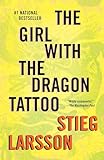
Stieg Larsson was a Swedish journalist and author whose Millennium trilogy — led by The Girl with the Dragon Tattoo — became a global crime fiction phenomenon.
Stieg Larsson died of a heart attack in 2004, just months after delivering the manuscripts for his three Millennium novels to his Swedish publisher — and never saw the extraordinary success they would generate. The Girl with the Dragon Tattoo, The Girl Who Played with Fire, and The Girl Who Kicked the Hornets’ Nest were published posthumously and became a global phenomenon, translated into dozens of languages and selling tens of millions of copies. At the centre of all three books is Lisbeth Salander, one of the most compelling protagonists in contemporary crime fiction: a brilliant, profoundly damaged hacker who survives abuse and institutional violence through sheer force of will.
Larsson drew heavily on his background as an investigative journalist, and the books are saturated with a genuine anger at Sweden’s treatment of its most vulnerable citizens — particularly women. The violence against women depicted in the trilogy is graphic and has divided readers; some see it as an unflinching critique, others as exploitation dressed up in feminist framing. The plotting is dense and sometimes digressive — The Girl Who Kicked the Hornets’ Nest in particular buries its thriller momentum under extended courtroom procedure — but the world Larsson builds is immersive and the characters are vivid.
What the trilogy achieves, despite its rough edges, is rare: a crime series with genuine sociopolitical weight and a protagonist whose appeal transcends the genre. Lisbeth Salander has lodged herself in contemporary popular culture in a way that few fictional creations manage, and the books’ unflinching quality speaks to what Larsson might have achieved had he lived to revise them.
The Journalist Behind the Novelist
To understand the Millennium trilogy, it helps to understand the life Larsson led before he ever wrote fiction. For decades he worked as an investigative journalist specialising in the far right, founding and editing the anti-racist magazine Expo and becoming one of Sweden’s foremost experts on extremist and neo-Nazi movements. This was dangerous work; he received threats and lived with a sense of vulnerability that shaped both his worldview and, some believe, the urgency of his novels. The fictional magazine Millennium, at the heart of the trilogy, is plainly modelled on Expo, and its journalist hero Mikael Blomkvist functions in part as an idealised version of Larsson himself — the crusading reporter exposing corruption and abuse that powerful institutions would prefer to keep buried. The novels are saturated with the concerns of his journalism: the persistence of fascism beneath respectable surfaces, the collusion of state and capital, and above all the systematic abuse of women. Larsson reportedly wrote the books in the evenings as a form of relaxation, never living to see them published, but they are unmistakably the work of a man who had spent his career investigating the very evils his fiction dramatises.
Lisbeth Salander, an Icon of Crime Fiction
If the trilogy endures, it is largely because of Lisbeth Salander, one of the most original and indelible characters in modern popular fiction. A diminutive, pierced, antisocial computer hacker with a photographic memory and a ferocious sense of justice, she upends nearly every convention of the genre’s female roles. She is neither victim nor love interest in any conventional sense, but a damaged, brilliant avenger whose history of institutional abuse fuels a relentless campaign against the men who prey on the vulnerable. Larsson reportedly conceived of her partly as a grown-up, troubled version of Pippi Longstocking, Astrid Lindgren’s anarchic child heroine, and the lineage shows in her refusal to submit to any authority. Salander’s combination of fragility and lethal competence, her moral clarity amid moral filth, struck a profound chord with readers worldwide and helped redefine what a thriller protagonist could be. She has inspired films in both Swedish and English, extensive critical discussion, and a degree of cultural recognition that few literary creations achieve. The trilogy’s lasting popularity is, in large measure, the popularity of Lisbeth Salander.
Posthumous Fame and a Contested Legacy
The story of the Millennium novels is inseparable from the tragedy and controversy surrounding their author’s death. Larsson died suddenly of a heart attack in 2004 at fifty, having delivered three manuscripts but seen none of them published, and the global phenomenon that followed unfolded entirely without him. Because he and his longtime partner Eva Gabrielsson were never married, Swedish inheritance law directed his estate, and the lucrative rights to his work, to his father and brother rather than to her, igniting a painful and widely publicised dispute over his legacy and the fate of an unfinished fourth manuscript. Gabrielsson has said he envisioned as many as ten books in the series. The estate later commissioned the Swedish author David Lagercrantz to continue the saga, producing several further volumes that extended Salander’s story for eager readers while dividing critics and purists over the wisdom of carrying on without the original author. These complications have only added to the mystique. Larsson remains a singular figure in crime fiction — a writer who became one of the best-selling novelists in the world without ever knowing it, leaving behind both an extraordinary heroine and a tangle of questions about what more he might have written.
The starting point is unambiguous: begin with The Girl with the Dragon Tattoo, the first of the Millennium novels, which introduces both Lisbeth Salander and the journalist Mikael Blomkvist and stands as the most self-contained and accessible entry into the trilogy. New readers should be prepared for a slow-building opening that rewards patience, and for the graphic depictions of violence, particularly against women, that run through the series. From there the original trilogy should be read in order, as The Girl Who Played with Fire and The Girl Who Kicked the Hornets’ Nest form a continuous, interlocking narrative that resolves Salander’s story. Readers who finish Larsson’s three novels and want more can continue with the volumes written by David Lagercrantz, who was commissioned to extend the series after Larsson’s death, though purists are divided on whether these later books capture the original’s distinctive anger and energy. For most readers, the essential and definitive Larsson is the trilogy he completed himself.
Reading Guides