Best Scandinavian Fiction: Essential Nordic Novels
The best Scandinavian fiction — from A Man Called Ove and The Girl with the Dragon Tattoo to Anxious People and The 100-Year-Old Man. Essential Nordic novels.
Scandinavian fiction — from the literary novels of Fredrik Backman to the crime thrillers of Stieg Larsson and the psychological darkness of Norwegian and Danish literary fiction — has become one of the dominant influences on contemporary popular reading. The genre’s distinctive qualities include a particular quality of social observation, a landscape that shapes psychology, and a tendency to use fiction as a vehicle for social criticism.
The Essential List
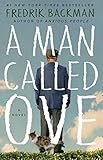
A Man Called Ove — Fredrik Backman (2012)
The most widely read Swedish literary novel of the past decade and the most accessible introduction to contemporary Scandinavian fiction. Ove’s curmudgeonly exterior — his rigid rules about parking, his contempt for incompetence, his hostility to the new neighbours who keep requiring his help — is gradually revealed to be the product of a life of loss that would justify bitterness rather than condemn it. Backman’s genius is that he withholds the revelation of Ove’s history until the reader’s affection for the man is already complete; the sympathy precedes the understanding, and the combination is devastating.
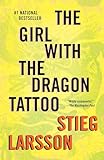
The Girl with the Dragon Tattoo — Stieg Larsson (2005)
The novel that established Nordic Noir as a global phenomenon. Journalist Mikael Blomkvist and hacker Lisbeth Salander’s investigation into the disappearance of Harriet Vanger from a wealthy Swedish family island in 1966 is both a compelling mystery and an exposure of sexual violence and institutional corruption within Swedish society. Lisbeth Salander — asocial, brilliant, traumatised, and capable of spectacular revenge — became one of the most distinctive characters in contemporary fiction. The trilogy’s second volume, The Girl Who Played with Fire, reveals Lisbeth’s backstory; The Girl Who Kicked the Hornets’ Nest resolves it.
The Girl Who Played with Fire — Stieg Larsson (2006)
The second volume of the Millennium trilogy, more focused on Lisbeth’s backstory than the first. Lisbeth becomes the prime suspect in three murders, forcing Mikael to investigate independently while she evades the police. The novel reveals the specific institutional corruption and personal history that made Lisbeth who she is; it is the most emotionally engaging of the three volumes.
The Girl Who Kicked the Hornets’ Nest — Stieg Larsson (2007)
The trilogy’s conclusion — more thriller than mystery, more concerned with institutional conspiracy than individual psychology. The resolution of Lisbeth’s story involves the highest levels of Swedish government and intelligence; the novel is the most politically explicit of the three. Best read after the first two volumes.
Anxious People — Fredrik Backman (2019)
Backman’s most structurally inventive novel. A bumbling bank robbery leads to an accidental hostage situation at an apartment viewing; the investigation by father-and-son police officers gradually reveals the hidden stories of each hostage. The novel is a comedy of misunderstanding and a meditation on the invisible threads of human connection — the chance encounters and random acts of kindness that prevent people from the worst of what they might otherwise do. The most optimistic of Backman’s novels.
The 100-Year-Old Man Who Climbed Out of a Window and Disappeared — Jonas Jonasson (2009)
The most successful Swedish comic novel after Backman. Allan Karlsson, on the day of his hundredth birthday, climbs out of his nursing home window with a briefcase of money belonging to a criminal gang and disappears into a series of adventures. Interwoven with the contemporary chase plot is a retrospective account of Allan’s earlier life, in which he has had improbable encounters with every major figure of twentieth-century history. The novel is pure comic entertainment, without the emotional depth of Backman; it is the most immediately enjoyable of the Swedish novels listed here.
My Grandmother Asked Me to Tell You She’s Sorry — Fredrik Backman (2015)
Backman’s second novel, following Elsa, a precocious seven-year-old, and her grandmother, who has just died — leaving Elsa with a series of letters to deliver to neighbours and secrets to discover. The novel is the most explicitly fairy-tale-like of Backman’s work; its combination of fantasy and emotional honesty is the most ambitious structural experiment in his fiction. Readers who respond to A Man Called Ove will find the same warmth and emotional intelligence here.
A Literature Shaped by Light and Dark
Scandinavian fiction carries the unmistakable imprint of the extreme northern landscape and climate that produced it — the long darkness of winter and the endless light of the summer night, the vast and often empty terrain of forest, mountain, and sea, the smallness of human settlement against an immense and indifferent nature — and these conditions have stamped the literature with a distinctive sensibility that sets it apart from the writing of more temperate lands. The dramatic alternation of light and dark across the Nordic year, the months of gloom and the weeks of perpetual day, finds its way into the very mood and texture of the fiction, lending it a quality of introspection, melancholy, and stark contrast that readers recognize as characteristically Scandinavian. The landscape itself, sparse and severe, shapes a literature attuned to solitude, to the human being’s confrontation with a powerful and often unforgiving natural world, and to the particular psychology that such an environment breeds. This rootedness in a distinctive physical world gives Scandinavian fiction much of its atmosphere and its emotional resonance, the sense of stories unfolding in a landscape that is itself a presence, charged with mood and meaning. The famous melancholy of Nordic literature, its preoccupation with the inner life and its acquaintance with darkness, both literal and figurative, derives in no small part from these conditions of light and dark, isolation and severity, that have shaped the region’s imagination. To read Scandinavian fiction is to enter this distinctive world, to feel the imprint of the northern landscape and climate on the very texture of the writing, and to encounter a literature whose atmosphere and sensibility are inseparable from the extreme and beautiful environment that produced it.
The Social Conscience of the North
A defining feature of Scandinavian fiction, distinguishing it from many other national literatures, is its pronounced social conscience — its deep engagement with questions of justice, equality, and the responsibilities of society to its members — reflecting the social-democratic values that have shaped the Nordic countries and their self-understanding. The Scandinavian nations developed, over the twentieth century, some of the world’s most comprehensive welfare states and most egalitarian societies, founded on a powerful ethos of social solidarity, collective responsibility, and the pursuit of equality, and this ethos pervades the region’s literature, which characteristically approaches its subjects with a strong awareness of social context and a deep concern for justice and the common good. Scandinavian fiction frequently examines the workings of society, the conditions of ordinary lives, the failures and tensions beneath the prosperous and egalitarian surface, and the moral responsibilities that citizens and societies bear toward one another, bringing to these subjects a seriousness and a social engagement that reflect the region’s distinctive values. Even the celebrated Nordic crime fiction is animated by this social conscience, using the investigation of crime as a means of exposing the dark undercurrents and social problems concealed beneath the placid surface of the model welfare states. This strong social dimension gives Scandinavian fiction a particular character and significance, marking it as a literature deeply concerned with the health of society and the justice of social arrangements, and reflecting a culture in which the collective welfare and the responsibilities of society to its members are matters of central importance. The social conscience of the North is among the most distinctive and admirable features of its literature, infusing the fiction with a moral seriousness and a concern for justice that reflect the deepest values of the societies that produced it.
Plain Style, Deep Feeling
Scandinavian fiction is marked by a distinctive aesthetic of restraint — a plain, spare, understated style that eschews ornament and excess in favor of clarity, economy, and a quiet precision — and this stylistic reticence, far from indicating a poverty of feeling, is in fact the vehicle for emotional depths of remarkable power. The characteristic Nordic prose is unadorned and direct, suspicious of rhetorical flourish and emotional display, preferring the understatement that suggests more than it states and the spare description that achieves its effects through precision rather than abundance. This aesthetic of restraint reflects something deep in the Scandinavian cultural temperament, a reticence and an undemonstrativeness, a distrust of the showy and the excessive, that finds its literary expression in a style of notable plainness and economy. Yet this very restraint is the source of the fiction’s emotional power, for beneath the spare and understated surface run depths of feeling all the more affecting for being held in check, and the plain style, by refusing easy emotional display, achieves a quiet intensity that more demonstrative writing often fails to reach. The reader of Scandinavian fiction learns to attend to what lies beneath the restrained surface, to feel the powerful emotions that the understated prose suggests rather than declares, and to appreciate the way that reticence can convey depths that effusion cannot. This combination of plain style and deep feeling is among the most distinctive achievements of Scandinavian fiction, demonstrating that emotional power need not depend on emotional display, and that the spare, restrained, and understated can move the reader more profoundly than the ornate and the explicit. The aesthetic of restraint, with its quiet precision and its hidden depths, is a hallmark of the Nordic literary tradition and a key to its particular and lasting power.
Nordic Noir Beyond Larsson
The genre Larsson established has been extended by a generation of Scandinavian crime writers: Norwegian authors Jo Nesbø (the Harry Hole series) and Anne Holt, Danish writers Peter Høeg (Miss Smilla’s Feeling for Snow) and Jussi Adler-Olsen (the Department Q series), Swedish writers Henning Mankell (the Kurt Wallander series) and Camilla Läckberg. The defining characteristics of the genre — social critique, institutional corruption, psychological complexity, and the distinctive Nordic landscape — are consistent across these writers, though their specific approaches vary considerably.
Frequently Asked Questions
What is the best Scandinavian novel to start with?
A Man Called Ove (2012) by Fredrik Backman is the best starting point — the portrait of a curmudgeonly Swedish man whose carefully ordered life is disrupted by new neighbours is funny, warm, and deeply moving, and the most consistently recommended Swedish novel for readers new to Scandinavian fiction. The Girl with the Dragon Tattoo (2005) by Stieg Larsson is the best starting point for readers who want Nordic crime — the first of the Millennium trilogy, featuring Lisbeth Salander, who has become one of the most recognisable characters in contemporary fiction.
What is A Man Called Ove about?
A Man Called Ove (2012) by Fredrik Backman follows Ove, a fifty-nine-year-old Swede whose wife has recently died and who is trying, repeatedly and unsuccessfully, to end his life — each attempt interrupted by the demands of the annoying neighbours he has been unable to avoid. The novel's structure gradually reveals why Ove is the way he is; by the time the reader understands his history, the affection for him is complete. The novel is simultaneously a comedy about Swedish social awkwardness, a portrait of grief, and an argument about community and mutual obligation.
What makes Scandinavian crime fiction special?
Scandinavian crime fiction — the genre known as 'Nordic Noir' — has several distinctive qualities that distinguish it from British or American crime fiction: an explicit social and political critique (the best Scandinavian crime novels are fundamentally about what is wrong with their societies, using the crime as a diagnostic tool); a willingness to portray institutional corruption and systemic failure; a distinctive landscape (the long winters, the isolation, the darkness) that shapes the psychology of the genre; and a tradition of morally complex investigators. Stieg Larsson, Jo Nesbø, and Henning Mankell established the template; a generation of successors has extended it.
What is Anxious People about?
Anxious People (2019) by Fredrik Backman follows a bank robber who accidentally takes a group of apartment-viewing strangers hostage, and the police investigation — led by a father and son — that follows. The novel is a Backman comedy of misunderstanding and human connection, structured around the revelation of how different the hostages' lives are from their appearances. Like A Man Called Ove, it is simultaneously funny and moving; its argument about the random human connections that prevent people from the worst of what they might do is characteristically Backman.