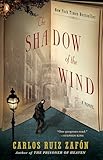
Carlos Ruiz Zafón was a Spanish novelist whose Gothic literary mystery The Shadow of the Wind became one of the best-selling Spanish novels ever published and a modern classic of European fiction.
Carlos Ruiz Zafón grew up in Barcelona and worked for years as an advertising copywriter and screenwriter before The Shadow of the Wind — published in Spain in 2001 and in English translation in 2004 — made him one of the most internationally read Spanish novelists of his generation. He died in 2020 at 55, leaving behind four novels set in his created world of the Cemetery of Forgotten Books.
The Shadow of the Wind is set in post-Civil War Barcelona, a city of shadows, secrets, and Franco’s long surveillance. A young boy discovers a novel by a writer named Julián Carax in a labyrinthine library of forgotten books, and his attempt to learn more about its author draws him into a mystery spanning decades. The novel is Gothic, labyrinthine, romantic, and plotted with extraordinary craft — each revelation opens onto another, and the city of Barcelona itself is as much a character as any of the human figures. The prose, in Lucia Graves’s translation, is lush without tipping into excess.
Zafón wrote with a deliberate love of popular storytelling — he admired Dumas and Dickens — and some literary readers have found The Shadow of the Wind’s emotional intensity melodramatic. That is not a misreading, but it misses what the book is doing: it is unapologetically a story in the grand romantic tradition, and within that tradition it is extraordinary. The Cemetery of Forgotten Books series that followed — The Angel’s Game, The Prisoner of Heaven, The Labyrinth of the Spirits — extended and deepened Zafón’s world, though none quite matched the incandescence of the original.
A Master of Literary Mystery
Carlos Ruiz Zafon was one of the most popular and beloved Spanish authors of his generation, a writer whose atmospheric, gothic, and intricately plotted novels enchanted readers around the world. Renowned for his evocative portrayal of Barcelona, his richly layered storytelling, and his celebration of the power of books and reading, Zafon created fiction of remarkable atmosphere and narrative pleasure. His novels blend mystery, romance, history, and the gothic into immersive, page-turning experiences, and his international success brought contemporary Spanish literature to a vast global audience, making him one of the most widely read writers in the world before his untimely death.
The Shadow of the Wind
Zafon’s masterpiece, The Shadow of the Wind, became an international phenomenon and one of the best-selling Spanish novels of all time. Set in post-Civil War Barcelona, it follows a young boy who discovers a mysterious book and becomes drawn into a labyrinthine mystery involving its enigmatic author. Atmospheric, suspenseful, and richly romantic, the novel celebrates the magic of books and reading while weaving an intricate gothic mystery, and its enormous popularity made Zafon a global literary star. The book remains the cornerstone of his reputation and a beloved favorite among readers who treasure immersive, bookish storytelling.
The Cemetery of Forgotten Books
The Shadow of the Wind is part of Zafon’s celebrated quartet, The Cemetery of Forgotten Books, a series of interconnected novels centered on a mysterious, labyrinthine library of lost and forgotten volumes hidden in the heart of Barcelona. This evocative conceit, a secret repository of books that must be protected and cherished, embodies Zafon’s love of literature and gives his interconnected novels a unifying magic. The series rewards readers who explore its full scope with a rich, layered world and overlapping mysteries, and the haunting image of the Cemetery of Forgotten Books has become one of the most beloved creations in contemporary fiction.
The City of Barcelona
A defining feature of Zafon’s fiction is his atmospheric, almost magical portrayal of Barcelona. He rendered the city, particularly in the shadowy, evocative period around the Spanish Civil War, as a place of mystery, beauty, and gothic enchantment, and Barcelona becomes a character in its own right in his novels. His richly detailed, romantic evocation of the city’s streets, buildings, and history immerses readers completely and is central to the distinctive atmosphere of his work. This loving, mysterious portrait of Barcelona is one of the great pleasures of his fiction and inseparable from its appeal.
A Celebration of Books
Underlying Zafon’s work is a profound love of books, reading, and storytelling itself. His novels are filled with mysterious volumes, devoted readers, hidden libraries, and the transformative power of literature, and they celebrate the magic of books with infectious passion. This bookish romanticism, the sense that books are precious, even enchanted objects capable of changing lives, resonates deeply with readers who love literature, and it gives his work a special charm. His fiction is, in part, a tribute to the act of reading and the enduring power of stories, which is central to its appeal.
Gothic Atmosphere and Intricate Plots
Zafon was a master of gothic atmosphere and intricate, layered plotting. His novels are suffused with mystery, shadow, and suspense, combining romance, secrets, and danger in elaborately constructed narratives full of twists and revelations. He drew on the traditions of gothic and mystery fiction while creating something distinctly his own, and his ability to maintain suspense and atmosphere across complex, interwoven stories is central to his appeal. This combination of haunting atmosphere with compelling, intricate plots makes his fiction both immersive and irresistibly page-turning, satisfying readers who crave both mood and mystery.
Where to Start with Carlos Ruiz Zafón
Carlos Ruiz Zafon’s influence and popularity were immense, and his atmospheric, book-loving fiction brought contemporary Spanish literature to readers around the world before his death in 2020. For newcomers, The Shadow of the Wind is the essential starting point and the gateway to the Cemetery of Forgotten Books quartet. For readers seeking immersive, atmospheric, and richly romantic fiction that combines gothic mystery, historical Barcelona, and a deep love of books, Carlos Ruiz Zafon remains one of the most enchanting and beloved storytellers in contemporary literature.
Going Deeper
There is more Carlos Ruiz Zafón worth seeking out, including The Angel’s Game.
Reading Guides