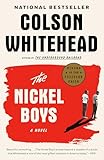
Editors Reads Verdict
The Nickel Boys is an act of formal compression and moral precision — Whitehead strips his prose to its essentials to match the material, and the result is devastating. The novel's structural twist is not a trick but a philosophical statement about whose perspective has been occluded.
What We Loved
- The prose is Whitehead's most controlled and direct — every sentence earns its place
- The structural revelation in the final pages recontextualises the entire novel and deepens its argument
- Elwood and Turner are beautifully contrasted — idealism versus pragmatism, both tested to their limits
- The grounding in the real Dozier School gives the fiction documentary weight
Minor Drawbacks
- The novel's brevity, while intentional, means some characters receive less development than they merit
- The Jim Crow context is rendered concisely — readers unfamiliar with the history may want supplementary material
- The emotional restraint of the prose, while technically admirable, keeps some readers at arm's length
Key Takeaways
- → Institutions of 'reform' have frequently served as sites of racially targeted punishment and abuse
- → Idealism in the face of systematic violence is not naivety but a form of resistance with its own costs
- → The full accounting of historical atrocity requires hearing from survivors on their own terms
- → Structural injustice does not require individual villains — it requires ordinary people doing their jobs
| Author | Colson Whitehead |
|---|---|
| Publisher | Doubleday |
| Pages | 224 |
| Published | July 16, 2019 |
| Language | English |
| Genre | Literary Fiction, Historical Fiction, Fiction |
| Difficulty | Intermediate |
| Best For | Readers of literary and historical fiction; anyone interested in the history of American carceral institutions; readers who want precise, restrained prose applied to urgent moral subjects. |
How The Nickel Boys Compares
The Nickel Boys at a glance against 3 similar books readers weigh alongside it.
| Book | Author | Rating | Best for |
|---|---|---|---|
| The Nickel Boys (this book) | Colson Whitehead | ★ 4.3 | Readers of literary and historical fiction |
| Beloved | Toni Morrison | ★ 4.5 | Serious readers of literary fiction with the patience for challenging, |
| The Hate U Give | Angie Thomas | ★ 4.5 | YA readers and adults seeking authentic engagement with racialized police |
| The Underground Railroad | Colson Whitehead | ★ 4.3 | Readers of literary and historical fiction |
The School That Should Not Have Existed
The Dozier School for Boys in Marianna, Florida, operated for 111 years before it was finally closed in 2011. During that time, it was the site of abuse, torture, and death — documented eventually through survivor testimony, archaeological investigation, and the discovery of unmarked graves. Whitehead read about Dozier in 2014, and the result, five years later, was The Nickel Boys: a novel set at the fictional Nickel Academy, which is Dozier in every particular that matters.
Elwood Curtis is sixteen, growing up in Tallahassee in the early 1960s. He is an idealist — he listens to Martin Luther King speeches on a record borrowed from his school, believes in the arc of the moral universe, and has secured a place at a local college. A single act of wrong-place-wrong-time — accepting a lift in a stolen car — sends him before a judge who has no interest in his character or potential. He arrives at the Nickel Academy committed to the belief that if he works hard and causes no trouble, the institution will recognise his worth.
Turner, his bunkmate, has no such illusions.
Two Ways of Surviving
The novel is organised around the contrast between Elwood and Turner — both intelligent, both trying to survive Nickel, but with fundamentally different theories of how survival is achieved. Elwood believes in the system’s capacity for reform; Turner believes the system does exactly what it intends to do, and that accommodation is the only rational response. Whitehead does not resolve this argument in favour of either position. Both boys are right about something, and neither framework is sufficient.
This is one of the novel’s most honest achievements: it respects the idealism that sustained the civil rights movement without sentimentalising it, and it respects the pragmatic self-protection of those who could not afford idealism without dismissing them as complicit.
The Formal Revelation
Without detailing the novel’s structural surprise — and it should be encountered without preparation — The Nickel Boys withholds a piece of information until the final pages that forces the reader to reassemble everything that has come before. It is not a thriller’s plot twist but a philosophical statement: about who survives, who gets to tell the story, and whose perspective has been systematically excluded from the historical record.
Whitehead’s Shortest and Most Precise Novel
At 224 pages, The Nickel Boys is approximately half the length of The Underground Railroad. The compression is deliberate — Whitehead’s prose here is stripped to essentials, declarative, controlled. The restraint matches the subject: sensationalism would be a form of disrespect to what actually happened at Dozier, and to the boys who did not survive it.
Our rating: 4.3/5
Reading Guides
The Dozier School’s Real History
The Dozier School for Boys — the basis for Whitehead’s Nickel Academy — was one of the most thoroughly documented reform school scandals in American history. After decades of survivor testimony, the state of Florida commissioned investigations in the 2000s, and in 2012 a University of South Florida team began archaeological work on the school’s grounds. They found dozens of unmarked graves in an area known to survivors as the White House, where the worst beatings took place. The school was closed in 2011 after more than a century of operation.
Whitehead read about Dozier in 2014 but waited until The Underground Railroad was finished before beginning work on The Nickel Boys. The decision to compress the historical record into a short, spare novel rather than to expand it into epic form was deliberate — the material, he has said, demanded a different kind of attention than spectacle.
The Pulitzer and Its Significance
Winning the Pulitzer Prize for Fiction in 2020 — awarded for work published in 2019 — made Whitehead the fourth writer ever to win the prize twice, joining William Faulkner, John Updike, and Booth Tarkington. The achievement brought attention to the novel that its subject had long deserved: not the fame of a single institution but the systemic use of reform schools as instruments of racial violence throughout the American South.
What the Novel Asks of the Reader
The Nickel Boys asks something specific of its reader: to hold the historical horror of what it describes — abuse, murder, buried bodies — without being distracted from the two boys at the novel’s centre. Whitehead’s restraint serves this purpose. He does not allow the novel to become a document of atrocity because to do so would be to treat Elwood and Turner as symbols rather than people. The discipline of that refusal is the novel’s greatest achievement.
After Nickel
For readers who finish The Nickel Boys wanting more context, the real Dozier School survivors who testified over decades are the human record that made Whitehead’s fiction possible. The White House Boys — a survivors’ advocacy group — documented their experiences publicly before any official investigation confirmed them. The novel is dedicated to them.
A Real Atrocity Behind the Fiction
The Nickel Boys (2019) draws directly on the Dozier School for Boys, a Florida reform school whose unmarked graves were exhumed only recently. Whitehead sets the idealistic, Kingian Elwood Curtis against the cynical, survival-minded Turner, two boys whose opposed philosophies are tested to destruction inside the Nickel Academy. The restraint of the prose makes the horror land harder, and a late structural turn reframes everything that came before. It won Whitehead a second Pulitzer Prize for Fiction in 2020, making him one of only a handful of writers to win the award twice.
Frequently Asked Questions
What is "The Nickel Boys" about?
Based on the real Dozier School for Boys in Florida, two Black teenagers — Elwood Curtis and Turner — navigate brutal abuse at the Nickel Academy in 1960s Jim Crow America. Winner of the 2020 Pulitzer Prize for Fiction.
Who should read "The Nickel Boys"?
Readers of literary and historical fiction; anyone interested in the history of American carceral institutions; readers who want precise, restrained prose applied to urgent moral subjects.
What are the key takeaways from "The Nickel Boys"?
Institutions of 'reform' have frequently served as sites of racially targeted punishment and abuse Idealism in the face of systematic violence is not naivety but a form of resistance with its own costs The full accounting of historical atrocity requires hearing from survivors on their own terms Structural injustice does not require individual villains — it requires ordinary people doing their jobs
Is "The Nickel Boys" worth reading?
The Nickel Boys is an act of formal compression and moral precision — Whitehead strips his prose to its essentials to match the material, and the result is devastating. The novel's structural twist is not a trick but a philosophical statement about whose perspective has been occluded.
Ready to Read The Nickel Boys?
Check the current price on Amazon.
Check Price on Amazon (paid link)Prices and availability are subject to change. See Amazon for current price.
Review last updated: