Colson Whitehead Books in Order: Complete Reading Guide
All Colson Whitehead books in order — from The Intuitionist to Crook Manifesto. Reading guide for the two-time Pulitzer Prize winner.
Colson Whitehead is an American novelist who has won the Pulitzer Prize for Fiction twice — a distinction shared by only a handful of authors in the prize’s history. He works across multiple modes, from literary historical fiction to comic crime novels.
Colson Whitehead Books in Publication Order
| # | Title | Year |
|---|---|---|
| 1 | The Intuitionist | 1999 |
| 2 | John Henry Days | 2001 |
| 3 | Sag Harbor | 2009 |
| 4 | Zone One | 2011 |
| 5 | The Underground Railroad | 2016 |
| 6 | The Nickel Boys | 2019 |
| 7 | Harlem Shuffle | 2021 |
| 8 | Crook Manifesto | 2023 |
1. The Intuitionist — 1999
A Black female elevator inspector in a corrupt city investigates elevator malfunctions, navigating a divided inspectorate. An allegorical novel that announced Whitehead’s formal ambition but is less accessible than his later work.
2. John Henry Days — 2001
A journalist covers the unveiling of a John Henry postage stamp — a meditation on Black folk heroism, media, and American mythology. National Book Critics Circle finalist.
3. Sag Harbor — 2009
A semi-autobiographical novel about Black teenagers summering in a historically Black enclave of the Hamptons in the 1980s. His warmest and most personal early novel.
4. Zone One — 2011
A literary zombie novel — a soldier clears Manhattan of the undead after a plague. Whitehead using genre conventions to examine trauma and recovery.
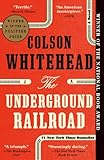
5. The Underground Railroad — 2016
Start here. Cora escapes a Georgia plantation on a literal underground railroad — an actual network of tunnels and trains — and travels north through a succession of alternate American states, each with its own version of racial violence. 2016 National Book Award. 2017 Pulitzer Prize for Fiction.
➡ Full review → | Buy on Amazon →
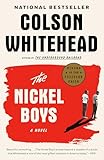
6. The Nickel Boys — 2019
Based on the real Dozier School for Boys in Florida — a reform school where Black children were tortured and murdered throughout the 20th century. Told through two boys sent to the school in the 1960s. 2020 Pulitzer Prize for Fiction.
➡ Full review → | Buy on Amazon →
7. Harlem Shuffle — 2021
Ray Carney runs a furniture store on 125th Street in 1960s Harlem and tries to stay straight while doing occasional business with his criminal cousin. Funny, atmospheric, and historically specific in its portrait of Harlem through the civil rights era.
➡ Full review → | Buy on Amazon →
8. Crook Manifesto — 2023
Ray Carney in 1970s Harlem — arson fires, fiscal crisis, the birth of hip-hop. Three novellas covering 1971, 1973, and 1976.
➡ Full review → | Buy on Amazon →
A Writer of Remarkable Range
Colson Whitehead is one of the most versatile and accomplished writers in contemporary American fiction, a novelist of remarkable range whose work moves freely across genres, subjects, and modes, each novel distinct from the others, while maintaining a consistent intelligence, craft, and ambition. Whitehead is distinguished by his extraordinary range and versatility, for his novels span a striking diversity of genres, subjects, and modes, from historical fiction to crime fiction, from searing engagements with American history to entertainments, and he refuses to confine himself to a single mode or repeat himself. His ability to move freely and successfully across such a range of genres and subjects, mastering each in turn while maintaining a consistent intelligence and craft, is among the most distinctive features of his work and a mark of his exceptional talent. This range is confirmed by his achievement, for he has won the highest recognition for works in different modes, demonstrating his mastery across the diversity of his fiction. Whitehead’s versatility reflects not a lack of consistency but a restless creative intelligence, unwilling to repeat itself and capable of mastering a striking range of genres and subjects. For readers, Whitehead offers fiction of remarkable range and versatility, novels that span a striking diversity of genres and subjects while maintaining a consistent intelligence, craft, and ambition. A writer of remarkable range, Whitehead is one of the most versatile and accomplished novelists in contemporary American fiction, whose work moves freely across genres, subjects, and modes while maintaining a consistent intelligence, craft, and ambition, and who has won the highest recognition for works in different modes.
Confronting American History and Race
A central and recurring concern of Colson Whitehead’s fiction is the confrontation with American history and the realities of race, particularly the history and legacy of slavery and racial injustice, which he explores with power, originality, and unflinching honesty. Whitehead has turned in some of his most celebrated work to the confrontation with American history and race, exploring the history and legacy of slavery, segregation, and racial injustice with power and originality. His acclaimed The Underground Railroad, for instance, confronts the history of slavery through an original and powerful imaginative conceit, while his celebrated The Nickel Boys exposes the brutal realities of racial injustice in a reform school, and both works confront American history and race with unflinching honesty and imaginative power. Whitehead’s engagement with American history and race is marked by its originality, its power, and its unflinching honesty, for he confronts the darkest realities of American history, the brutalities of slavery and racial injustice, with an imaginative power and a moral seriousness that illuminate these realities and their enduring legacy. This confrontation with American history and race is central to Whitehead’s achievement, for his most celebrated works engage the history and legacy of slavery and racial injustice with power, originality, and honesty. For readers, Whitehead offers a powerful and original confrontation with American history and race, the history and legacy of slavery and racial injustice explored with unflinching honesty. Confronting American history and race is a central concern of Whitehead’s fiction, particularly the history and legacy of slavery and racial injustice, which he explores with power, originality, and unflinching honesty in his most celebrated works.
Intelligence, Craft, and Reinvention
What unites Colson Whitehead’s diverse body of work, across its remarkable range of genres and subjects, is a consistent intelligence, craft, and willingness to reinvent, qualities that mark him as one of the most accomplished writers of his generation. Whatever the genre or subject of a given novel, Whitehead brings to his fiction a consistent intelligence, a mastery of craft, and a willingness to reinvent himself and his approach, refusing to settle into a single mode and continually exploring new genres, subjects, and possibilities. His intelligence is evident throughout his work, in its sharp insight, its originality, and its engagement with serious ideas and realities, while his craft is evident in the skill and accomplishment with which he masters each genre and mode he undertakes. And his willingness to reinvent, to move from one genre and subject to another and to refuse to repeat himself, marks him as a restless and ambitious creative intelligence, continually exploring new possibilities. These qualities, intelligence, craft, and reinvention, unite Whitehead’s diverse body of work and mark him as one of the most accomplished and significant writers of his generation, a versatile master who brings consistent intelligence and craft to a remarkable range of genres and subjects. For readers, Whitehead offers fiction of consistent intelligence, craft, and reinvention, a versatile and accomplished body of work that refuses to repeat itself. Intelligence, craft, and reinvention unite Colson Whitehead’s diverse body of work, the consistent qualities that mark him, across his remarkable range of genres and subjects, as one of the most accomplished and significant writers of his generation.
Reading Order Recommendation
For most readers: The Underground Railroad → The Nickel Boys → Harlem Shuffle → Crook Manifesto. This covers his major work in order of both publication and increasing accessibility.
Affiliate disclosure: Links to Amazon on this page are affiliate links. We earn a small commission at no extra cost to you.
Frequently Asked Questions
What Colson Whitehead book should I read first?
Start with The Underground Railroad (2016 Pulitzer Prize) — it is his most celebrated work and an ideal introduction. The Nickel Boys is the natural second read. If you want Whitehead in a different mode, the Harlem crime novels (Harlem Shuffle, Crook Manifesto) come after.
Has Colson Whitehead won the Pulitzer Prize?
Yes — twice. The Underground Railroad won the 2017 Pulitzer Prize for Fiction, and The Nickel Boys won the 2020 Pulitzer Prize for Fiction. He is one of only a handful of authors to win the prize twice.
Are Harlem Shuffle and Crook Manifesto a series?
Yes. They are the first two volumes of a planned Harlem trilogy. Both follow Ray Carney — a furniture store owner on 125th Street — across different periods of 1960s and 1970s Harlem. They should be read in order.