Junot Díaz Books in Order: Complete Bibliography & Best Starting Points
Junot Díaz's complete bibliography in order — from The Brief Wondrous Life of Oscar Wao and Drown to This Is How You Lose Her. Best starting points for new readers.

Junot Díaz (b. 1968) is one of the most original voices in contemporary American literature — his Spanglish prose, his encyclopaedic references (science fiction, comics, Dominican history, Caribbean folklore), and his unflinching account of Dominican-American masculinity constitute a genuinely new contribution to the literary tradition. He immigrated from the Dominican Republic to New Jersey as a child, and his experience of that specific cultural and geographical displacement drives everything he has written.
He won the Pulitzer Prize for The Brief Wondrous Life of Oscar Wao in 2008 and the MacArthur ‘Genius’ Fellowship in 2012. He teaches at MIT.
Where to Start
The Brief Wondrous Life of Oscar Wao (2007)
The essential starting point — Oscar’s brief, wondrous, doomed life in New Jersey and the Dominican Republic, narrated by Yunior with a voice that is simultaneously funny, encyclopaedic, and heartbreaking. The novel’s synthesis of American pop culture, Dominican history, Tolkien-inflected fantasy, and Caribbean folk belief creates a fictional world unlike anything else in contemporary American fiction. Won the Pulitzer Prize.
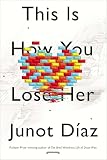
This Is How You Lose Her (2012)
The more accessible starting point — nine stories about Yunior and the women he loses, shorter and more formally conventional than the novel. The best starting point for readers who prefer stories to novels, and essential for understanding Yunior’s character more fully.
Complete Bibliography
| Title | Year | Note |
|---|---|---|
| Drown | 1996 | Debut; stories; Dominican-American |
| The Brief Wondrous Life of Oscar Wao | 2007 | Pulitzer Prize; novel; Yunior narrates |
| This Is How You Lose Her | 2012 | Stories; Yunior; relationships |
A New Voice for the Dominican Diaspora
Junot Díaz emerged as one of the most distinctive and celebrated voices in contemporary American fiction, a writer who brought the experience of the Dominican diaspora into the center of American literature with a voice unlike any other. Born in the Dominican Republic and raised in New Jersey, Díaz draws on the experience of the Dominican immigrant community in America, rendering its life with an authenticity, intensity, and linguistic energy that made his work a revelation. His fiction centers on the Dominican-American experience, the lives of immigrants and their children caught between the Dominican Republic and the United States, navigating the dislocations of diaspora, the weight of Dominican history, and the challenges of identity and belonging in America. Díaz’s significance lies in bringing this experience into American literature with a voice of remarkable originality and power, one that captured the texture, the language, and the reality of the Dominican-American world with unprecedented authenticity and energy. His achievement was recognized with the Pulitzer Prize for his novel The Brief Wondrous Life of Oscar Wao, which confirmed his place as a major figure in contemporary American fiction and as the preeminent literary voice of the Dominican diaspora. For readers, Díaz offers a powerful and original entry into the Dominican-American experience, rendered with an authenticity and linguistic energy that transformed how this experience was represented in American literature. A new voice for the Dominican diaspora, Díaz brought the experience of the Dominican immigrant community into the center of American literature with remarkable originality and power, and his work, recognized with the Pulitzer Prize, established him as the preeminent literary voice of that experience.
Spanglish, Nerds, and the Weight of History
What makes Junot Díaz’s voice so distinctive, and his fiction so original, is its unmistakable style, a vibrant blend of English and Spanish, high literary reference and popular culture, that captures the reality of the Dominican-American world with extraordinary energy. Díaz writes in a distinctive Spanglish, mixing English and Spanish in a way that reflects the actual language of the Dominican-American community and that gives his prose a vibrant, code-switching energy. He blends this with a wealth of references to popular culture, science fiction, fantasy, and comics, infusing his fiction with the sensibility of the nerd and the geek, and juxtaposing this popular culture with high literary reference and the weight of history. And through and beneath this energetic surface runs a deep engagement with the weight of history, particularly the brutal history of the Dominican Republic under the dictator Trujillo, whose violence and its long aftermath haunt his characters and their families. This distinctive style, the blend of Spanglish, popular culture, nerd sensibility, and historical depth, is the signature of Díaz’s fiction and the source of much of its originality and power, capturing the reality and the language of the Dominican-American world while engaging the weight of Dominican history and the dislocations of diaspora. The energy and originality of this voice account for much of Díaz’s impact, for it brought a new language and sensibility into American literature, one that reflected the actual texture of the Dominican-American experience. Spanglish, nerds, and the weight of history are the distinctive elements of Díaz’s style, the vibrant blend of language, popular culture, and historical depth that gives his fiction its originality and power, and that captures the reality of the Dominican-American world with extraordinary energy.
A Small but Influential Body of Work
Junot Díaz’s published fiction is relatively small, consisting of a celebrated novel and collections of short stories, yet its influence on contemporary American literature has been considerable, far exceeding what its modest size might suggest. Díaz is not a prolific writer, and his reputation rests on a compact body of work, but this work has had an outsized impact, influencing how the immigrant and diaspora experience is represented in American fiction and inspiring a generation of writers with its distinctive voice and its authentic rendering of the Dominican-American world. His novel The Brief Wondrous Life of Oscar Wao, the centerpiece of his work and the winner of the Pulitzer Prize, is the essential book and the ideal starting point, a powerful and original novel that brings together all the distinctive elements of his fiction, the energetic voice, the Dominican-American experience, the weight of Trujillo’s history, and the blend of popular culture and literary ambition. His story collections extend and complement the novel, exploring the Dominican-American experience in shorter form and displaying the same distinctive voice and concerns. For readers, the path through Díaz’s work is clear: The Brief Wondrous Life of Oscar Wao is the essential starting point, the celebrated novel that represents the fullest expression of his vision, with the story collections offering further exploration of his world and voice. The modest size of his body of work belies its considerable influence, for Díaz’s compact but powerful fiction has significantly shaped contemporary American literature. A small but influential body of work, Díaz’s fiction has had an outsized impact on contemporary American literature, and his Pulitzer-winning novel The Brief Wondrous Life of Oscar Wao offers the essential starting point and the fullest expression of his distinctive vision.
Reading Order Recommendations
New to Díaz: The Brief Wondrous Life of Oscar Wao → This Is How You Lose Her.
Stories first: Drown → This Is How You Lose Her → The Brief Wondrous Life of Oscar Wao.
Publication order: Drown → The Brief Wondrous Life of Oscar Wao → This Is How You Lose Her.
Frequently Asked Questions
What is the best Junot Díaz book to start with?
The Brief Wondrous Life of Oscar Wao (2007) is the best starting point — a Pulitzer Prize-winning novel about Oscar de León, an overweight Dominican-American nerd in New Jersey who dreams of becoming the Dominican Tolkien and finding love. Díaz's voice (Spanglish, streetwise, encyclopaedic, funny, and grieving) is the most original in contemporary American literature. This Is How You Lose Her (2012) is the more accessible starting point — nine linked stories about Yunior, a recurring character in Díaz's work, and the women he cheats on and loses.
What is The Brief Wondrous Life of Oscar Wao about?
The Brief Wondrous Life of Oscar Wao (2007) follows Oscar de León, a Dominican-American boy growing up in New Jersey, who loves fantasy and science fiction, is chronically unsuccessful with women, and dreams of finding love. The novel spans three generations and two continents — Oscar's family's history under the Dominican dictator Trujillo, his mother's immigration to the United States, and Oscar's own doomed romantic quest. Narrated primarily by Yunior, Oscar's college roommate, the novel is simultaneously a family saga, a political history of the Dominican Republic under Trujillo, a meditation on the 'fukú' (curse) that pursues the family, and an elegy for a young man who didn't quite fit. Won the Pulitzer Prize.
What is This Is How You Lose Her about?
This Is How You Lose Her (2012) collects nine linked stories, most narrated by Yunior — the same character who narrates sections of The Brief Wondrous Life of Oscar Wao. Yunior is charming, smart, relentlessly unfaithful, and capable of seeing exactly what he is doing while being unable to stop. The stories follow him from his Dominican childhood (with his father and brother) through his relationships in the United States, each one ending in the loss of the women who loved him. The collection is about desire, machismo, immigration, and the gap between the man Yunior knows he should be and the man he is.
What is the 'fukú' in Oscar Wao?
The 'fukú americanus' is the novel's central metaphor — a curse, originating in the slave trade, that has afflicted the Americas since Columbus and that specifically pursues Oscar's family. Díaz presents it as a genuine feature of the world, not merely a folk belief: the Trujillo dictatorship, Oscar's mother's abuse, and Oscar's own inability to find love are all manifestations of the fukú. Its counterpart is the 'zafa' — a charm against the curse, most often invoked through storytelling. The novel itself is a zafa: an attempt to counter the curse by naming it.