Where to Start with Junot Díaz: A Reading Guide
Where to start with Junot Díaz — whether to begin with The Brief Wondrous Life of Oscar Wao, Drown, or This Is How You Lose Her. A complete reading guide.

Junot Díaz (born 1968) is the Dominican-American novelist and short story writer whose debut collection Drown (1996) introduced a new voice in American fiction and whose novel The Brief Wondrous Life of Oscar Wao (2007) won the Pulitzer Prize for Fiction, the National Book Critics Circle Award, and is widely considered one of the most significant American novels of the 2000s. Díaz emigrated from the Dominican Republic to New Jersey at age six; his fiction draws on Dominican-American immigrant experience, the legacy of the Trujillo dictatorship, masculinity and its failures, and the specific cultural position of living between two worlds without fully belonging to either. His prose style — code-switching, allusive, carnivalesque, and technically precise — is among the most distinctive in contemporary American literature. He has published only three books of fiction but their cumulative impact has been disproportionate to their number.
Where to Start: The Brief Wondrous Life of Oscar Wao (2007)
The essential Díaz — and one of the most electrifying novels in recent American fiction. Oscar de León is fat, nerdy, desperately romantic, and profoundly unlucky in love. Growing up in Paterson, New Jersey, he is that rarest of Dominican men: one who has never had a girlfriend, who prefers Tolkien and Asimov to the masculine rituals of Dominican-American masculinity, and who nurses an absolute, hopeless desire to be loved by a woman — any woman.
The novel is narrated primarily by Yunior, Oscar’s college roommate, and moves between New Jersey in the 1980s and 1990s, Oscar’s mother’s story in the 1960s, and his grandfather’s story under the Trujillo dictatorship — carrying the thread of the fukú, the generational curse that Díaz argues the Trujillo regime placed on the Dominican people and that Oscar’s family has been unable to escape. The footnotes (digressive, furious, and often the novel’s best writing) describe the history of the Trujillo regime in terms that move between academic citation and genuine outrage.
What makes the novel astonishing is how it holds together: the genre references (Tolkien, Watchmen, Star Wars) are not decorations but structural elements; Oscar’s nerdiness is both a personal limitation and a metaphor for the Dominican diaspora’s relationship to American popular culture; the love story at the centre is genuinely moving. The prose is relentless — dense, funny, angry, and beautiful within the space of a single sentence.
Drown (1996)
The debut — ten stories that introduced Yunior, the Dominican Republic and New Jersey as twin poles of an immigrant consciousness, and a prose style unlike anything being published in American fiction at the time. The stories are often brutal (poverty, domestic violence, the specific cruelties of machismo) but also funny, tender, and possessed of an extraordinary economy. The title story, about a young man who can’t admit he’s been left behind while his friends have moved on, is a masterclass in compression.
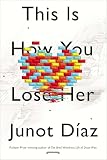
This Is How You Lose Her (2012)
Nine stories — mostly Yunior again, mostly about infidelity and its aftermath. The collection is more tonally consistent than Drown and reads almost as a novel in stories: Yunior is not a monster but he behaves monstrously, and the collection is merciless about the gap between the story men tell themselves about their behaviour and its actual costs. The title story is among the finest pieces of short fiction published in the United States in the last twenty years.
Why The Brief Wondrous Life of Oscar Wao Is the Ideal First Book
For a reader new to Junot Díaz, The Brief Wondrous Life of Oscar Wao is the ideal first book because it is his Pulitzer Prize-winning novel and the fullest expression of his distinctive gifts, the dazzling, energetic voice, the blending of cultures and registers, and the powerful engagement with identity, history, and family. The Brief Wondrous Life of Oscar Wao follows an overweight, geeky Dominican American outcast and his family across generations and continents, weaving together the history of the Dominican Republic and the immigrant experience, in a dazzling, funny, and moving novel. As an entry point it is ideal, for it is his most celebrated work and a perfect example of his energetic, inventive, and powerful fiction. It welcomes the newcomer with its dazzling voice, its compelling story, and its emotional and historical depth, drawing the reader into his distinctive vision. It is his most famous work and the one that best represents his gifts, so the new reader encounters Díaz at his most characteristic. For the newcomer, then, The Brief Wondrous Life of Oscar Wao is the natural and ideal starting point.
What to Expect as a New Reader
As a new reader, you can expect The Brief Wondrous Life of Oscar Wao to be a dazzling, energetic, and emotionally powerful novel. You can expect a dazzling voice, for Díaz writes with energy, slang, wit, and a distinctive blend of English and Spanish, the literary and the pop-cultural. You can expect a compelling story, for the novel follows a geeky Dominican American outcast and his family across generations. You can expect a blending of cultures and registers, for Díaz weaves together the immigrant experience, nerd culture, and the history of the Dominican Republic. You can expect engagement with history, for the novel confronts the brutal history of the Dominican Republic under dictatorship. You can expect humor, heartbreak, and energy. You should be prepared for strong language and some difficult material. Expect, in short, a dazzling, energetic, and emotionally powerful novel, a superb introduction to Díaz’s gifts.
Going Deeper After Your First Book
Once The Brief Wondrous Life of Oscar Wao has introduced you to Díaz’s gifts, the reader who wishes to go deeper can explore his short stories, which continue his dazzling, energetic voice, his blending of cultures, and his powerful engagement with identity, love, and the immigrant experience. His acclaimed story collections follow recurring characters through love, heartbreak, family, and the Dominican American experience, marked by the same energy, wit, and emotional depth that distinguish his novel. Reading these after The Brief Wondrous Life of Oscar Wao deepens your appreciation of Díaz’s distinctive gifts, the dazzling voice, the blending of cultures, and the engagement with identity and history. His characteristic strengths run through his work, and the reader who has enjoyed The Brief Wondrous Life of Oscar Wao will find them across his stories. Building your reading journey through Díaz is a matter of following his fiction from The Brief Wondrous Life of Oscar Wao into his story collections. The reader who begins here and continues will find one of the most energetic and distinctive voices in contemporary American fiction.
Reading Junot Díaz
Begin with The Brief Wondrous Life of Oscar Wao — it is Díaz’s most fully realised work and the book through which his other fiction is best understood. Read Drown for the earlier, rawer Yunior; This Is How You Lose Her for the mature stories. All three can be read in any order, though the novels gain resonance from knowing the short story collections.
For the full Junot Díaz bibliography, reviews, and biography, visit the Junot Díaz author page on Editors Reads.
Affiliate disclosure: Links to Amazon on this page are affiliate links. We earn a small commission at no extra cost to you.
Frequently Asked Questions
Where should I start with Junot Díaz?
The Brief Wondrous Life of Oscar Wao (2007) is the essential starting point — Díaz's Pulitzer Prize-winning novel about Oscar de León, an overweight Dominican-American nerd in New Jersey obsessed with science fiction and fantasy, who has never had a girlfriend and who carries his family's history of tragedy and political horror (what the novel calls the fukú, the curse of the Trujillo dictatorship) in his genes. The novel won the Pulitzer Prize for Fiction in 2008 and is among the most important American novels of the 2000s. Drown is the alternative for readers who want short stories.
What is Drown about?
Drown (1996) is Díaz's debut — ten short stories set among Dominican-American communities in New Jersey and the Dominican Republic. The stories follow recurring characters (particularly Yunior, who would become the narrator of Oscar Wao and This Is How You Lose Her) through immigration, poverty, masculinity, family dissolution, and the specific experience of living between two cultures. Díaz's prose — code-switching between English and Spanish, densely allusive, vernacular and literary simultaneously — announced a completely new voice in American fiction.
What is This Is How You Lose Her about?
This Is How You Lose Her (2012) is Díaz's second story collection — nine stories, most narrated by Yunior, about infidelity, machismo, grief, and the aftermath of bad choices. The collection is more unified in theme and voice than Drown; its portrait of Yunior's chronic infidelity and the women who loved and left him is both damning and strangely sympathetic. The title story is among the finest in American short fiction of its decade.
What makes Díaz's prose style distinctive?
Díaz writes in a code-switching style that moves fluidly between English and Spanish, between academic literary register and Dominican-American slang, between direct address to the reader ('you') and omniscient narrative. He is also heavily allusive — Oscar Wao in particular is saturated with references to science fiction, fantasy, comic books, and genre fiction that function both as characterisation and as structural metaphor. His prose is simultaneously vernacular and formally sophisticated; the density rewards rereading.