Where to Start with Colson Whitehead: A Reading Guide
Where to start with Colson Whitehead — whether to begin with The Underground Railroad, The Nickel Boys, or Harlem Shuffle. A complete reading guide to Whitehead's novels.
Colson Whitehead (born 1969) is the only American novelist to have won the Pulitzer Prize for Fiction twice — for The Underground Railroad in 2017 and for The Nickel Boys in 2020 — and is widely regarded as the most important Black American novelist of his generation. His range is extraordinary: he has written a zombie apocalypse novel, a poker memoir, a Harlem crime novel, and two devastating historical novels about American racism. What connects his work is formal intelligence, moral seriousness, and a refusal to sentimentalize the history he confronts.
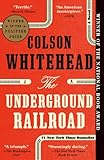
Where to Start: The Underground Railroad (2016)
The essential Whitehead — and one of the most significant American novels of the past decade. Cora is a slave on a Georgia cotton plantation whose grandmother was captured in Africa and whose mother disappeared when Cora was ten, leaving her alone and vulnerable. She escapes with a fellow slave, Caesar, via a literal underground railroad — actual trains running through tunnels beneath the South. Each state she reaches is a different version of American racial ideology: South Carolina’s paternalistic medical experiments, North Carolina’s violent racial purity. Whitehead uses the fantastical element to make visible what the language of history often softens: the systematic nature of American racism and the human cost of surviving it.
Pulitzer Prize, National Book Award; should be on any list of essential American novels.
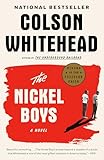
The Nickel Boys (2019)
The more concentrated and, arguably, the more formally perfect of the two Pulitzer winners. Elwood Curtis, a Black teenager in 1960s Tallahassee who has grown up listening to Martin Luther King’s speeches and believing in the possibility of justice, wins a college scholarship and is arrested while hitchhiking a ride. He is sent to the Nickel Academy, a Florida reform school where boys are beaten, exploited, and sometimes killed. His friendship with Turner, who has no illusions about justice, is the novel’s central relationship and the vehicle for Whitehead’s most direct engagement with the question of whether hope is possible in the face of systematic violence.
The novel’s final pages contain one of the most devastating revelations in recent American fiction.
Harlem Shuffle (2021)
A deliberate change of gear — Whitehead’s most pleasurable novel. Ray Carney owns a furniture store in Harlem in the 1960s and tries to live a legitimate life, but his cousin Freddie keeps pulling him back toward the criminal networks that run through Harlem’s social fabric. The novel follows Ray across three episodes spanning the decade, each involving a heist or a crime, rendered with the atmospheric precision of a period novelist who knows his Harlem in fine detail. Less morally punishing than Whitehead’s previous work; a genuine genre pleasure as well as a literary one.
The Intuitionist (1999)
Whitehead’s debut — a noir-inflected allegorical novel set in a fictional American city where elevator inspectors are divided into two camps (Empiricists and Intuitionists) and a Black female elevator inspector named Lila Mae Watson becomes entangled in a political conspiracy involving a mythical perfect elevator. The novel is Whitehead at his most formally experimental and least accessible — but for readers interested in seeing where his literary ambition began, it is a fascinating early statement. The elevator-inspection allegory for race in America is both strange and illuminating.
Why The Underground Railroad Is the Ideal First Book
For a reader new to Colson Whitehead, The Underground Railroad is the ideal first book because it is his Pulitzer Prize-winning masterwork and a powerful expression of his distinctive gifts, the inventive imagination, the formal daring, and the unflinching engagement with American history and race. The Underground Railroad follows an enslaved woman’s flight to freedom, reimagining the historical underground railroad as a literal railroad beneath the earth, in a powerful, inventive, and harrowing novel. As an entry point it is ideal, for it is his most celebrated work and a perfect example of his inventive, powerful, and historically engaged fiction. It welcomes the newcomer with its compelling story, its inventive conceit, and its emotional and moral power, drawing the reader into his distinctive vision. It is among his major works and the one that best represents his gifts, so the new reader encounters Whitehead at his finest. For the newcomer, then, The Underground Railroad is the natural and ideal starting point, on harrowing subject matter handled with seriousness.
What to Expect as a New Reader
As a new reader, you can expect The Underground Railroad to be an inventive, powerful, and harrowing novel. You can expect an inventive conceit, for the novel reimagines the historical underground railroad as a literal railroad beneath the earth. You can expect a compelling story, for it follows an enslaved woman’s flight to freedom through a series of states, each rendering a different facet of American racism. You can expect unflinching engagement with history, for the novel confronts the brutal realities of slavery and racism. You can expect formal daring, for Whitehead blends history, allegory, and invention. You can expect emotional and moral power and a gripping narrative. You can expect clear, controlled, powerful prose. You should be prepared for harrowing material. Expect, in short, an inventive, powerful, and harrowing novel, a superb introduction to Whitehead’s gifts.
Going Deeper After Your First Book
Once The Underground Railroad has introduced you to Whitehead’s gifts, the reader who wishes to go deeper can explore his other novels, which reveal his remarkable range across genre and subject while remaining marked by his inventive imagination and his engagement with American life and race. His second Pulitzer Prize-winning novel confronts the horrors of a brutal reform school and its long aftermath, while his other works range across literary fiction, a zombie thriller, a heist novel, and a coming-of-age story, displaying his versatility. Reading these after The Underground Railroad deepens your appreciation of Whitehead’s distinctive gifts, the inventive imagination, the formal daring, and the engagement with history and race. His characteristic strengths run through his varied work. Building your reading journey through Whitehead is a matter of following his fiction from The Underground Railroad into his other novels. The reader who begins here and continues will find one of the most inventive and acclaimed novelists in contemporary American literature.
Reading Colson Whitehead
Whitehead’s particular achievement is the integration of genre conventions (the slave narrative, the institutional abuse narrative, the crime novel) with literary precision and historical seriousness. His novels are not easy — they do not allow the reader to distance themselves from the suffering they describe — but they are never gratuitous. Begin with The Underground Railroad for the fullest demonstration of his gifts; begin with The Nickel Boys for the most concentrated; begin with Harlem Shuffle for the most pleasurable. All three lead naturally to each other.
Frequently Asked Questions
Where should I start with Colson Whitehead?
The Underground Railroad (2016) is both the most widely read and the best starting point — a Pulitzer Prize-winning novel that imagines the Underground Railroad as a literal railway system running beneath the American South, following Cora, a slave on a Georgia cotton plantation, as she attempts to escape to the North. It is Whitehead's most fully realised novel and his most emotionally powerful engagement with American slavery. The Nickel Boys (2019) is an equally excellent alternative — shorter, more concentrated, and equally devastating in its account of a reform school in Jim Crow Florida. Both won the Pulitzer Prize.
What is The Underground Railroad about?
The Underground Railroad (2016) follows Cora, a slave on a Georgia cotton plantation, who escapes with a fellow slave named Caesar using a literal underground railroad — actual trains running through actual tunnels beneath the South. As Cora travels from state to state, each stop reveals a different version of American racism: South Carolina's medical experiments on Black bodies, North Carolina's violent purge of its Black population, Tennessee's burned landscape. The novel is historical fiction that uses the fantastical element of the literal railroad to strip away the rationalizations Americans use and show the system's violence as nakedly as possible.
What is The Nickel Boys about?
The Nickel Boys (2019) is based on the Dozier School for Boys in Marianna, Florida, a notorious reform school where abuse, violence, and murder were routine from its founding in 1900 until its closure in 2011. Whitehead follows Elwood Curtis, a Black teenager in 1960s Florida who wins a scholarship to college and is arrested on his way there through no fault of his own, and his friendship with the cynical Turner at the reform school. The novel is Whitehead's most formally controlled and his most economically devastating; its final revelation is one of the most powerful in recent American fiction.
What is Harlem Shuffle about?
Harlem Shuffle (2021) is a deliberate change of register for Whitehead — a Harlem crime novel set in the 1960s, following Ray Carney, a furniture store owner who tries to stay on the right side of the law but keeps being pulled into the orbit of his criminal cousin Freddie and the criminal networks that run through Harlem. The novel is Whitehead's most pleasurable and least morally punishing — a genre novel with literary ambitions, a period piece with great atmospheric texture, and a portrait of Harlem's economic and social life with real anthropological depth.