Amor Towles Books in Order: Complete Bibliography & Best Starting Points
Amor Towles's complete bibliography in order — from A Gentleman in Moscow and Rules of Civility to The Lincoln Highway. Best starting points for new readers.

Amor Towles (b. 1964) is one of the most popular literary novelists of the past decade — A Gentleman in Moscow sold over two million copies, spending years on bestseller lists, and confirmed Towles as a writer who can combine literary quality with wide commercial appeal. He was an investment professional for many years before becoming a full-time writer.
His work is characterised by elegant prose, historical settings (1930s New York, 1920s–1950s Moscow, 1954 America), and a fundamental warmth: his protagonists are people of genuine decency navigating difficult circumstances, and Towles refuses to be cynical about them.
Where to Start
A Gentleman in Moscow (2016)
The essential starting point — Count Rostov’s house arrest in the Metropol Hotel across thirty years of Soviet history. Towles’s most accomplished novel and the most perfectly balanced between historical depth and present-tense delight. The relationship between Rostov and Sofia (who grows up in the hotel as his de facto ward) is the most moving element; the account of 1950s Moscow is the most interesting historically.
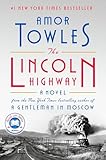
The Lincoln Highway (2021)
The most accessible and most propulsive of Towles’s novels — an eighteen-day countdown from Emmett’s release from the work farm to the novel’s end, narrated by four voices. Less reflective than A Gentleman in Moscow and more concerned with action; the best starting point for readers who prefer plot to atmosphere.
Rules of Civility (2011)
Towles’s debut — 1930s New York, Katey Kontent, and the world of cocktail parties and class distinction she navigates through intelligence and ambition. The most conventionally structured of his novels and the one most directly engaged with the specifically American question of how far talent and will can compensate for the absence of inherited advantage.
Complete Bibliography
| Title | Year | Note |
|---|---|---|
| Rules of Civility | 2011 | 1930s New York; debut |
| A Gentleman in Moscow | 2016 | Metropol Hotel; best starting point |
| The Lincoln Highway | 2021 | 1954 road novel; four narrators |
| Table for Two | 2024 | Stories; novella |
A Novelist of Elegance and Charm
Amor Towles has established himself as a distinctive contemporary novelist whose fiction is marked by its elegance, its charm, and its sophisticated craftsmanship, offering readers the pleasures of beautifully written, gracefully constructed, and deeply satisfying storytelling. Towles’s novels are distinguished by their elegance and charm, by the grace and sophistication of their prose and construction, and by the deep satisfaction of their well-crafted storytelling, and these qualities are among the defining features of his work. He is a writer of notable craftsmanship and sophistication, and his fiction offers the pleasures of elegant prose, graceful construction, and charming, engaging storytelling, combining literary quality with broad appeal and deep readerly satisfaction. His novels are at once sophisticated and accessible, elegant and engaging, offering the pleasures of fine writing and graceful construction alongside the satisfactions of compelling and charming storytelling. This combination of elegance, charm, and craftsmanship is central to Towles’s distinctive appeal, for his fiction offers the pleasures of beautifully written and gracefully constructed storytelling, sophisticated yet accessible, elegant yet deeply engaging. For readers who value elegance, charm, and craftsmanship, Towles offers a distinctive and deeply satisfying fiction, the work of a novelist whose elegant prose and graceful storytelling combine literary quality with broad appeal. A novelist of elegance and charm, Towles is distinguished by the elegance, charm, and sophisticated craftsmanship of his fiction, which offers the pleasures of beautifully written and gracefully constructed storytelling, combining literary quality with broad appeal and deep readerly satisfaction.
Civility, Fate, and the Examined Life
Beneath their elegant surfaces, Amor Towles’s novels engage with deeper themes of civility, fate, and the art of living well, exploring how individuals navigate the circumstances and constraints of their lives with grace, dignity, and purpose. Towles is concerned with civility, with the manners, grace, and dignity with which individuals conduct themselves, and his fiction often celebrates and explores the art of living with civility, refinement, and purpose, even amid difficult or constraining circumstances. He is also concerned with fate and circumstance, with the way that individuals are shaped and constrained by the circumstances of their lives and the turns of fortune, and with how they navigate these constraints with grace, resourcefulness, and dignity. His celebrated novel A Gentleman in Moscow, in which an aristocrat confined under house arrest to a grand hotel must construct a meaningful and dignified life within the constraints of his confinement, exemplifies these themes, exploring civility, fate, and the art of living well within constraint. Beneath the elegant surface of Towles’s fiction, then, runs a serious engagement with how to live well, with civility and dignity, with the navigation of fate and circumstance, and with the art of constructing a meaningful and graceful life. For readers, these themes give Towles’s elegant fiction its depth and its resonance, the engagement with civility, fate, and the art of living well beneath its charming surface. Civility, fate, and the examined life are deeper themes of Towles’s fiction, which explores how individuals navigate the circumstances and constraints of their lives with grace, dignity, and purpose, and which celebrates the art of living well, with civility and refinement, even amid difficult or constraining circumstances.
The Pleasures of a Well-Made Novel
Amor Towles’s fiction offers, above all, the distinctive and increasingly rare pleasures of the well-made novel, the gracefully constructed, beautifully written, and deeply satisfying work whose every element is crafted with care and skill. Towles is a master of construction, and his novels are notable for their graceful and sophisticated structure, their careful and skillful construction, and the deep satisfaction of their well-made design, and these pleasures of craftsmanship are central to his appeal. His novels are constructed with evident care and skill, their structures elegant and satisfying, their elements gracefully arranged, and their stories told with a craftsmanship that offers the distinctive pleasures of the well-made novel. In an age that does not always prize such qualities, Towles offers the increasingly rare pleasures of the gracefully constructed and beautifully written novel, the deep satisfaction of a story told with care, skill, and elegance. This mastery of construction and craftsmanship, the creation of gracefully made and deeply satisfying novels, is among the most distinctive and appealing features of Towles’s fiction, offering readers the particular pleasures of the well-made novel. For readers who value craftsmanship and construction, who delight in the gracefully made and beautifully written novel, Towles offers some of the most satisfying examples in contemporary fiction. The pleasures of a well-made novel are central to Towles’s appeal, for his fiction offers the distinctive and increasingly rare satisfactions of the gracefully constructed, beautifully written, and skillfully crafted work, whose every element is arranged with care and skill to offer the deep pleasures of the well-made novel.
Reading Order Recommendations
New to Towles: A Gentleman in Moscow → The Lincoln Highway → Rules of Civility.
Chronological: Rules of Civility → A Gentleman in Moscow → The Lincoln Highway.
All fiction: Rules of Civility → A Gentleman in Moscow → The Lincoln Highway → Table for Two.
Frequently Asked Questions
What is the best Amor Towles book to start with?
A Gentleman in Moscow (2016) is the best starting point — Count Alexander Rostov, sentenced in 1922 to house arrest in Moscow's Metropol Hotel for the rest of his life, and the thirty years he spends in the hotel as Soviet Russia unfolds around him. The novel is warm, witty, and beautifully constructed — Towles's prose has the elegant precision of the count himself. The Lincoln Highway (2021) is the most plot-driven of his novels and the easiest to read quickly — two brothers in 1954, a cross-country journey that goes wrong, structured as an eighteen-chapter countdown from Day One to Day Eighteen.
What is A Gentleman in Moscow about?
A Gentleman in Moscow (2016) follows Count Alexander Rostov, an aristocrat who is sentenced by a Bolshevik tribunal in 1922 to permanent house arrest in the Metropol Hotel — should he leave, he will be shot. The novel covers 1922 to 1954: Rostov's life in the hotel's attic room, the friendships he forms (with a young girl named Sofia who grows up in the hotel, with the chef, with the head waiter), and the ways in which the Soviet world outside the hotel filters into his elegant, constrained existence. Towles writes about luxury, culture, and the relationship between a civilised person and an uncivilised world with a lightness and wit that makes the novel one of the most enjoyable of recent years.
What is Rules of Civility about?
Rules of Civility (2011) is Towles's debut — Katey Kontent, a young woman of modest means in 1930s New York, and her navigation of the city's social stratifications through friendship, ambition, and the accident of meeting Tinker Grey, a wealthy young man, on New Year's Eve 1937. The novel is an examination of class, ambition, and the specific world of New York in the 1930s, written in the first person by an older Katey looking back. More conventionally plotted than Towles's later novels and the most direct account of female ambition in a period when female ambition was constrained.
What is The Lincoln Highway about?
The Lincoln Highway (2021) is set in June 1954 — Emmett Watson, eighteen, is released from a juvenile work farm in Kansas after serving fifteen months for a manslaughter charge. He intends to collect his eight-year-old brother Billy and drive to California to start a new life. Two other boys from the work farm stow away in the trunk of the car and redirect the journey east to New York City. The novel is structured as eighteen chapters, one for each day, narrated by four alternating voices. Towles uses the road novel form to examine questions of fate, chance, moral responsibility, and what a young man can make of himself.