Where to Start with Amor Towles: A Reading Guide
Where to start with Amor Towles — whether to begin with A Gentleman in Moscow, Rules of Civility, or The Lincoln Highway. A complete reading guide.

Amor Towles (born 1964) is the American novelist whose combination of historical glamour, warmth toward his characters, and elegant prose has made him one of the most widely read serious novelists of the past decade. His novels are set in specific historical moments (New York in 1938, Russia from 1922 to 1954, America in 1954) and are precise about period detail; they are also, at their core, stories about people attempting to live with grace and integrity in the face of circumstances that resist both. He is a rarity in contemporary fiction: a novelist of unambiguous warmth who is also a genuinely serious writer.
Where to Start: A Gentleman in Moscow (1938)
The essential Towles — and one of the most beloved novels of the last decade. Count Alexander Rostov, a Russian aristocrat, is sentenced in 1922 by a Bolshevik tribunal to permanent house arrest in the Metropol Hotel. Unable to leave the hotel for the rest of his life, Rostov transforms his confinement: he befriends the chef, the maître d’, and the hotel seamstress; he takes a young girl named Sofia under his care when her parents are swept away by the purges; he observes Soviet history through the hotel’s windows and dining rooms; and he maintains, through every deprivation and danger, the warmth, curiosity, and good cheer that are his most essential qualities.
The novel is an argument for civility, friendship, and the richness that a disciplined mind can extract from any set of circumstances. It is also tremendously pleasurable to read — Towles’s prose is effortlessly elegant and his Count is one of the most lovable protagonists in recent fiction.
Rules of Civility (2011)
Towles’s debut — and the novel that established his characteristic virtues: historical specificity, elegant prose, a protagonist of intelligence and moral clarity, and an ear for the social distinctions that shape what people become. Katey Kontent, a young woman of modest background, is working as a stenographer in New York City in 1938 when she meets Tinker Grey, a handsome, wealthy banker, at a jazz club on New Year’s Eve. The novel follows the year in which Katey navigates Manhattan’s overlapping social worlds — learning what she wants, what she is willing to do for it, and what she will refuse to become.
The novel has the quality of a great 1930s film: precise observation of how people dress, talk, and move; a setting rendered with the loving attention of someone who has thought carefully about what Manhattan looked like and felt like in that particular year; and a heroine worth spending a novel with.
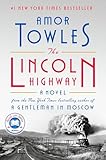
The Lincoln Highway (2021)
Towles’s most formally complex novel — narrated by four different characters across ten days in June 1954, as a plan for a simple road trip from Nebraska to California unravels spectacularly. Emmett Watson, recently released from a juvenile work farm, intends to drive across the country with his eight-year-old brother Billy to start over. Two fellow inmates appear at his home and redirect everything: Duchess, charming and unreliable; Woolly, gentle and broken. The Lincoln Highway runs east to west across America; the novel takes everyone east, toward New York and toward consequences that Towles renders with uncharacteristic bleakness.
The Lincoln Highway is Towles’s departure from the pure warmth of A Gentleman in Moscow — it is darker, more formally ambitious, and more emotionally complex. An excellent second Towles after his masterpiece.
Why A Gentleman in Moscow Is the Ideal First Book
For a reader new to Amor Towles, A Gentleman in Moscow is the ideal first book because it is among his most beloved and acclaimed novels and the fullest expression of his distinctive gifts, the elegant prose, the warmth and wit, and the rich, immersive storytelling. A Gentleman in Moscow follows a charming Russian count placed under house arrest in a grand Moscow hotel for decades, in an elegant, witty, and deeply humane novel of a life lived within four walls and a changing nation glimpsed from within them. As an entry point it is ideal, for it is one of his best-known works and a perfect example of his elegant, warm, and immersive fiction. It welcomes the newcomer with its charming hero, its elegant prose, and its warmth and wit, drawing the reader into his distinctive vision. It is among his most famous works and a fine representation of his gifts, so the new reader encounters Towles at his most characteristic. For the newcomer, then, A Gentleman in Moscow is an excellent starting point.
What to Expect as a New Reader
As a new reader, you can expect A Gentleman in Moscow to be an elegant, witty, and deeply humane novel. You can expect a charming hero, for the novel follows a cultured, witty Russian count placed under house arrest in a grand Moscow hotel. You can expect elegant prose, for Towles writes with grace, polish, and style. You can expect warmth and wit, for the novel is charming, funny, and full of humanity. You can expect a confined yet rich setting, for the count’s world is the hotel, rendered with immersive detail, while the changing nation is glimpsed from within. You can expect rich characterization and a moving, life-spanning story. You can expect themes of dignity, adaptation, friendship, and the art of living well. You can expect an immersive, satisfying read. Expect, in short, an elegant, witty, and deeply humane novel, a fine introduction to Towles’s gifts.
Going Deeper After Your First Book
Once A Gentleman in Moscow has introduced you to Towles’s gifts, the reader who wishes to go deeper can explore his other novels, which continue his elegant prose, his warmth and wit, and his rich, immersive storytelling. His debut novel evokes the glamour and ambition of late-1930s New York through the story of a young woman finding her way, while his later novel follows a cross-country journey in 1950s America with the same elegance and narrative richness. Reading these after A Gentleman in Moscow deepens your appreciation of Towles’s distinctive gifts, the elegant prose, the warmth and wit, and the rich, immersive storytelling. His characteristic strengths run through his work, and the reader charmed by A Gentleman in Moscow will find them across his novels. Building your reading journey through Towles is a matter of following his fiction from A Gentleman in Moscow into his other novels. The reader who begins here and continues will find one of the most elegant and warmly humane storytellers in contemporary fiction.
Reading Amor Towles
Towles’s fiction is built on the belief that elegance, grace, and genuine goodness are not weaknesses but forms of strength — and that the most revealing test of character is how a person responds to circumstances they didn’t choose and can’t control. His prose is pleasurable in itself (he writes sentences worth reading twice), his historical settings are carefully researched and vividly rendered, and his protagonists are people worth spending several hundred pages with. Begin with A Gentleman in Moscow for the most complete and most beloved statement of his vision; read Rules of Civility for the sharpest social observation; approach The Lincoln Highway for the most formally ambitious and emotionally demanding.
Frequently Asked Questions
Where should I start with Amor Towles?
A Gentleman in Moscow (2016) is both the most widely beloved and the best starting point — the novel in which Count Alexander Rostov is sentenced in 1922 by a Bolshevik tribunal to house arrest in Moscow's Metropol Hotel for the rest of his life, and in which, across the following thirty-odd years, he constructs a life of astonishing richness within its walls. It is Towles at his most charming, most generous, and most philosophically warm. Rules of Civility is the best alternative for readers who want Towles's most stylish debut; The Lincoln Highway for his most adventurous and emotionally complex novel.
What is A Gentleman in Moscow about?
A Gentleman in Moscow (2016) follows Count Alexander Rostov, an aristocrat who has been sentenced to house arrest in the Metropol Hotel opposite the Kremlin following the Russian Revolution. Unable to leave the hotel for decades, Rostov creates an extraordinarily rich life within its walls — befriending the staff, mentoring young Sofia, navigating the shifting currents of Soviet power visible through the hotel's microcosm, and maintaining his dignity and good cheer against every pressure. The novel is an argument for the value of grace, curiosity, and friendship as responses to political constraint, and it is one of the warmest and most pleasurable reading experiences in recent fiction.
What is Rules of Civility about?
Rules of Civility (2011) is Towles's debut — set in New York City in 1938, narrated by Katey Kontent, a young woman from a working-class background who, on New Year's Eve in a jazz bar, meets Tinker Grey, a handsome young banker from a good family. The novel follows Katey's year as she navigates the social worlds of Manhattan — working her way up from a stenographer's desk, acquiring wealthy friends, and defining who she wants to become. The novel has the elegance and social precision of a 1930s film and a heroine whose intelligence and moral clarity make every scene feel exactly right.
What is The Lincoln Highway about?
The Lincoln Highway (2021) is Towles's most ambitious and most emotionally complex novel — set in June 1954, following Emmett Watson, eighteen, who has just been released from a work farm after a manslaughter conviction. He plans to drive with his eight-year-old brother Billy from Nebraska to California to start a new life. Two fellow inmates arrive unexpectedly at his home and redirect the journey entirely eastward to New York, and the novel unfolds over ten days as multiple narrators — Emmett, Billy, the volatile Duchess, and the gentle giant Woolly — pursue their different, converging, and ultimately tragic goals. Towles's most formally inventive and emotionally demanding novel.