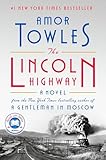
Editors Reads Verdict
Towles delivers another meticulously crafted period piece with a cast of unforgettable characters, using an America-in-motion story to meditate on fate, free will, and the stories we tell ourselves about who we are.
What We Loved
- Beautifully constructed with a distinctive rotating-perspective structure
- Duchess is one of the most vivid characters in recent American fiction
- Period detail of 1954 America is immersive and lovingly rendered
- Thematically rich meditation on fate, choice, and narrative
Minor Drawbacks
- The ending divides readers sharply — some find it devastating, others unsatisfying
- At 592 pages, the pacing occasionally slackens
- Eight-year-old Billy's voice sometimes strains credibility
Key Takeaways
- → The stories we use to organize our lives can trap us as surely as prison bars
- → Free will and predetermination are not opposites but accomplices
- → Loyalty and love are not the same as enabling
- → America's myth of reinvention is available to some and withheld from others
- → Characters who cannot rewrite their own stories are doomed to repeat them
| Author | Amor Towles |
|---|---|
| Publisher | Viking |
| Pages | 592 |
| Published | October 5, 2021 |
| Language | English |
| Genre | Literary Fiction, Historical Fiction |
| Difficulty | Intermediate |
| Best For | Literary fiction readers; fans of A Gentleman in Moscow; anyone drawn to mid-century American settings. |
How The Lincoln Highway Compares
The Lincoln Highway at a glance against 3 similar books readers weigh alongside it.
| Book | Author | Rating | Best for |
|---|---|---|---|
| The Lincoln Highway (this book) | Amor Towles | ★ 4.3 | Literary fiction readers |
| A Gentleman in Moscow | Amor Towles | ★ 4.7 | Literary fiction readers who want elegance, wit, historical intelligence, and a |
| East of Eden | John Steinbeck | ★ 4.7 | Readers who enjoy ambitious family sagas and multigenerational narratives — and |
| The Corrections | Jonathan Franzen | ★ 4.0 | Literary fiction readers |
A Journey Interrupted
June 1954: Emmett Watson comes home to Nebraska after eighteen months at a juvenile work farm, having killed a boy in a fight he didn’t start. His plan is simple — sell the family farm, collect his eight-year-old brother Billy, and drive to California to start fresh. But two friends from the work farm have stowed away in the trunk of the warden’s car, and one of them, the incandescent, unreliable, lovable Duchess, has other ideas. Within hours, the brothers’ journey west has been redirected to New York.
The Picaresque Structure
Towles tells his story in short chapters that rotate perspective among four primary characters: Emmett, the earnest and burdened older brother; Billy, who navigates the world through the lens of hero stories and a book of notable American figures; Duchess, whose charisma conceals a terrifying commitment to a personal code of reciprocity; and Woolly, Duchess’s gentle, damaged friend who lives entirely inside his own inner world. The structure creates dramatic irony — we watch characters act on information others lack — while building to convergences that feel both surprising and inevitable.
Duchess: An American Archetype
The novel’s great achievement is Duchess, a figure simultaneously infuriating and irresistible. His personal code — every good turn deserves a good turn, every wrong deserves settling — is both his defining quality and his fatal flaw. Towles uses Duchess to examine the American mythos of the self-made man, the romantic outlaw, the person who lives outside society’s rules by a code purer and simpler than society’s. Duchess believes he is the hero of a Western. The novel gently, devastatingly disagrees.
Fate and Free Will
Beneath the picaresque adventure, “The Lincoln Highway” is a philosophical novel about whether people can change direction or whether character is destiny. Billy’s faith in the hero’s journey as a map for real life becomes the book’s structuring metaphor. The question Towles poses — can we write a different story for ourselves, or does our character always reassert itself? — receives an answer in the final pages that readers will debate for a long time.
Towles After A Gentleman in Moscow
The Lincoln Highway was Amor Towles’s third novel, following the enormous success of A Gentleman in Moscow, and it confirmed his standing as one of contemporary fiction’s most elegant entertainers. Where the earlier novel confined its hero to a single Moscow hotel across decades, this one does the opposite — it bursts outward into motion, trading stillness for the open American road. Yet the books share a sensibility: a faith in storytelling itself, a fondness for characters of grace and code, and prose of unhurried, old-fashioned pleasure. Readers who loved the warmth and craftsmanship of A Gentleman in Moscow will find them here in a different key, applied to a rowdier, more picaresque, distinctly American canvas. Towles is a writer unembarrassed by charm, and the novel is a showcase for it.
Ten Days, Counted Down
The novel’s most striking structural choice is its countdown. It unfolds over just ten days, and the chapters are numbered in reverse — from Ten down to One — so that the reader feels time contracting toward an ending that the structure itself insists is approaching. This formal device works against the leisurely, episodic surface of the road narrative, planting a quiet dread beneath the comedy and adventure: however much the characters wander, the count is falling. Towles uses it to convert what might have been a loose, baggy journey into a tightening machine, and the reverse numbering pays off in a finale that feels both surprising and, on reflection, inevitable — the destination the countdown was always carrying the reader toward.
The Literary Inheritance
The Lincoln Highway is densely woven with the literature of journeys and heroes, and Towles makes the inheritance explicit. Young Billy carries a treasured compendium of heroes and adventurers — a book of Odysseus, Theseus, and other questers — and reads his own road trip through its lens, so that the novel becomes a sustained meditation on the American hero myth and its costs. Echoes of Homer’s Odyssey, of Huckleberry Finn’s river, and of the Western’s lone-rider code run throughout, and Duchess in particular fancies himself the protagonist of a story whose rules he alone understands. Towles uses this scaffolding both affectionately and critically, asking what happens when people try to live inside the clean logic of myth in a world that does not honor it.
Billy and the Compendium
If Duchess is the novel’s most magnetic figure, eight-year-old Billy is its moral heart. Earnest, literal, and unshakably methodical, Billy navigates the chaos of the journey by the fixed star of his hero stories and his faith that good actions are repaid in kind. His relationship with his burdened older brother Emmett, and his insistence on a code of fairness in a world that keeps violating it, give the book its tenderness and its central question: whether the stories we are raised on are maps for living or beautiful lies. Towles refuses an easy answer, but Billy’s clarity — his refusal to abandon the belief that life can be lived honorably — is the lens through which the novel’s darker turns acquire their weight. It is a measure of Towles’s craft that a child’s faith in stories becomes the most serious thing in a book full of charming rogues, and that the reader, by the final page, is left genuinely uncertain whether to mourn that faith or to share it.
Our rating: 4.3/5 — A brilliantly constructed American journey with characters who will live in readers’ minds long after the last page.
Reading Guides
Frequently Asked Questions
What is "The Lincoln Highway" about?
In 1954, eighteen-year-old Emmett Watson is released from a juvenile work farm, intending to drive west with his brother and start a new life — until two unexpected companions redirect his journey to New York.
Who should read "The Lincoln Highway"?
Literary fiction readers; fans of A Gentleman in Moscow; anyone drawn to mid-century American settings.
What are the key takeaways from "The Lincoln Highway"?
The stories we use to organize our lives can trap us as surely as prison bars Free will and predetermination are not opposites but accomplices Loyalty and love are not the same as enabling America's myth of reinvention is available to some and withheld from others Characters who cannot rewrite their own stories are doomed to repeat them
Is "The Lincoln Highway" worth reading?
Towles delivers another meticulously crafted period piece with a cast of unforgettable characters, using an America-in-motion story to meditate on fate, free will, and the stories we tell ourselves about who we are.
Ready to Read The Lincoln Highway?
Check the current price on Amazon.
Check Price on Amazon (paid link)Prices and availability are subject to change. See Amazon for current price.
Review last updated: