Amor Towles is an American novelist whose elegant, witty literary fiction celebrates refinement, resilience, and the art of living well under constraint.
Amor Towles spent two decades as an investment professional before publishing his first novel, and his fiction has a polished, almost architectural quality — each book is carefully constructed, beautifully written, and clearly the product of a writer who does not rush. He has built a devoted readership through word of mouth and critical respect rather than hype.
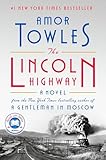
A Gentleman in Moscow is his most beloved novel: a Russian aristocrat sentenced to indefinite house arrest in the Metropol Hotel in 1922 makes a life of extraordinary richness within its walls across the following three decades. The conceit might sound limiting, but Towles uses the hotel as a kind of civilizational stage on which history and human nature play out. The prose is witty and erudite, the protagonist — Count Alexander Rostov — is one of the more charming narrators in recent literary fiction, and the novel’s fundamental argument, that grace and purpose can be maintained under any external constraint, is genuinely moving. The Lincoln Highway is a different kind of project: a road-trip novel set in 1950s America, following a young man whose release from a work farm goes immediately sideways. It is more picaresque and less controlled than A Gentleman in Moscow, and opinions are divided on whether its looser structure is liberation or simply less discipline.
Towles writes with uncommon care for craft, and his books reward close reading. The criticism — not unfair — is that his worlds are aesthetically curated to a degree that can feel insulated from genuine darkness. They are pleasures, and magnificent ones, but pleasures with a certain comfortable ceiling.
Reading Guides