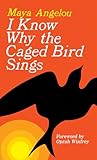
Editors Reads Verdict
One of the defining works of American autobiography — Maya Angelou's account of a Black girl's childhood in the Jim Crow South is a masterpiece of lyrical prose and psychological honesty that has shaped the memoir form and the understanding of Black American experience for generations.
What We Loved
- Angelou's prose is among the most beautiful in American autobiography
- The memoir opened Black women's inner life to American literature in unprecedented ways
- Grandmother Henderson is one of the most powerful supporting characters in the memoir genre
- The treatment of sexual trauma is handled with honesty that was radical for 1969
- The recovery through literature and language is one of the genre's great narratives
Minor Drawbacks
- The memoir has been the target of school banning campaigns for its sexual content
- Some readers find the poetic quality occasionally abstracts where directness would serve better
- The episodic structure means some sections are more fully developed than others
Key Takeaways
- → Language and literature can provide sanctuary to those the world has excluded
- → Silence can be a response to trauma that the person who forced the trauma then uses as weapon
- → A community of women can provide the structure and love that a broken family cannot
- → Racism is not background noise but the organizing principle of every encounter and opportunity
- → Identity survives what is done to the body — it lives in the mind's relationship to language
| Author | Maya Angelou |
|---|---|
| Publisher | Random House |
| Pages | 289 |
| Published | January 1, 1969 |
| Language | English |
| Genre | Memoir, Coming-of-Age, African American Literature |
| Difficulty | Intermediate |
| Best For | Readers of American autobiography, particularly those interested in Black women's experience, the Jim Crow South, trauma and recovery, and the memoir as literary form. |
How I Know Why the Caged Bird Sings Compares
I Know Why the Caged Bird Sings at a glance against 3 similar books readers weigh alongside it.
| Book | Author | Rating | Best for |
|---|---|---|---|
| I Know Why the Caged Bird Sings (this book) | Maya Angelou | ★ 4.6 | Readers of American autobiography, particularly those interested in Black |
| Becoming | Michelle Obama | ★ 4.8 | Anyone interested in American political history, the Obama era, or memoir as a |
| Born a Crime | Trevor Noah | ★ 4.8 | Anyone interested in apartheid South Africa, memoir as a form, questions of |
| Educated | Tara Westover | ★ 4.7 | Anyone interested in memoir, education, or the psychology of escaping |
The Caged Bird’s Voice
Maya Angelou was asked by her friend, the novelist James Baldwin, and her editor, Robert Loomis, to write her autobiography. She initially declined, arguing that autobiography as a form was too easy. Loomis’s response was to call it a near-impossible literary challenge — to write an autobiography as literature — and this provocation produced one of the form’s masterworks.
I Know Why the Caged Bird Sings covers Angelou’s life from early childhood to the age of seventeen, from Stamps, Arkansas, where she was raised by her grandmother Annie Henderson alongside her brother Bailey after her parents’ marriage dissolved, to San Francisco, where she becomes the city’s first Black female streetcar conductor and, in the memoir’s final pages, a teenage mother.
The title comes from Paul Laurence Dunbar’s poem “Sympathy,” whose caged bird beats against its prison and sings not from joy but from pain — the cry of the imprisoned. Angelou’s memoir is about singing in exactly this register: survival expressed through language in conditions designed to silence.
Stamps, Arkansas
The memoir’s most powerful setting is Stamps in the 1930s and early 40s — a world of strict racial segregation in which the texture of daily Black life is rendered with extraordinary specificity. Angelou’s grandmother’s store, the Church, the rituals of the Black community’s self-sustaining life within the constraints of Jim Crow — these are documented with the love and clarity of memory that has never let go of what it knew.
Henderson (Momma) is one of memoir’s great portraits: a woman of absolute personal dignity and iron moral certainty who navigates white supremacy not by confronting it directly — the cost of that was death — but by maintaining within herself and her family an undefeated self-regard that racism could not touch.
The Trauma and the Silence
Angelou was raped at eight by her mother’s boyfriend. When she told her family, the man was murdered by her uncles within days of release from jail. The eight-year-old Angelou concluded that her voice had killed him — that speaking had caused the death — and she went mute for approximately five years.
This period of silence, and her recovery from it through her introduction to literature by a neighbor named Mrs. Bertha Flowers, is the memoir’s structural center. Angelou describes Mrs. Flowers reading aloud from A Tale of Two Cities and giving Marguerite (as she was then known) the understanding that language — heard first, then owned — was the thing that would save her.
The Literary Legacy
The memoir has been assigned, banned, debated, and revered across more than five decades. It opened the memoir form to Black women’s interior life in ways that influenced generations of subsequent writers, from Toni Morrison’s autobiographical essays to the contemporary memoir boom.
Our rating: 4.6/5 — One of the essential works of American autobiography — a lyrical, unflinching account of how language becomes survival for those whom the world has tried to silence.
A Childhood Rendered as Literature
Maya Angelou’s I Know Why the Caged Bird Sings transformed the memoir of a difficult childhood into a work of genuine literary art. Recounting her early years in the segregated American South and beyond — marked by racism, displacement, and trauma — Angelou writes with a lyrical, poetic command that elevates the autobiography far above mere recollection. Her prose carries the rhythms of the poet she also was, and the book’s beauty of language is inseparable from its power; she makes the reader feel the textures of a particular childhood while reaching toward something universal about growing up, survival, and the finding of one’s voice.
Finding a Voice After Silence
The book’s central arc is the journey from silence to speech. After a profound early trauma, the young Maya stops speaking for years, and the gradual recovery of her voice — drawn out by literature, by a mentor, and by her own resilience — becomes the memoir’s emotional and symbolic heart. The title itself, drawn from a poem, captures this theme: the caged bird sings of freedom it cannot reach, and Angelou’s account of claiming her own voice against the forces that would silence her gives the book its triumphant undercurrent.
Race, Identity, and Resilience
Angelou confronts the realities of racism and the experience of growing up Black and female in the Jim Crow South with unflinching honesty, and she renders both the cruelty she encountered and the strength of the community and family that sustained her. The book is a portrait of resilience that neither minimises suffering nor surrenders to it, and its frank treatment of difficult subjects, handled with seriousness and grace, is part of why it has been both widely taught and sometimes challenged.
Why It Endures
I Know Why the Caged Bird Sings became a landmark of American autobiography and a foundational text of Black women’s writing because it fused painful personal history with extraordinary literary beauty and an affirming vision of the human spirit. It is the first and most celebrated of Angelou’s several memoirs, and the ideal introduction to her work. As a moving, lyrical, and ultimately empowering account of a remarkable life, it has spoken to generations of readers and earned its place among the essential American memoirs. That it manages to be at once a particular story of one Black girl’s coming of age and a universal account of resilience and the finding of one’s voice is the mark of its greatness, and the reason it has never gone out of print.
Reading Guides
Frequently Asked Questions
What is "I Know Why the Caged Bird Sings" about?
Maya Angelou's first autobiographical volume, covering her childhood in Stamps, Arkansas, her rape at eight years old, her years of traumatized silence, and her eventual recovery through literature and language.
Who should read "I Know Why the Caged Bird Sings"?
Readers of American autobiography, particularly those interested in Black women's experience, the Jim Crow South, trauma and recovery, and the memoir as literary form.
What are the key takeaways from "I Know Why the Caged Bird Sings"?
Language and literature can provide sanctuary to those the world has excluded Silence can be a response to trauma that the person who forced the trauma then uses as weapon A community of women can provide the structure and love that a broken family cannot Racism is not background noise but the organizing principle of every encounter and opportunity Identity survives what is done to the body — it lives in the mind's relationship to language
Is "I Know Why the Caged Bird Sings" worth reading?
One of the defining works of American autobiography — Maya Angelou's account of a Black girl's childhood in the Jim Crow South is a masterpiece of lyrical prose and psychological honesty that has shaped the memoir form and the understanding of Black American experience for generations.
Ready to Read I Know Why the Caged Bird Sings?
Check the current price on Amazon.
Check Price on Amazon (paid link)Prices and availability are subject to change. See Amazon for current price.
Review last updated: