
Bestseller
And Still I Rise
by Maya Angelou
4.8
Maya Angelou's landmark collection of verse celebrating Black joy, female resilience, and the unbreakable human spirit in the face of oppression.
Check Price on Amazon (paid link)American · b. 1928
Presidential Medal of Freedom 2011; Grammy Award; NAACP Spingarn Medal
Maya Angelou was an American poet, memoirist, and civil rights activist whose I Know Why the Caged Bird Sings is among the most important American autobiographies.
Maya Angelou was one of the most celebrated American writers and public voices of the twentieth century — a poet, memoirist, actor, dancer, filmmaker, and civil rights activist whose life story was itself extraordinary. Born in St. Louis in 1928 and raised largely in Stamps, Arkansas, she survived poverty, racism, childhood sexual assault, and years of selective mutism before finding her voice as a writer. That voice, when she found it, was one of the most distinctive in American letters: warm, rhythmic, and precisely controlled, equally effective in prose and poetry.
I Know Why the Caged Bird Sings (1969), the first of seven autobiographical volumes, recounts her childhood through the age of seventeen with a candour that was radical at the time of publication. The book’s account of her assault by her mother’s boyfriend and its aftermath — including the psychological impact of what happened when she disclosed the assault — is handled with both unflinching honesty and profound literary skill. The portrait of Stamps, of her grandmother, and of the Black community in the Jim Crow South gives the book historical as well as personal depth. It was challenged and banned in various American school districts, which says more about the discomfort of the challengers than about the book’s suitability.
Angelou’s poetry — collected in volumes including Just Give Me a Cool Drink of Water ‘fore I Diiie and And Still I Rise — is best understood as the work of a spoken-word artist as much as a page poet: it is musical, oratorical, and gains enormously from being read aloud or heard in her voice. Her 1993 inaugural poem “On the Pulse of Morning” is a useful introduction. Critics have occasionally noted that her later public persona became somewhat reduced to inspirational quotation, but the early memoirs and the best of the poetry represent a genuinely major literary achievement.
Maya Angelou was one of the most beloved and influential American writers of the twentieth century, a poet, memoirist, and civil rights activist whose powerful, lyrical work gave voice to the African American experience and to the resilience of the human spirit. Renowned above all for her groundbreaking autobiography and her stirring poetry, Angelou became a revered cultural figure, celebrated for the wisdom, dignity, and warmth she brought to her writing and her public life. Her work explored identity, racism, womanhood, and survival with honesty and grace, and she stands as one of the most cherished and important voices in American letters.
Angelou’s most famous work, I Know Why the Caged Bird Sings, is a landmark of American autobiography and one of the most widely read and taught memoirs in the country. Recounting her childhood in the segregated American South, including her experience of racism and trauma and her gradual discovery of her own strength and voice, the book broke new ground in its honest portrayal of a young Black girl’s coming of age. Its lyrical power, emotional honesty, and ultimate affirmation of resilience and dignity made it a classic, and it remains a foundational text in American literature and the cornerstone of her reputation.
Angelou transformed the genre of autobiography, writing a series of memoirs that traced her remarkable life across many decades and experiences. With lyrical prose and unflinching honesty, she chronicled her journey from a difficult childhood through a varied and extraordinary life, exploring identity, race, womanhood, and the search for belonging and purpose. Her memoirs are notable for their literary artistry as well as their candor, elevating personal narrative to the level of art and demonstrating the power of telling one’s own story. This achievement made her one of the most important memoirists in American literature.
Angelou was also a beloved and celebrated poet whose verse, marked by its rhythm, directness, and affirming spirit, reached a wide audience. Poems such as “Still I Rise” and “Phenomenal Woman” became anthems of resilience, dignity, and self-affirmation, particularly for Black women, and her recitation of a poem at a presidential inauguration brought her work to a national audience. Her accessible, powerful poetry, celebrating survival, strength, and the worth of every individual, has inspired countless readers and confirmed her place as one of the most cherished poetic voices of her era.
Angelou’s life and work were deeply intertwined with the struggle for civil rights and human dignity. She was active in the civil rights movement, worked alongside its leaders, and used her voice throughout her life to bear witness against injustice and to affirm the humanity and worth of the oppressed. Her writing is inseparable from this commitment, giving voice to experiences of racism and marginalization while insisting on resilience, hope, and the possibility of triumph over adversity. This fusion of art and activism, of personal testimony and universal affirmation, is central to her enduring significance.
What readers cherish most in Angelou’s work is its profound wisdom and its affirmation of human resilience. Drawing on her own experiences of hardship and triumph, she wrote with hard-won insight about survival, dignity, courage, and the capacity of the human spirit to rise above suffering. Her warmth, her generosity, and her belief in the worth and potential of every person made her a beloved teacher and mentor to many, and her words continue to offer comfort, inspiration, and guidance. This wisdom, rooted in lived experience and expressed with grace, is at the heart of her lasting appeal.
Maya Angelou’s influence on American literature and culture is immense, and her work continues to be read, taught, and cherished for its honesty, its beauty, and its affirmation of the human spirit. For newcomers, I Know Why the Caged Bird Sings is the essential starting point, with her collected poems offering an introduction to her stirring verse. For readers seeking writing of profound wisdom, emotional power, and enduring inspiration, work that confronts hardship while affirming dignity and resilience, Maya Angelou remains one of the most beloved and important voices in American letters.
by Maya Angelou
Maya Angelou's landmark collection of verse celebrating Black joy, female resilience, and the unbreakable human spirit in the face of oppression.
Check Price on Amazon (paid link)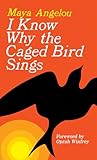
by Maya Angelou
Maya Angelou's first autobiographical volume, covering her childhood in Stamps, Arkansas, her rape at eight years old, her years of traumatized silence, and her eventual recovery through literature and language.
Check Price on Amazon (paid link)
by Maya Angelou
The fourth volume of Maya Angelou's autobiography — New York in the late 1950s, the Harlem Writers Guild, the civil rights movement, her friendship with Malcolm X and Martin Luther King Jr., and her years in Cairo and Accra.
Check Price on Amazon (paid link)
by Maya Angelou
The second volume of Maya Angelou's autobiography, covering her late teens in post-war California — working as a cook, a dancer, a madam, and eventually a prostitute, while raising her young son alone.
Check Price on Amazon (paid link)guide
Where to start with Maya Angelou — whether to begin with I Know Why the Caged Bird Sings, Gather Together in My Name, or And Still I Rise. A complete guide.
list
All Maya Angelou books in order — her seven-volume autobiography and essential poetry. Where to start and how to read the complete works.
Disclosure: Amazon links on this page are affiliate links. If you purchase through them we earn a small commission at no extra cost to you.