Maya Angelou Books in Order: Complete Reading Guide
All Maya Angelou books in order — her seven-volume autobiography and essential poetry. Where to start and how to read the complete works.
Maya Angelou (1928–2014) published seven volumes of autobiography across forty years, along with major poetry collections and a substantial body of essays and plays. Her autobiographies together constitute one of the most comprehensive and artistically serious self-portraits in American literature.
Maya Angelou Autobiographies in Order
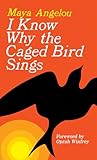
1. I Know Why the Caged Bird Sings — 1969
Start here. Angelou’s childhood in Stamps, Arkansas — raised by her grandmother, navigating racism, surviving sexual assault at eight, going mute for five years — and her teenage years in California. One of the most important memoirs in American literature and among the most banned books in the country. Required reading.
➡ Full review → | Buy on Amazon →
2. Gather Together in My Name — 1974
Age seventeen: unmarried, with a newborn son, working as a cook, a dancer, a madam. The most unsparing volume — Angelou describes the most dangerous years of her life with clear-eyed honesty.
➡ Full review → | Buy on Amazon →
3. Singin’ and Swingin’ and Gettin’ Merry Like Christmas — 1976
Her years in San Francisco’s nightclub scene and her first European tour as a performer with Porgy and Bess — the volume that covers her emerging professional life.
4. The Heart of a Woman — 1981
New York in the late 1950s — the Harlem Writers Guild, the civil rights movement, friendships with Malcolm X and Martin Luther King Jr., and her years in Cairo and Accra. The most politically rich volume.
➡ Full review → | Buy on Amazon →
5. All God’s Children Need Traveling Shoes — 1986
Her years living in Ghana — the African American expatriate community in Accra, her complex relationship with the Africa she sought and the Africa she found.
6. A Song Flung Up to Heaven — 2002
Returns to the US in the late 1960s — the assassinations of Malcolm X and Martin Luther King Jr., the Watts riots, and the writing of Caged Bird.
7. Mom and Me and Mom — 2013
Her final memoir — about her complicated relationship with her mother, Vivian Baxter, whom she barely knew as a child and came to love as an adult.
A Life Transformed Into Literature
Maya Angelou created one of the great achievements in American autobiography, transforming the experiences of her extraordinary life into a sequence of memoirs that illuminate not only her own remarkable story but the larger realities of being Black, a woman, and an American in the twentieth century. Angelou’s autobiographical work, beginning with the celebrated I Know Why the Caged Bird Sings, transformed the experiences of her extraordinary life into literature of lasting power, and her sequence of memoirs constitutes one of the great achievements in American autobiography. Through the story of her own life, Angelou illuminated the larger realities of her time, the experience of being Black in a racist America, the experience of being a woman, and the struggles, resilience, and triumphs of an extraordinary life lived through extraordinary times. Her memoirs are at once intimate personal narratives and illuminations of the larger historical and social realities of being Black, a woman, and an American in the twentieth century, and they have given lasting literary form to a remarkable life and to the experiences it embodied. This transformation of a life into literature is central to Angelou’s achievement, for she rendered the experiences of her extraordinary life with a power and artistry that illuminate both her own story and the larger realities of her time. For readers, Angelou offers one of the great achievements in American autobiography, a life transformed into literature of lasting power, illuminating both a remarkable individual story and the larger realities of being Black, a woman, and an American in the twentieth century. A life transformed into literature is Angelou’s great achievement, her sequence of memoirs rendering the experiences of her extraordinary life with power and artistry, and illuminating not only her own remarkable story but the larger realities of being Black, a woman, and an American in the twentieth century.
Resilience and the Triumph of the Spirit
At the heart of Maya Angelou’s work, in both her memoirs and her poetry, lies a powerful affirmation of resilience and the triumph of the human spirit, a celebration of the capacity to endure, overcome, and rise above adversity, oppression, and suffering. Angelou’s work is animated by a profound affirmation of resilience and the triumph of the spirit, by a celebration of the human capacity to endure and overcome adversity, oppression, and suffering, and to rise, with dignity and strength, above the obstacles and injustices of life. Her memoirs trace her own resilience and triumph over the adversities and injustices she faced, and her celebrated poetry, including her famous affirmations of rising above oppression, gives powerful voice to the resilience and triumph of the spirit. This affirmation of resilience and the triumph of the spirit is central to Angelou’s work and to its enduring power and inspiration, for she celebrates the human capacity to endure, overcome, and rise above adversity, and her work has inspired countless readers with its powerful affirmation of resilience, dignity, and strength. Her vision is not naive about the realities of adversity, oppression, and suffering, which she confronts honestly and unflinchingly, but it affirms, against these realities, the resilience and triumph of the human spirit, the capacity to endure, overcome, and rise. For readers, Angelou offers a powerful affirmation of resilience and the triumph of the spirit, an inspiring celebration of the capacity to endure, overcome, and rise above adversity and oppression. Resilience and the triumph of the spirit are at the heart of Angelou’s work, her powerful affirmation of the human capacity to endure, overcome, and rise above adversity, oppression, and suffering, which has inspired countless readers and which gives her memoirs and poetry their enduring power.
A Voice of Dignity and Power
Maya Angelou possessed one of the most distinctive and powerful voices in American literature, a voice of dignity, strength, and authority that gives her work its commanding presence and its profound impact. Angelou’s work is marked by the distinctive power of her voice, by a tone of dignity, strength, and authority that gives her writing its commanding presence and its profound effect on readers. Whether in her memoirs or her poetry, Angelou writes with a voice of unmistakable dignity and power, a voice that commands attention and respect, that bears the authority of hard-won wisdom and experience, and that speaks with strength, grace, and conviction. This voice of dignity and power is central to Angelou’s achievement and her impact, for her distinctive voice gives her work its commanding presence and its profound effect, and it made her not only a celebrated writer but a revered public figure whose words carried exceptional weight and authority. Her voice bore the dignity and authority of one who had endured and overcome great adversity, who spoke with hard-won wisdom and strength, and who addressed her readers with grace, conviction, and power. This voice of dignity and power distinguished Angelou and made her one of the most revered and influential figures in American letters, a writer and a public presence whose words carried exceptional weight and authority. For readers, Angelou offers a voice of dignity and power, a commanding and authoritative voice that gives her work its profound impact and presence. A voice of dignity and power distinguished Maya Angelou, one of the most distinctive and powerful voices in American literature, a voice of dignity, strength, and authority that gave her work its commanding presence and its profound impact, and that made her a revered figure in American letters.
Essential Maya Angelou Poetry
And Still I Rise — Her most celebrated poetry collection, including the title poem that has become one of the most quoted poems in English.
Affiliate disclosure: Links to Amazon on this page are affiliate links. We earn a small commission at no extra cost to you.
Frequently Asked Questions
What order should I read Maya Angelou's autobiographies in?
Read them in publication order: I Know Why the Caged Bird Sings, Gather Together in My Name, Singin' and Swingin', The Heart of a Woman, All God's Children Need Traveling Shoes, A Song Flung Up to Heaven, Mom and Me and Mom. Each volume covers a distinct period and they build on each other.
What is the best Maya Angelou book to start with?
I Know Why the Caged Bird Sings is the essential starting point — one of the great American memoirs of the 20th century. It covers her childhood in Stamps, Arkansas, and her teenage years in California. The subsequent volumes are best read after it.
Did Maya Angelou write novels or only memoirs?
Angelou's major prose works are her seven autobiographical volumes and her poetry collections. She also wrote screenplays, plays, and essays, but her reputation rests on the autobiographies and poems.