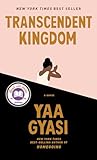
Editors Reads Verdict
Gyasi's second novel is quieter and more personal than Homegoing, a compressed, intellectually rich meditation on faith, science, addiction, and grief. The scientific and spiritual are held in productive tension throughout.
What We Loved
- The science of addiction and depression is integrated seamlessly into the narrative
- Gifty is a fully realized, intellectually formidable narrator
- The grief at the novel's center is rendered with devastating restraint
- The tension between faith and science is treated with unusual sophistication
Minor Drawbacks
- The compressed structure leaves some threads underexplored
- Readers expecting Homegoing's epic scope will find this more interior
- The pacing is deliberately slow, which may frustrate some
Key Takeaways
- → Science and faith ask different questions and can coexist without resolution
- → Addiction is a disease of the brain with identifiable neurological mechanisms
- → Grief and guilt are frequently indistinguishable from each other
- → Immigrant families carry particular kinds of pressure and expectation
- → Depression is not weakness but a medical condition demanding treatment
| Author | Yaa Gyasi |
|---|---|
| Publisher | Knopf |
| Pages | 264 |
| Published | September 1, 2020 |
| Language | English |
| Genre | Literary Fiction |
| Difficulty | Intermediate |
| Best For | Literary fiction readers; anyone touched by addiction or mental health struggles. |
How Transcendent Kingdom Compares
Transcendent Kingdom at a glance against 3 similar books readers weigh alongside it.
| Book | Author | Rating | Best for |
|---|---|---|---|
| Transcendent Kingdom (this book) | Yaa Gyasi | ★ 4.2 | Literary fiction readers |
| An American Marriage | Tayari Jones | ★ 4.3 | Literary fiction readers |
| Being Mortal | Atul Gawande | ★ 4.6 | Anyone with aging parents |
| Homegoing | Yaa Gyasi | ★ 4.6 | Anyone interested in African and African-American history |
Science and Sorrow
Gifty is a sixth-year neuroscience PhD student at Stanford, running experiments on mice to understand the neurological mechanisms of addiction and depression. The experiments are personal: her brother Nana died of an opioid overdose, and her mother has retreated into a catatonic depression so severe that Gifty has brought her to California to live in her small apartment. While caring for her mother and conducting her research, Gifty processes the losses that have shaped her life, turning them over in the language of science and the language of faith she was raised in.
Faith and the Laboratory
The novel’s central tension is between Gifty’s evangelical Christian upbringing — her mother’s Ghanaian church in Alabama was both community and suffocation — and the reductive materialism her scientific training demands. Gyasi treats both ways of knowing with genuine respect. Gifty’s scientific work on reward pathways and compulsive behavior illuminates her brother’s addiction without explaining it away. Her childhood faith, abandoned and then mourned, represents something her science cannot replace. The novel is remarkable for refusing to resolve this tension cheaply.
The Opioid Epidemic, Intimately
While Gyasi doesn’t frame Nana’s story as a political statement about the opioid crisis, “Transcendent Kingdom” is one of the most intimate portraits of how addiction destroys families from the inside. Nana’s descent — beginning with a sports injury, a prescription, a need that outlasted the pain — is rendered with heartbreaking specificity. Gifty’s guilt, the what-ifs that colonize her thoughts, is the emotional reality of surviving a sibling’s addiction.
A Family Undone
At the centre of the novel are three people and the spaces that grief has opened between them. There is Nana, the radiant older brother — a gifted athlete, beloved and golden — whose path from a basketball injury to a painkiller prescription to heroin and death traces, with terrible specificity, the arc of the American opioid epidemic as it played out in countless families. There is the mother, a home health aide of granite faith and exhausting work ethic, who survives Nana’s death only by sinking into a depression so total that she cannot leave her bed, becoming the silent presence in Gifty’s apartment around whom the whole novel is organised. And there is Gifty herself, eleven when her brother died, who responded to the chaos of loss by reaching for the certainties of science and the comforts she could no longer find in church. Gyasi renders their bonds — and the guilt, silence, and unspoken love between them — with a restraint that makes the rare moments of feeling land with overwhelming force.
The Science of Wanting
Gifty’s research is no mere backdrop; it is the novel’s intellectual heart and its central metaphor. She works in optogenetics, using light to switch neurons on and off in the brains of mice, trying to understand the reward-seeking circuitry that drives compulsive behaviour — the same circuitry that, in her brother, became a death sentence. Gyasi threads in genuinely illuminating science: the role of dopamine and reward pathways in addiction, the phenomenon of anhedonia (the inability to feel pleasure) that both addicts and the depressed endure, the unsettling continuity between a mouse pressing a lever and a human being unable to stop. The brilliance of the conceit is that Gifty is using her science to ask an unanswerable question — could anything have saved Nana? could anything reach her catatonic mother? — and the gap between what neuroscience can map and what it can heal becomes the novel’s quiet tragedy.
Ghana, Alabama, and the Weight of Inheritance
Beneath the grief runs the immigrant story. Gifty’s family came from Ghana to Huntsville, Alabama, drawn by a mother’s fierce determination and a father — “the Chin Chin Man” — who could not bear American racism and eventually returned home, leaving the family fractured. Gyasi is acute on the specific pressures of being Black, immigrant, and evangelical in the American South: the casual and structural racism that wears her mother down, the way Nana’s gifts as an athlete made him visible and then vulnerable, the suffocating yet sustaining role of the Pentecostal church. The novel suggests that addiction and depression do not strike in a vacuum but land on bodies and families already bearing the weight of displacement, prejudice, and impossible expectation.
After Homegoing
Transcendent Kingdom arrived under the enormous shadow of Homegoing, Yaa Gyasi’s celebrated 2016 debut — a multigenerational epic that traced two branches of a Ghanaian family across three centuries of slavery and its aftermath. This second novel is a deliberate pivot: where Homegoing was panoramic, Transcendent Kingdom is intimate, confined largely to one woman’s mind. Some critics felt the change of scale exposed the book to a charge of trying to do too much in too little space — race, faith, addiction, depression, immigration, all probed but, to a few readers, none exhausted. That criticism has some merit, but it undervalues what Gyasi achieves through compression and restraint: a novel that feels less like an argument than like the texture of a particular consciousness working through unbearable loss.
A Quieter Achievement
Compared to Homegoing’s epic sweep, this novel is more interior and more compressed. It is not a lesser achievement — it is a different kind of achievement, one that measures the weight of private grief against the grandeur of scientific and spiritual aspiration. Gifty’s voice, cool and precise on the surface, burning underneath, is one of the more remarkable narrative voices in recent American fiction, and the book’s refusal to resolve the tension between faith and science into easy consolation is its deepest integrity.
Our rating: 4.2/5 — A compressed, intellectually serious novel about grief, science, and the limits of human understanding.
Reading Guides
Frequently Asked Questions
What is "Transcendent Kingdom" about?
A Ghanaian-American neuroscience PhD student at Stanford studies the science of addiction and depression while caring for her catatonic mother and processing the loss of her brother to an opioid overdose.
Who should read "Transcendent Kingdom"?
Literary fiction readers; anyone touched by addiction or mental health struggles.
What are the key takeaways from "Transcendent Kingdom"?
Science and faith ask different questions and can coexist without resolution Addiction is a disease of the brain with identifiable neurological mechanisms Grief and guilt are frequently indistinguishable from each other Immigrant families carry particular kinds of pressure and expectation Depression is not weakness but a medical condition demanding treatment
Is "Transcendent Kingdom" worth reading?
Gyasi's second novel is quieter and more personal than Homegoing, a compressed, intellectually rich meditation on faith, science, addiction, and grief. The scientific and spiritual are held in productive tension throughout.
Ready to Read Transcendent Kingdom?
Check the current price on Amazon.
Check Price on Amazon (paid link)Prices and availability are subject to change. See Amazon for current price.
Review last updated: