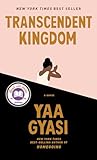
Yaa Gyasi is a Ghanaian-American novelist whose debut Homegoing and follow-up Transcendent Kingdom established her as one of the most important literary voices of her generation.
Yaa Gyasi was born in Ghana and raised in the United States, and her debut novel Homegoing (2016), published when she was twenty-six, announced a talent of unusual ambition and control. The novel follows two half-sisters — one sold into slavery in eighteenth-century Ghana, one married to a British slave trader — through eight generations across two continents, with each chapter following a different descendant and each generation revealing how the historical trauma of slavery and colonialism shapes the lives of those who follow. It is an extraordinary structural achievement: a novel that is both a family saga and a compacted history of the African diaspora, holding enormous social and historical material within a series of intimate personal portraits.
Homegoing’s formal daring could easily have produced something schematic, but Gyasi’s characterisation is sufficiently specific and empathetic to make each chapter feel like a complete story rather than an illustrative episode. The voices across centuries and continents are distinct, the historical research is embedded rather than displayed, and the cumulative emotional weight — of what has been lost across generations of violence and displacement — is genuinely devastating without ever becoming didactic.
Transcendent Kingdom (2020), her second novel, is a quieter and more interior book: a Ghanaian-American neuroscience PhD student at Stanford whose research on addiction intersects with her family’s experience of her brother’s death from heroin overdose and her mother’s depression. Where Homegoing ranges across centuries, Transcendent Kingdom stays within one consciousness, one grief. It is less immediately spectacular but reveals how much Gyasi can do with restraint and depth. She is a writer who demands and rewards serious attention.
Reading Guides