Yaa Gyasi Books in Order: Complete Reading Guide
Both Yaa Gyasi novels in order — Homegoing and Transcendent Kingdom. Where to start with one of the most celebrated young American novelists.

Yaa Gyasi is a Ghanaian-American novelist who published two of the most acclaimed literary novels of their respective years. Her style is precise, emotionally direct, and structurally inventive.
Yaa Gyasi Books in Publication Order
1. Homegoing — 2016
The structural achievement. Two half-sisters in 18th-century Ghana — one who marries a British slave trader, one who is captured and sold into American slavery — become the progenitors of two family lines. Gyasi traces each through fourteen chapters across three centuries, from 1700s Ghana to the Harlem Harlem Shake of the 2010s. A debut of extraordinary ambition.
➡ Full review → | Buy on Amazon →
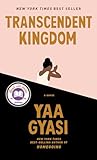
2. Transcendent Kingdom — 2020
Gifty, a neuroscience PhD student at Stanford, narrates her family’s history — Ghanaian immigrant parents, a brother destroyed by opioid addiction, a mother who goes silent with depression — while studying reward-seeking behaviour in mice. A much more intimate and interior novel than Homegoing, shaped around questions of faith, grief, and science.
➡ Full review → | Buy on Amazon →
Where to Start with Yaa Gyasi
Both novels are excellent and either can be read first. If you prefer sweeping historical fiction, begin with Homegoing. If you prefer intimate character studies, begin with Transcendent Kingdom.
Most readers who love one love both — Gyasi’s intelligence and emotional precision are consistent across very different formal approaches.
Slavery’s Long Shadow
Yaa Gyasi announced herself as a major literary talent with her debut novel Homegoing, an ambitious and powerful work that traces the long shadow of slavery across centuries and continents through the story of two branches of a single family. Homegoing is a novel of remarkable ambition and scope, beginning with two half-sisters in eighteenth-century Ghana, one married to a British colonizer and one sold into slavery, and following their respective descendants across the generations and across continents, from Ghana to America, through slavery, colonialism, and their long aftermath to the present day. Through this structure, the novel illuminates the long shadow of slavery and colonialism, tracing their effects across centuries and through the lives of successive generations on both sides of the Atlantic, and revealing how the consequences of these historical catastrophes reach forward through time to shape the present. The ambition and scope of Homegoing are extraordinary for a debut, encompassing centuries of history and two continents within the story of a single family, and the novel’s achievement lies in making this vast historical sweep concrete and humanly meaningful through the intimate stories of its characters across the generations. Gyasi, of Ghanaian heritage and raised in America, brings to this material a deep engagement with the history of slavery and colonialism and their enduring legacies, rendered through the powerful device of the multigenerational family saga. For readers, Homegoing offers a powerful and ambitious entry into the long history and enduring legacy of slavery and colonialism, rendered through the intimate stories of a single family across the generations. Slavery’s long shadow is the great subject of Gyasi’s debut Homegoing, which traces the effects of slavery and colonialism across centuries and continents through the story of two branches of a single family, and which illuminates how these historical catastrophes reach forward to shape the present.
Faith, Science, and the Immigrant Family
Yaa Gyasi’s second novel, Transcendent Kingdom, marks a significant departure from the historical sweep of her debut, turning to an intimate, contemporary story that explores faith, science, addiction, and the experience of an immigrant family. Where Homegoing spanned centuries and continents, Transcendent Kingdom is intimate and inward, focusing on a single Ghanaian-American family and particularly on a young woman, a neuroscientist, grappling with her brother’s addiction and death, her mother’s depression, and her own complex relationship to the evangelical Christian faith of her upbringing and the science she has come to pursue. The novel explores the tension between faith and science, the experience of addiction and its devastation of a family, the pressures and dislocations of the immigrant experience, and the inner struggle of a young woman caught between the religious faith of her family and the scientific worldview of her work. This turn to intimate, contemporary material, and to the exploration of faith, science, addiction, and the immigrant family, demonstrates Gyasi’s range and her refusal to repeat herself, for Transcendent Kingdom is a wholly different kind of novel from Homegoing, intimate where the debut was sweeping, inward where it was historical. Yet it shares the debut’s emotional depth, its serious engagement with difficult subjects, and its concern with the experience of those of African heritage in America. For readers, Transcendent Kingdom offers an intimate and emotionally powerful exploration of faith, science, addiction, and the immigrant family, demonstrating Gyasi’s range and depth. Faith, science, and the immigrant family are the materials of Gyasi’s second novel Transcendent Kingdom, an intimate and contemporary departure from the historical sweep of her debut, exploring the tension between faith and science, the devastation of addiction, and the experience of an immigrant family with emotional depth and seriousness.
Two Novels, Two Modes
Yaa Gyasi’s body of work, though consisting of only two novels, reveals a writer of remarkable range, for her two books work in entirely different modes, demonstrating a versatility and a refusal to repeat herself that mark her as a significant talent. Her debut, Homegoing, is a sweeping historical saga, vast in scope, spanning centuries and continents, and structured as a multigenerational family epic that traces the long shadow of slavery across time. Her second novel, Transcendent Kingdom, is its opposite in nearly every respect, intimate and contemporary, focused on a single family and a single consciousness, inward and psychological rather than sweeping and historical. That a writer should produce, in her first two novels, works so different in mode and approach is striking, demonstrating a range and a versatility that distinguish Gyasi from writers who find a single mode and repeat it. The two novels share certain deep concerns, with the experience of those of African heritage, with family, with serious moral and emotional themes, but they pursue these concerns through entirely different means, the historical sweep of the family epic and the intimate psychology of the contemporary novel. This range is among the most striking features of Gyasi’s work, marking her as a writer of versatility and ambition, unwilling to repeat herself and capable of working in entirely different modes. For readers, the two novels offer two very different but equally powerful experiences, the sweeping historical saga of Homegoing and the intimate contemporary exploration of Transcendent Kingdom, and together they reveal a writer of remarkable range. Two novels, two modes, Gyasi’s body of work reveals a writer of remarkable range and versatility, whose two books work in entirely different modes, the sweeping historical saga and the intimate contemporary novel, demonstrating a refusal to repeat herself that marks her as a significant talent.
What Makes Gyasi Distinctive
Gyasi’s most distinctive quality is her ability to make structural ambition serve emotional ends. Homegoing’s fourteen-chapter structure could easily feel schematic — one generation per chapter — but each chapter is a complete short story that stands independently while adding to the cumulative weight of the whole. Transcendent Kingdom’s science-and-grief frame could feel contrived, but the parallel between Gifty’s research into addiction and her brother’s actual addiction is precisely observed.
Affiliate disclosure: Links to Amazon on this page are affiliate links. We earn a small commission at no extra cost to you.
Frequently Asked Questions
Should I read Homegoing before Transcendent Kingdom?
The two novels are not connected — they are entirely separate stories with different characters and settings. Start with whichever premise interests you more. Homegoing is the more structurally ambitious work; Transcendent Kingdom is the more emotionally intimate.
What is Homegoing about?
Homegoing traces two branches of a Ghanaian family over three centuries — from a woman who marries a British slave trader to her half-sister who is sold into slavery in America — through fourteen chapters, each featuring a different descendant. A novel about slavery, colonialism, and the divergent paths taken by people descended from the same origin.
Is Transcendent Kingdom autobiographical?
Transcendent Kingdom draws on elements of Gyasi's own experience — she is a Ghanaian-American who grew up in Huntsville, Alabama — but is a work of fiction rather than memoir.