Where to Start with Yaa Gyasi: A Reading Guide
Where to start with Yaa Gyasi — whether to begin with Homegoing or Transcendent Kingdom. A complete reading guide to the essential Ghanaian-American novelist.

Yaa Gyasi (born 1989) is the Ghanaian-American novelist whose debut Homegoing (2016) was published when she was twenty-six and immediately established her as one of the most important voices in contemporary American fiction. Gyasi was born in Ghana, moved to the United States as a child, grew up in Huntsville, Alabama, and studied at Stanford and the Iowa Writers’ Workshop. Homegoing draws on research into the Gold Coast slave trade that Gyasi began during a visit to Ghana’s Cape Coast Castle; Transcendent Kingdom (2020), her second novel, is more explicitly autobiographical and more intimate. Both novels are concerned with the long shadows of history — the way trauma is transmitted across generations and the effort required to understand and survive it.
Where to Start: Homegoing (2016)
One of the most extraordinary debut novels in recent American fiction — and one of the most ambitious structural achievements in the literature of the slave trade. The novel begins in the Gold Coast in the 1750s with two half-sisters: Effia, who becomes the wife of a British officer at Cape Coast Castle, and Esi, who is imprisoned in the castle’s dungeons and transported to slavery in America. Each subsequent chapter follows one of their descendants across a different era: slavery in colonial Georgia, the Civil War, Reconstruction, the Great Migration, Harlem during the heroin epidemic of the 1960s, crack-era Oakland; and in parallel, Gold Coast under British colonialism, the independence movement, and contemporary Accra.
Each chapter is a complete story. Each story carries the weight of what came before without explaining it, because the characters don’t always know their own history. The accumulation is devastating — by the novel’s end, the reader understands how a single catastrophe (the slave trade) shaped two family lines over three centuries. The scope is vast; the prose is exact; the emotional intelligence is extraordinary throughout.
Transcendent Kingdom (2020)
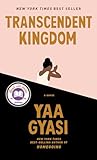
A smaller novel than Homegoing — more intimate, more focused, and in some ways more emotionally demanding. Gifty is a PhD student in neuroscience at Stanford, studying the brain mechanisms of addiction and reward in mice, in an attempt to understand what happened to her brother Nana. Nana was a talented high school basketball player in Huntsville, Alabama; an injury led to an opioid prescription; the prescription led to addiction; the addiction led to his death when Gifty was fifteen. Now Gifty’s mother has retreated to bed, unable to function, and Gifty is conducting the research that is in some sense her response to both losses.
The novel moves between Gifty’s present and her past, between her neuroscience and her evangelical Christian childhood, between her scientific training (which requires her to think about addiction empirically) and her grief (which is not empirical at all). One of the finest recent novels about faith, science, and what we inherit.
Why Homegoing Is the Ideal First Book
For a reader new to Yaa Gyasi, Homegoing is the ideal first book because it is her acclaimed debut and the fullest expression of her distinctive gifts, the ambitious historical sweep, the emotional depth, and the powerful engagement with the legacies of slavery and race. Homegoing traces two half-sisters and their descendants across three centuries, from eighteenth-century Ghana through slavery in America to the present, devoting each chapter to a new generation. As an entry point it is ideal, for it is her breakout novel and a stunning showcase of her gifts, the structural ambition, the historical and emotional power, and the beauty of her prose. It welcomes the newcomer with its compelling structure, its sweeping history, and its emotional force, drawing the reader into a profound exploration of family, heritage, and the long shadow of slavery. It is her most celebrated work and the one that best represents her gifts, so the new reader encounters Gyasi at her finest. For the newcomer, then, Homegoing is the natural and ideal starting point.
What to Expect as a New Reader
As a new reader, you can expect Homegoing to be an ambitious, sweeping, and emotionally powerful novel of history and heritage. You can expect a bold structure, for the novel follows two half-sisters and their descendants across three centuries, devoting each chapter to a new member of the family in a new time and place. You can expect historical sweep, for the story moves from eighteenth-century Ghana through the slave trade and slavery in America to the present day. You can expect profound themes, for the novel explores slavery, colonialism, race, family, and the inheritance of trauma and resilience across generations. You can expect emotional depth, for each generation’s story is rendered with intimacy and force. You can expect beautiful, assured prose remarkable in a debut. You should be prepared for some painful historical material handled with care. Expect, in short, an ambitious, sweeping, and emotionally powerful novel, a stunning introduction to Gyasi’s gifts.
Going Deeper After Your First Book
Once Homegoing has introduced you to Gyasi’s gifts, the reader who wishes to go deeper can explore her second novel, Transcendent Kingdom, which shows a different but equally powerful side of her talent. Where Homegoing sweeps across centuries, Transcendent Kingdom turns inward, telling the intimate story of a Ghanaian-American family grappling with addiction, faith, grief, and the demands of science, in a quieter, more interior, but deeply moving register. Reading it after Homegoing deepens your appreciation of Gyasi’s distinctive gifts, the emotional depth, the engagement with family and heritage, and the beauty of her prose, while revealing her range. Her characteristic strengths run through both novels, and the reader moved by Homegoing will find them in her later work. Building your reading journey through Gyasi is a matter of following her from the sweeping Homegoing to the intimate Transcendent Kingdom. The reader who begins here and continues will find one of the most gifted and resonant novelists of her generation.
Reading Yaa Gyasi
Gyasi’s two novels are formally very different — Homegoing ambitious and panoramic, Transcendent Kingdom concentrated and interior — but both are sustained by the same quality: a moral seriousness that never becomes didactic, and an emotional intelligence that trusts the reader to feel what the prose is doing rather than having it explained. Begin with Homegoing for the scope and the ambition; read Transcendent Kingdom for the more intimate and more personal demonstration of her gifts.
Frequently Asked Questions
Where should I start with Yaa Gyasi?
Homegoing (2016) is both the best starting point and one of the most extraordinary debut novels of the past decade — a multi-generational saga beginning in eighteenth-century Ghana with two half-sisters, one of whom is sold into slavery and one of whom marries a British slave trader, and tracing their descendants through eight generations to the present day. Each chapter follows a different descendant in a different era, and together they form a comprehensive account of how the slave trade and its legacies shaped both African and African American history. Transcendent Kingdom is the best alternative for readers who want Gyasi's second novel, a more intimate story about faith and grief.
What is Homegoing about?
Homegoing (2016) begins in the Gold Coast (present-day Ghana) in the mid-eighteenth century with two half-sisters who do not know each other exist: Effia, who marries James Collins, a British officer at Cape Coast Castle, and Esi, who is imprisoned in the castle's dungeons and sold to slavery in America. The novel then follows one descendant from each line in each subsequent era — through slavery in the American South, the Civil War, Reconstruction, the Great Migration, Harlem in the 1960s, crack-era Oakland — and, in parallel, through Gold Coast independence, the rise of the Asante kingdom, and contemporary Ghana. The scope is staggering; the emotional intelligence with which Gyasi handles each chapter is equally so.
What is Transcendent Kingdom about?
Transcendent Kingdom (2020) is a much more intimate novel than Homegoing — narrated by Gifty, a Ghanaian-American PhD student in neuroscience at Stanford, who is studying addiction and reward-seeking behaviour in mice while her mother lies in her childhood bedroom, paralysed by depression. The novel moves between Gifty's present (her research, her relationship with her advisor) and her past (her family's migration to Alabama, her brother Nana's basketball talent and opioid addiction and death, and her own complicated relationship with the evangelical Christianity of her childhood). It is one of the finest novels about grief, faith, and science in recent American fiction.
Is Homegoing a difficult read because of its structure?
Homegoing is structurally unusual — each chapter is a self-contained story following a different character, with minimal direct narrative continuity between them — but it is not difficult to read. Gyasi provides enough context within each chapter that the reader knows who they are following and what era they are in; the emotional thread that connects the chapters (the slave trade and its legacies; what is inherited; what is lost) is clear throughout. Readers who find the multi-generational structure disorienting can help themselves by keeping a simple family tree as they go. The rewards of staying with the structure are significant.