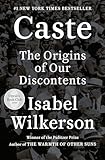
Editors Reads Verdict
Wilkerson's framework of caste — rather than race — as the organising principle of American hierarchy is one of the most clarifying analytical contributions to American social thought in recent years.
What We Loved
- The caste framework clarifies what 'race' as a concept cannot fully explain
- The comparative analysis with India and Nazi Germany is illuminating and carefully argued
- The eight pillars of caste provide a precise analytical framework
- Wilkerson's personal experiences woven through the analysis are powerful
Minor Drawbacks
- The comparative framework with Nazi Germany is controversial and contested
- Some readers find the prescriptive section underdeveloped compared to the analysis
- The concept of caste, applied to America, is disputed by some scholars
Key Takeaways
- → Caste is the structure that rank orders human beings regardless of their actual individual attributes
- → America operates a racial caste system with eight reinforcing pillars
- → Caste systems require maintenance — they do not persist automatically
- → The lowest caste absorbs the social costs (crime, illness, environmental hazards) of the whole society
- → Understanding caste as a structure shifts the analysis from individual racism to systemic architecture
| Author | Isabel Wilkerson |
|---|---|
| Publisher | Random House |
| Pages | 496 |
| Published | August 4, 2020 |
| Language | English |
| Genre | History, Sociology, Current Affairs |
| Difficulty | Intermediate |
| Best For | Anyone seeking to understand the structural foundations of racial inequality in America and its historical and comparative context. |
How Caste Compares
Caste at a glance against 3 similar books readers weigh alongside it.
| Book | Author | Rating | Best for |
|---|---|---|---|
| Caste (this book) | Isabel Wilkerson | ★ 4.7 | Anyone seeking to understand the structural foundations of racial inequality in |
| Born a Crime | Trevor Noah | ★ 4.8 | Anyone interested in apartheid South Africa, memoir as a form, questions of |
| Say Nothing | Patrick Radden Keefe | ★ 4.8 | Anyone interested in the Troubles, political violence, narrative nonfiction |
| The Warmth of Other Suns | Isabel Wilkerson | ★ 4.8 | Anyone seeking to understand the full scope of African American history and the |
A New Framework for an Old Problem
Isabel Wilkerson’s Caste proposes a shift in how Americans understand their racial hierarchy — from the language of race (which implies biological categories and individual prejudice) to the language of caste (which describes a structural system of rank ordering that persists regardless of individual attitudes).
The distinction is not merely semantic. Race, as a biological category, is scientifically meaningless — all humans share 99.9% of their genetic material. But the hierarchy built on racial designation is entirely real and consequential. Calling it caste, Wilkerson argues, names the structure more precisely and points more clearly toward the structural remedies it requires.
The Eight Pillars
Wilkerson identifies eight pillars that define and maintain any caste system: divine will or natural order (the theological or pseudo-scientific justification for hierarchy), heritability (caste determined by birth, not achievement), endogamy (restrictions on intermarriage), purity and pollution (the pollution associated with lower caste), occupational hierarchy, dehumanisation and stigma, enforcement through terror and violence, and inherent superiority or inferiority.
Each of these pillars is documented in the American context with specific historical evidence. The framework is precise enough to be analytically useful rather than just rhetorically powerful.
The Comparative Analysis
The book’s most ambitious and controversial section draws comparisons with the caste systems of India (the oldest in the world, dating back three thousand years) and Nazi Germany (the most self-conscious attempt to impose a racial caste system in the modern era). Wilkerson points to the fact that Nazi theorists explicitly studied American Jim Crow laws when designing their racial legislation — a historical connection that is disturbing but well-documented.
The India comparison illuminates the persistence of caste structures across cultures and millennia; the Nazi comparison shows the extremity to which caste logic can be taken when state power enforces it systematically.
Personal Testimony
Wilkerson weaves her own experiences as a Black woman in America — incidents of assumption, diminishment, and explicit racism — through the analytical framework. These personal passages give the abstract theory grounding in lived experience and remind the reader that the structure she is analysing operates on specific people in specific moments.
The Scapegoat and the Cost of Caste
One of Wilkerson’s most penetrating arguments is that caste is not merely cruel to those at the bottom; it is corrosive for everyone, including those it appears to benefit. The lowest caste, she shows, functions as a societal scapegoat, absorbing the blame, the dangerous labour, the environmental hazards, and the psychic anxieties of the whole system. But the dominant caste pays too — in the form of the social mistrust, diminished public goods, and political dysfunction that caste-stratified societies reliably produce. Drawing on a memorable extended metaphor, she likens America to an old house whose owners did not build its cracked foundation but are nonetheless responsible for repairing it. Caste, she insists, must be actively maintained; it does not persist on its own, which means it can also be dismantled.
Criticisms and the Debate It Sparked
The book has not gone unchallenged, and a fair review must say so. Some scholars argue that “caste,” with its specific roots in South Asian society, is an imperfect import for the American racial order, and that substituting it for “race” risks obscuring as much as it reveals. The provocative juxtaposition with Nazi Germany — though Wilkerson grounds it in the real, documented fact that Nazi jurists studied American segregation law while drafting the Nuremberg Laws — strikes some critics as more rhetorically charged than analytically precise. Others find the book’s diagnostic power outruns its prescriptions: the closing call for “radical empathy” and individual awakening feels thin set against the vast structural machinery the earlier chapters describe. These are serious objections, and engaging them is part of reading the book well.
The Power of the Individual Stories
For all its structural ambition, the book’s most unforgettable passages are often its smallest. Wilkerson, a Pulitzer-winning journalist, has a gift for the illuminating anecdote: the Black plumber summoned to a white family’s basement and treated as invisible; the immigrant who must learn America’s racial rankings before he learns its language; her own humiliations as a successful professional still presumed to be the help. She tells the wrenching story of a Black eminence in mid-century Texas, and the history of the “Tutsi/Hutu” cataclysm, to show how arbitrarily caste lines are drawn and how lethally they are enforced. These human-scale moments do the persuasive work that statistics cannot, grounding an abstract architecture of hierarchy in the texture of lived days. It is this fusion of sweeping comparative scholarship and intimate testimony that gives Caste its distinctive force and explains why it reached so far beyond the usual audience for sociology.
Final Verdict
Even so, Caste stands among the most intellectually serious and widely discussed books about American society of its era — an Oprah’s Book Club selection and bestseller that reshaped public conversation and was adapted into Ava DuVernay’s film Origin. Its analytical lens, whatever its limits, makes visible patterns that the familiar vocabulary of race and individual prejudice tends to miss, and Wilkerson’s blend of rigorous comparison and personal testimony gives the argument both authority and heart.
Whether or not one accepts every element of its central analogy, it is a book that genuinely changes how a reader sees the society around them — and few works of nonfiction can claim as much.
Our rating: 4.7/5 — A clarifying, courageous, and historically grounded analysis of American hierarchy. Essential reading.
Reading Guides
Frequently Asked Questions
What is "Caste" about?
A searing analysis of America's unspoken caste system, comparing it to India's caste system and Nazi Germany's racial hierarchy to illuminate the structural foundations of inequality.
Who should read "Caste"?
Anyone seeking to understand the structural foundations of racial inequality in America and its historical and comparative context.
What are the key takeaways from "Caste"?
Caste is the structure that rank orders human beings regardless of their actual individual attributes America operates a racial caste system with eight reinforcing pillars Caste systems require maintenance — they do not persist automatically The lowest caste absorbs the social costs (crime, illness, environmental hazards) of the whole society Understanding caste as a structure shifts the analysis from individual racism to systemic architecture
Is "Caste" worth reading?
Wilkerson's framework of caste — rather than race — as the organising principle of American hierarchy is one of the most clarifying analytical contributions to American social thought in recent years.
Ready to Read Caste?
Check the current price on Amazon.
Check Price on Amazon (paid link)Prices and availability are subject to change. See Amazon for current price.
Review last updated: