Best Books About Criminal Justice: Essential Reading on Law and Incarceration
The best books about criminal justice — from The New Jim Crow and In Cold Blood to Caste and Between the World and Me. Race, law, and the American justice system.
By Aisha Patel

Books about criminal justice range from structural analyses of mass incarceration to narrative accounts of individual crimes. The most important books in this category argue that criminal justice is not separate from the larger social order but is a primary mechanism through which that order is maintained — and that understanding the system requires understanding the society it serves.
Mass Incarceration and Race
The New Jim Crow — Michelle Alexander (2010)
The most important book about the American criminal justice system — a comprehensive argument that mass incarceration, which exploded after the War on Drugs began in the 1980s, functions as a system of racial control that replaces, in legal form, the system of Jim Crow. Alexander shows how the criminal justice system’s discretionary practices at every stage — policing, charging, sentencing, parole — produce racial disparities that cannot be explained by differential crime rates, and how the consequences of a criminal record (disenfranchisement, exclusion from housing and jobs) create a permanent underclass.
Essential reading for anyone who wants to understand why American incarceration rates are the highest in the world, and why they are so racially skewed.
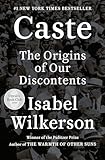
Caste — Isabel Wilkerson (2020)
Wilkerson’s argument — that America, India, and Nazi Germany share a caste structure that determines the value assigned to human beings based on birth — places the criminal justice system in its proper context: not a system that occasionally produces unjust results, but one of the primary mechanisms through which a hierarchical social order reproduces itself. The book is detailed, compellingly written, and particularly useful in explaining why racial disparities in criminal justice have proved so persistent despite decades of reform efforts.
Between the World and Me — Ta-Nehisi Coates (2015)
Coates’s letter to his teenage son about what it means to inhabit a Black body in America — and specifically about the relationship between that body and the state’s power to harm it. The criminal justice system is present throughout as one of the primary ways Black bodies are marked, constrained, and damaged. Shorter and more personal than The New Jim Crow, and the most powerful personal account of how state violence against Black Americans is experienced from the inside.
Narrative Crime Non-Fiction
In Cold Blood — Truman Capote (1966)
The book that invented narrative non-fiction — Capote’s reconstruction of the 1959 murder of the Clutter family in Kansas, the investigation, and the six years between arrest and execution of the two killers. Capote’s portrait of Perry Smith, one of the killers, is particularly disturbing in its empathy: the reader comes to understand how someone who commits a terrible crime has a comprehensible internal life, without excusing the crime. The book raises questions about capital punishment, about the relationship between poverty and violence, and about who gets to tell stories about crime.
The Devil in the White City — Erik Larson (2003)
Larson interweaves two stories: the building of the 1893 Chicago World’s Fair and the career of H.H. Holmes, a serial killer who constructed a hotel adjacent to the fair specifically to enable his crimes. The contrast between the fair’s idealism and Holmes’s predation is Larson’s central argument — that the same culture and social conditions that produce one also enable the other. The book is narrative non-fiction at its most readable and is particularly good on how Holmes exploited the social assumptions of the period.
The System and the Story
The books on this list approach criminal justice from two distinct but complementary directions, and understanding the difference is the key to using them well. The first approach is structural and analytical, exemplified by Alexander and Wilkerson, who examine criminal justice as a system — a vast apparatus of laws, policies, institutions, and practices that produces aggregate outcomes shaped by history and power. This mode reveals what no individual case could: the patterns of racial disparity that recur across millions of arrests, charges, and sentences; the way the consequences of a criminal record create a permanent underclass; the historical continuities that connect mass incarceration to earlier systems of racial control. The structural view is essential because it shows that injustice in the criminal system is not a matter of occasional bad outcomes but of design, of forces operating far above the level of any single defendant or officer. The second approach is narrative and particular, exemplified by Capote and Larson, who tell the story of specific crimes, criminals, and victims in vivid detail. This mode reveals what the structural view cannot: the texture of an individual crime, the comprehensible inner life of a person who does terrible things, the concrete human reality that statistics abstract away. Capote’s empathetic portrait of a killer forces the reader to hold together two truths — that a crime was monstrous and that its perpetrator was a human being shaped by poverty and damage. The fullest understanding comes from reading both modes: the systemic analysis that explains the patterns and the narrative accounts that render the human reality, each correcting the limitations of the other.
Criminal Justice as a Mirror of Society
A unifying argument runs through the most serious books on this list: that the criminal justice system cannot be understood in isolation, as a neutral mechanism for processing crime, but must be seen as a primary mirror and instrument of the larger social order. This is the central insight of the structural works, and it transforms how one reads everything else in the category. Alexander’s The New Jim Crow makes the case explicitly, arguing that the explosion of mass incarceration following the War on Drugs functions as a system of racial control that reproduces, in legally permissible form, the hierarchy that slavery and segregation once enforced — that the criminal justice system is not separate from America’s racial order but one of the principal means by which it is maintained. Wilkerson’s Caste widens the lens further, situating the American system within a global pattern of caste structures that assign human worth by birth, and explaining why disparities in criminal justice have proved so stubbornly resistant to reform: because they are not malfunctions but expressions of a deeper hierarchical logic. Even the narrative crime books reveal this mirroring, as Capote and Larson show how the social assumptions, prejudices, and conditions of their eras shaped which crimes were committed, how they were investigated, and who was punished. The cumulative lesson is that to study criminal justice is to study a society’s deepest values and contradictions — its assumptions about race, class, and human worth, its definitions of crime and its choices about whom to punish. The system does not stand apart from the society it serves; it concentrates and reveals that society’s true character, which is why these books illuminate far more than law enforcement alone.
From Outrage to Reform
The deepest purpose of the criminal justice literature, and the reason these books matter beyond their considerable interest, is their capacity to transform how readers understand a system that operates largely out of sight and to generate the awareness from which reform becomes possible. The American criminal justice system is vast, complex, and deliberately opaque to most citizens, who encounter it only through sensationalized media coverage of individual crimes rather than through any grasp of its structural realities. The books on this list pierce that opacity. The New Jim Crow in particular has functioned as a genuine catalyst for change, becoming a foundational text for a broad movement to reform policing, sentencing, and incarceration, and reshaping public and political debate for more than a decade by making the systemic injustice of mass incarceration legible and undeniable to a mass audience. The narrative books perform a complementary work, using the power of story to make readers feel the human stakes — the reality of the victim, the comprehensible humanity of the criminal, the questions of justice, punishment, and mercy that every crime raises. Together, the structural analysis and the narrative immediacy produce both understanding and the moral response that understanding ought to carry. For a citizen of a country with the highest incarceration rate in the world, where racial disparities pervade every stage of the process, this literature is not merely informative but civically essential, equipping readers to think clearly about one of the most consequential and troubling institutions of modern life, and to participate in the urgent, ongoing debate about how a just society should respond to crime.
Reading Order
Structural analysis: The New Jim Crow → Caste → Between the World and Me.
Narrative approach: In Cold Blood → The Devil in the White City → The New Jim Crow.
Complete picture: Between the World and Me → The New Jim Crow → Caste.
Frequently Asked Questions
What is the best book about criminal justice?
The New Jim Crow by Michelle Alexander is the most important book about the American criminal justice system — a comprehensive argument that mass incarceration functions as a system of racial control that replaces the Jim Crow laws dismantled by the civil rights movement. In Cold Blood by Truman Capote is the defining narrative non-fiction account of a violent crime. Caste by Isabel Wilkerson places the criminal justice system in the context of America's deeper caste structure, which explains why its disparities are so persistent.
What is The New Jim Crow about?
The New Jim Crow (2010) by Michelle Alexander argues that the War on Drugs, beginning in the 1980s, created a system of mass incarceration that disproportionately affects Black Americans and functions as a legal system of social control — one that continues to restrict the rights and opportunities of those it ensnares long after release, through felony disenfranchisement, exclusion from housing and employment, and the permanent mark of a criminal record. Alexander argues this system is not an accident but serves the same social function as the Jim Crow laws it replaced.
What is Caste about?
Caste (2020) by Isabel Wilkerson argues that America, India, and Nazi Germany share a common structure — a rigid hierarchy of human value based on birth — and that understanding American race relations as a caste system (rather than simply a race problem) better explains its persistence. The book draws on Wilkerson's own experience as a Black woman in America and on extensive historical research, including a striking parallel between the Nuremberg Laws and American Jim Crow laws. The criminal justice system appears throughout as a primary mechanism for maintaining caste hierarchy.
What is In Cold Blood about?
In Cold Blood (1966) by Truman Capote reconstructs the 1959 murder of the Clutter family in Holcomb, Kansas — four members of a prosperous farming family killed by two drifters, Richard Hickock and Perry Smith. Capote spent six years reporting the story, including extensive interviews with the killers before their execution. The book invented the genre of narrative non-fiction — literary techniques applied to factual events — and remains the best argument that a journalist can render a criminal event with the depth and empathy of a novelist.