Best Books About Poverty and Inequality: Essential Non-Fiction and Fiction
The best books about poverty and inequality — from The Grapes of Wrath and Shuggie Bain to The Warmth of Other Suns and The New Jim Crow. Essential reading.
By Aisha Patel

Books about poverty and inequality require different things from fiction and from non-fiction. Fiction (Steinbeck, Stuart) can give poverty a specific face — the weight of individual experience that statistics cannot provide. Non-fiction (Wilkerson, Alexander) can provide the scale, the historical context, and the systemic analysis that individual stories alone cannot. The books below do both.
Fiction
The Grapes of Wrath — John Steinbeck (1939)
The most powerful fictional account of poverty in American literature — the Joad family’s migration from the Oklahoma Dust Bowl to California, and what they find when they arrive (exploitation, hostility, the systematic destruction of any hope of security). Steinbeck’s intercalary chapters (passages that pull back from the Joads to describe the economic forces shaping their situation) are formally innovative and historically precise. The novel won the Pulitzer Prize and contributed directly to the New Deal policies designed to address farm poverty.
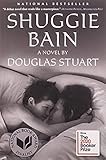
Shuggie Bain — Douglas Stuart (2020)
The Booker Prize-winning novel about poverty in 1980s Glasgow — Shuggie Bain’s childhood with his alcoholic mother Agnes, in the post-industrial communities that Thatcher’s policies were destroying. Stuart’s novel is the most emotionally immediate account of poverty in contemporary fiction: not a sociological study but the texture of a life lived in it, day by day, with the specific weight of love and shame and hope that sustains people in situations designed to break them.
Non-Fiction
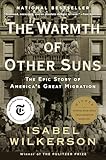
The Warmth of Other Suns — Isabel Wilkerson (2010)
The definitive account of the Great Migration — six million Black Americans leaving the Jim Crow South between 1915 and 1970. Wilkerson follows three individuals from different states and different decades, using their lives to tell the history of an internal migration that reshaped American cities, American politics, and American culture. The most readable and most comprehensive account of this defining movement in American history.
The New Jim Crow — Michelle Alexander (2010)
Alexander’s argument that mass incarceration has replicated the legal and social effects of Jim Crow — that the War on Drugs disproportionately targets Black and brown communities, that the resulting convictions strip people of the vote, employment rights, and public housing eligibility, and that the resulting second-class status is structurally equivalent to the segregation that preceded it. The most important book about the American criminal justice system and race published in the past two decades.
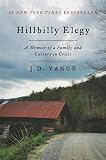
Hillbilly Elegy — J.D. Vance (2016)
Vance’s memoir of growing up in Appalachian Ohio — the white working class in post-industrial decline, with the specific texture of addiction, domestic violence, and the erosion of the social structures (work, church, family) that once held communities together. The most widely read account of white working-class poverty in America; politically contested but invaluable as a specific account of a specific community.
The Warmth of Other Suns Companion: Between the World and Me — Ta-Nehisi Coates (2015)
Coates’s letter to his teenage son about what it means to be Black in America — the history of the body as the site of racial violence, the specific fears of Black parenthood, the destruction of the ‘Dream’ (white America’s self-mythologisation). Written in the tradition of Baldwin’s The Fire Next Time, it is the most powerful short statement on race and poverty in contemporary American non-fiction.
The Statistic and the Face
The deliberate pairing of fiction and nonfiction on this list reflects a conviction about how poverty and inequality are truly understood, and why neither mode alone is sufficient. Nonfiction supplies what fiction cannot: the scale, the systemic analysis, the historical context, the hard data that reveal poverty and inequality as structural phenomena rather than individual misfortunes. Wilkerson documents the movement of six million people; Alexander traces the legal architecture by which mass incarceration reproduces racial caste. These books make visible the forces and patterns that no single life could reveal, and they are essential, because without the systemic view, poverty appears as a series of personal failures or accidents rather than the predictable product of policy and structure. But the systemic view has its own limitation: a statistic, however staggering, struggles to move us, and a number cannot convey what it actually feels like to live a life shaped by deprivation. This is the irreplaceable work of fiction. Steinbeck’s Joads and Stuart’s Shuggie give poverty a face, a body, a specific texture of daily shame and love and exhaustion that the most rigorous study cannot supply. When the reader holds both together — the analysis that explains and the story that makes us feel — understanding becomes complete in a way neither mode achieves alone. The number tells us how many; the novel tells us what it is like to be one of them; and only the combination produces both knowledge and the moral urgency that knowledge ought to carry.
Poverty as Structure, Not Character
A unifying argument runs through the most serious books on this list, fiction and nonfiction alike: that poverty and inequality are not primarily the result of individual choices, moral failures, or personal deficiencies, but of structures, systems, and historical forces operating far above the level of any individual life. This argument runs directly against a powerful and persistent strain in popular thinking — especially American thinking — which holds that poverty is fundamentally a matter of personal responsibility, that the poor are largely the authors of their own condition, and that hard work and good character are sufficient to escape it. The books here mount a sustained rebuttal. Steinbeck’s intercalary chapters pull back from the Joads to expose the economic machinery — the banks, the land system, the labor market — that grinds individual families regardless of their virtue or effort. Wilkerson shows millions fleeing a system of legal oppression that no amount of individual merit could overcome. Alexander demonstrates how laws and policies, not personal failings, strip millions of citizens of opportunity and rights. Even Hillbilly Elegy, the most individually focused and politically contested book on the list, documents the collapse of the economic and social structures — the disappearance of work, the erosion of community institutions — within which individual struggles unfold. The cumulative effect of reading these books is to make the structural view almost impossible to dismiss: to see clearly that the circumstances of one’s birth, the policies of one’s government, and the accumulated weight of history shape life chances far more powerfully than character or effort, and that any honest reckoning with poverty must begin there.
From Understanding to Conscience
Beyond informing the reader, the deepest purpose of this literature is to cultivate conscience — to transform poverty and inequality from abstract social issues into matters of genuine moral concern, and to make indifference harder to sustain. This is a function literature has performed throughout its history, and these books stand in a long tradition of writing that has actually changed the world. The Grapes of Wrath did not merely depict the suffering of Dust Bowl migrants; it generated public outrage that contributed directly to New Deal reforms addressing agricultural poverty. The New Jim Crow did not merely analyze mass incarceration; it became a foundational text for a movement to reform the criminal justice system, shaping public understanding and policy debate for a generation. The power of these works lies in their capacity to breach the defenses that allow comfortable people to ignore the suffering of others — the statistical abstraction that numbs, the geographic and social distance that hides, the ideological convenience of blaming the poor for their poverty. By making the reality vivid, particular, and emotionally undeniable, this literature reawakens the moral response that distance and abstraction suppress. It insists that the conditions it describes are not inevitable, not natural, not deserved, but the product of choices that could be made differently, which means they are matters of justice rather than fate. To read these books with attention is to find it harder to look away, harder to accept inequality as simply the way things are, and to feel the pull toward a more just arrangement of the world. That movement from understanding to conscience, from knowing to caring to wanting change, is the highest work these books perform, and it is why they remain not merely informative but genuinely important.
Reading Order
Start here: The Grapes of Wrath → The Warmth of Other Suns → The New Jim Crow.
Fiction first: The Grapes of Wrath → Shuggie Bain → Between the World and Me.
Non-fiction: The Warmth of Other Suns → The New Jim Crow → Hillbilly Elegy → Between the World and Me.
Frequently Asked Questions
What is the best book about poverty?
The Grapes of Wrath (1939) by John Steinbeck is the most powerful fictional account of poverty in American literature — the Joad family's displacement from the Oklahoma Dust Bowl and their migration to California, where they find exploitation rather than opportunity. For non-fiction, The Warmth of Other Suns (2010) by Isabel Wilkerson is the essential account of the Great Migration — the movement of six million Black Americans from the Jim Crow South to the northern and western cities between 1915 and 1970 — and what they found when they arrived. The New Jim Crow (2010) by Michelle Alexander is the most important account of how mass incarceration has replicated the social effects of Jim Crow segregation.
What is The Grapes of Wrath about?
The Grapes of Wrath (1939) by John Steinbeck follows the Joad family — sharecroppers from Oklahoma — who are forced off their land during the Dust Bowl and the Depression, and migrate to California in hope of work. What they find is a labor market designed to exploit them: too many migrants, too little work, labor contractors who manipulate wages, and a hostility from California's established communities that mirrors the hostility they faced in Oklahoma. Steinbeck alternates between the Joads' specific story and intercalary chapters that give the wider context — the economic forces driving the migration, the ideology of ownership that treats people as disposable.
What is The Warmth of Other Suns about?
The Warmth of Other Suns (2010) by Isabel Wilkerson follows three individuals — Ida Mae Brandon Gladney (who moved from Mississippi to Chicago in 1937), George Swanson Starling (who moved from Florida to New York in 1945), and Robert Joseph Pershing Foster (who moved from Louisiana to California in 1953) — and uses their stories to tell the history of the Great Migration. Wilkerson spent fifteen years researching the book, conducting more than 1,200 interviews. The result is both a work of meticulous historical research and a narrative of individual lives that makes the statistics human. One of the most important American history books of the past twenty years.
What is Hillbilly Elegy about?
Hillbilly Elegy (2016) by J.D. Vance is a memoir of growing up in Appalachian Ohio — the white working class of a de-industrialised region, with its cycles of poverty, addiction, domestic violence, and social disintegration. Vance's account of his grandmother (Mamaw), who was the stabilising force of his childhood, and of his own escape through the Marine Corps and Yale Law School, became the most widely read account of white working-class America. The book is politically contested (critics argue it attributes structural poverty to cultural failure) but remains the most accessible single account of the Appalachian working class.