Best Books About Class and Inequality: Essential Reading List
The best books about class and inequality — from The Grapes of Wrath and Les Misérables to Hillbilly Elegy and Normal People. Literature on poverty, privilege, and social mobility.
By Aisha Patel

Class and inequality have been central subjects of the novel since its origins — partly because the novel as a form emerged at the same time as capitalism, and partly because the displacement of people between social strata (upward through ambition, downward through catastrophe) provides exactly the narrative and psychological material that novels require. The best novels about class don’t simply document injustice: they show how inequality is internalised, how it shapes aspiration and shame, and what it costs to cross it.
The Great Novels of Economic Injustice
The Grapes of Wrath — John Steinbeck (1939)
The most powerful American novel about poverty. The Joad family — sharecroppers driven from their Oklahoma land by drought and bank foreclosure — migrate to California, following the promise of work, and find exploitation, violence, and solidarity. Steinbeck alternates between the Joad family’s story and short chapters that describe the migrant experience in general terms, creating a portrait that is simultaneously specific and representative.
The novel won the Pulitzer Prize in 1940 and was immediately controversial — California farm owners attempted to suppress it, and some counties banned it. It remains the definitive account of American economic catastrophe and the dignity of people it destroys.
Les Misérables — Victor Hugo (1862)
The greatest European novel about class and criminal justice. Jean Valjean, imprisoned for stealing a loaf of bread and then for attempting to escape, spends nineteen years in prison and emerges to find that his convict’s passport prevents him from being accepted anywhere. Hugo’s novel is both the story of Valjean’s moral transformation and an indictment of a society that criminalises poverty, uses the law to enforce class hierarchy, and denies redemption to those it has already punished.
At over 1,200 pages (including long digressions on the Paris sewer system and the battle of Waterloo), it is the most ambitious of all social novels.
Class Aspiration
Great Expectations — Charles Dickens (1860-61)
The most psychologically precise Victorian novel about class aspiration and its costs. Pip, a blacksmith’s boy on the Kent marshes, receives an anonymous fortune and goes to London to become a gentleman — abandoning his origins, being ashamed of Joe Gargery’s rough kindness, and building an identity on the foundation of money he does not understand. The revelation of who his benefactor actually is dismantles his version of himself, and the novel’s final stages trace the painful process of understanding what was actually valuable in what he rejected.
Dickens wrote from experience: his own childhood included factory work and the debtor’s prison, and Pip’s shame about his origins is rendered with a specificity that suggests autobiography.
Normal People — Sally Rooney (2018)
The most perceptive contemporary novel about how class operates in ways that its characters do not fully name. Connell, whose mother cleans for Marianne’s family, is popular at school; Marianne is isolated. At university, their positions are inverted — Marianne’s wealth gives her access to social worlds that Connell cannot enter. Rooney’s treatment of how class shapes not just material circumstances but psychology, self-presentation, and the capacity for intimacy is the most precise in recent Irish fiction.
Working-Class Non-Fiction
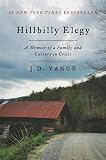
Hillbilly Elegy — J.D. Vance (2016)
The most widely discussed memoir about white working-class America. Vance’s account of growing up in Appalachian Ohio — with a drug-addicted mother, an unstable family, and the specific psychology of communities that have been left behind by economic change — generated enormous debate about poverty, culture, and the limits of individual agency. Whether or not you agree with Vance’s political conclusions, the portrait of working-class life is detailed and specific in ways that most political commentary is not.
The European Tradition
Germinal — Émile Zola (1885)
The most important novel about industrial labour. Zola spent months in the coal mines of northern France before writing his account of a strike in a mining community — the conditions of the work, the relationship between miners and owners, the specific way that poverty creates both solidarity and desperation. Zola’s naturalism — his documentary ambition, his refusal to moralise or sentimentalise — produces a novel that reads simultaneously as a historical document and a fully imagined world.
Class as the Hidden Architecture of Life
Class is one of the most powerful forces shaping human lives and yet one of the most often unspoken, an invisible architecture that determines opportunities, relationships, and destinies while frequently going unnamed and unexamined. The books on this list perform the essential work of making this hidden structure visible, of exposing the ways that the social and economic position into which a person is born pervasively shapes the entire course of their life — their education, their prospects, their health, their relationships, even their sense of what is possible for them. What makes class so insidious as a force is precisely its tendency to disguise itself, to present the outcomes it produces as the natural results of individual merit or failing rather than as the predictable consequences of a structured system of advantage and disadvantage. The literature of class cuts through this mystification, revealing the machinery of social position and demonstrating how thoroughly the accidents of birth determine the supposedly free choices and earned achievements of a life. This is uncomfortable knowledge, because it challenges the comforting belief that we live in a meritocracy where effort and talent reliably determine success, and it forces a recognition of how much of any individual’s fate is set by circumstances they did not choose and cannot control. But it is necessary knowledge, both for understanding the world accurately and for any serious effort to make it more just. The best books on class equip the reader to perceive the structure that ordinarily remains invisible, to recognize its operation in their own life and the lives around them, and to think clearly about a force that shapes everything while hiding in plain sight.
The Lie and the Limits of Mobility
Central to any honest examination of class is the question of social mobility — the possibility of moving from the circumstances of one’s birth to a different and higher station — and the books on this list confront this question with a clarity that punctures one of modern society’s most cherished and consoling myths. The promise of mobility, of the rags-to-riches ascent available to anyone with sufficient talent and determination, is foundational to how many societies understand themselves, offering both a justification for inequality (the poor could rise if they tried) and a source of hope (anyone can make it). The literature of class subjects this promise to hard scrutiny and finds it largely wanting. The reality these books document is that mobility is far rarer and more difficult than the myth suggests, that the structures of class are remarkably persistent across generations, and that the obstacles facing those born into disadvantage are systematic rather than merely matters of individual effort. They reveal, too, the hidden costs paid by those who do manage to move between classes — the alienation from one’s origins, the sense of belonging fully to neither the world one left nor the world one entered, the psychic toll of straddling a social divide. This unsentimental examination of mobility matters because the myth of easy advancement does real harm, blaming the disadvantaged for their circumstances and obscuring the structural barriers that hold them in place. By exposing both the limits of mobility and its true costs, these books replace a comforting fiction with a more accurate and more useful understanding, one that locates the causes of persistent inequality not in the failings of individuals but in the architecture of a system designed, however unintentionally, to reproduce itself across the generations.
Inequality and the Fracturing of Society
Beyond its effects on individual lives, the literature of class and inequality illuminates a larger and increasingly urgent reality: the way that widening economic division fractures society itself, corroding the common life and threatening the bonds that hold a community or nation together. The books on this list make clear that inequality is not merely a private misfortune for those at the bottom but a collective condition that shapes the entire society, and that its growth carries profound consequences for everyone. As the gap between rich and poor widens, the rich and the poor increasingly inhabit separate worlds — different neighborhoods, schools, healthcare, and experiences of life — until they can barely comprehend one another, and the sense of shared citizenship and common fate that sustains a functioning society begins to dissolve. This fracturing breeds resentment, mistrust, and political instability; it undermines the social solidarity on which collective action and democratic life depend; and it concentrates not only wealth but power, allowing the advantaged to shape the rules of the system further in their own favor. The literature of inequality traces these dynamics, showing how economic division translates into social and political division, and how a society of extreme inequality differs in character from a more equal one — harsher, more divided, more precarious for all but the most fortunate. This larger perspective matters because it reframes inequality from a question of individual hardship into a question of the health of the whole society, and because it suggests that the costs of extreme inequality are borne, ultimately, by everyone. In illuminating how class division fractures the common life, these books make the case that inequality is not only an injustice to those it harms most directly but a danger to the entire community, and a problem that any society concerned with its own future cannot afford to ignore.
Reading Order
American tradition: The Grapes of Wrath → Great Expectations → Normal People.
European tradition: Les Misérables → Germinal → Howards End.
Non-fiction: Hillbilly Elegy → then the fiction that illuminates what the memoir describes.
Frequently Asked Questions
What is the best novel about class and inequality?
The Grapes of Wrath by John Steinbeck is the most powerful American novel about poverty and economic injustice — the Joad family's migration from Dust Bowl Oklahoma to California is rendered with documentary specificity and biblical moral weight. Les Misérables by Victor Hugo is the greatest European novel about class and the criminal justice system's treatment of the poor. Great Expectations by Dickens is the most psychologically precise novel about class aspiration and its costs. Each approaches class from a different angle — economic catastrophe, criminal justice, social ambition — and each is essential.
What non-fiction books about inequality are essential?
Hillbilly Elegy by J.D. Vance is the most widely discussed contemporary memoir about white working-class experience in America. Capital in the Twenty-First Century by Thomas Piketty is the most important recent academic analysis of wealth inequality. Evicted by Matthew Desmond is the most important recent work on poverty and housing in America — Desmond spent months living in Milwaukee's poorest neighbourhoods and his account of the eviction cycle is both journalism and sociology at the highest level.
What is Normal People about in terms of class?
Normal People by Sally Rooney is centrally about class — about how Connell's working-class background and Marianne's middle-class family shape what each of them can access, both materially and psychologically. Connell is popular at school partly because his mother is the Marianne family's cleaner, and the specific social embarrassment that Connell feels about this shapes his refusal to publicly acknowledge Marianne. At university the class positions are inverted — Marianne's wealth gives her access that Connell lacks. The love story is inseparable from the class story.
What is Germinal about?
Germinal by Émile Zola (1885) is a novel about a coal-mining community in northern France — a strike, the conditions of mining life, the relationship between workers and owners — and is the most important French novel about class and labour. Zola spent months researching the coal mines before writing it, and his account of the physical conditions of industrial labour in the nineteenth century is both documentary and novelistic. It remains the defining work of literary naturalism and one of the greatest novels about work ever written.