Best American Novels: The Great American Novel Reading List
The best American novels — from Moby-Dick and The Great Gatsby to Beloved and Blood Meridian. The essential canon of American fiction from the 19th century to today.

The American novel is among the great bodies of fiction in world literature — from the democratic epic of Melville and the psychological realism of James and Wharton through the modernism of Faulkner and Hemingway to the postmodernism of Pynchon and DeLillo and the moral seriousness of Morrison and McCarthy. The novels below are the essential starting points: the works that have most defined what the American novel is and what it can do.
The Nineteenth Century
Moby-Dick — Herman Melville (1851)
The central document of American literature — a narrative of obsession, democracy, and human insignificance before nature that encompasses an adventure story, a philosophical poem, and an encyclopedic account of nineteenth-century whaling. Captain Ahab’s hunt for the white whale that took his leg is the frame; the novel’s subject is what Ahab represents (the American will to dominate nature and circumstance), what the Pequod’s multicultural crew represents (democracy’s promise and its limits), and what the whale represents (the universe’s indifference to human projects). Demanding but essential.
Adventures of Huckleberry Finn — Mark Twain (1884)
The novel Ernest Hemingway said all American literature came from — Huck Finn’s journey down the Mississippi with Jim, an escaped enslaved man, is the most direct confrontation in nineteenth-century American fiction with the country’s central moral failure. Twain’s vernacular prose (Huck’s voice is the most achieved first-person narrator in American fiction before Faulkner) and his willingness to let Huck arrive at a moral position that contradicts everything his society has taught him make the novel central to any understanding of American literature.
The Twentieth Century
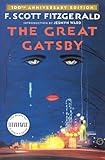
The Great Gatsby — F. Scott Fitzgerald (1925)
The most widely read American novel — Jay Gatsby’s attempt to recapture the past, seen through the eyes of Nick Carraway, in the Long Island of the 1920s boom. The novel’s argument about the American Dream (its seductiveness, its fraudulence, and the violence it conceals) is made through Fitzgerald’s extraordinarily precise prose. At 180 pages, it is the most concentrated major American novel.
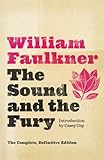
The Sound and the Fury — William Faulkner (1929)
The most technically accomplished American novel — the disintegration of the Compson family in Mississippi told in four sections, each from a different perspective, the first three fragmentary and unreliable (the first narrated by the intellectually disabled Benjy). Faulkner’s use of stream of consciousness, temporal disruption, and multiple narrators to represent the experience of a collapsing Southern aristocracy is the most demanding in American fiction. Essential for serious readers of the novel; not a starting point.
Invisible Man — Ralph Ellison (1952)
The central novel of African American experience in mid-century America — the unnamed narrator’s account of his life from a Southern college through Harlem to an underground room where he has retreated, invisible to the white society that cannot see Black people as individuals. Ellison’s achievement is to make the narrator’s invisibility a formal and philosophical condition rather than just a social one, and to use the picaresque journey structure to survey the full range of Black political thought in the period.
Beloved — Toni Morrison (1987)
The most morally serious American novel — Sethe’s haunting by the ghost of her murdered daughter is Morrison’s account of what slavery did not just to its victims but to the bonds of love and family that were its primary instrument of destruction. Morrison’s prose (dense, poetic, non-linear) enacts the trauma it describes, and the novel’s argument — that there is no reparation possible, only the possibility of continuing to live — is the most honest statement available about the legacy of slavery in American life.
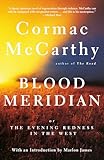
Blood Meridian — Cormac McCarthy (1985)
The most violent and the most philosophically serious of American novels — Judge Holden’s argument that war is the supreme human activity, and the Glanton gang’s history of atrocities along the Texas-Mexico border, constitute the most unflinching examination of violence and American expansion in any literature. Not for every reader; essential for serious engagement with what America is and was.
The Search for the Great American Novel
The very idea of “the great American novel” is a peculiarly American obsession, an aspiration unlike anything in other national literatures, and understanding it illuminates what is at stake in the works on this list. From early in the nation’s history, American writers and critics have been preoccupied with the dream of a single novel that would capture the essence of the United States — its vast scale, its founding ideals and their betrayals, its restless diversity, its distinctive character as a nation perpetually inventing itself. This ambition reflects something fundamental about America’s relationship to its own identity: a young country, founded on ideas rather than ancient ties of blood and soil, composed of peoples drawn from everywhere, and committed to a set of propositions about freedom and equality that its reality has continually tested. Such a nation seems to demand a literature equal to its scale and contradiction, a novel that could somehow contain the whole sprawling, contradictory experiment. The great novels on this list represent successive attempts to meet that impossible demand, each capturing some essential facet of the American experience while no single one exhausts it. The very impossibility of the task is revealing: America is too large, various, and contradictory to be contained in any single book, and the persistent dream of the great American novel testifies to a nation forever trying and failing to capture itself whole. What the search has produced instead is a constellation of great novels, each illuminating a different dimension of the national experience, and together composing a fuller portrait than any one could achieve. To read across them is to participate in the long, unfinished American project of self-definition, and to understand why this nation, more than any other, has made the writing of its defining novel into a cultural quest.
A Nation Arguing With Itself
The greatest American novels are, again and again, books in which the nation argues with itself — in which the gap between America’s professed ideals and its actual realities becomes the central and animating subject. From its founding, the United States has been defined by a set of soaring propositions: that all are created equal, that liberty is a universal right, that the nation offers opportunity and self-invention to all who come. And from its founding, American reality has contradicted those propositions, through slavery and its long aftermath, through the dispossession of native peoples, through the recurring betrayals of the immigrant’s hope and the persistent inequalities of class and race. The major American novels live precisely in this contradiction, holding the nation’s ideals up against its failures and refusing to let either cancel the other. They are patriotic in the deepest sense — taking America’s promises seriously enough to be enraged and heartbroken by their betrayal — and critical in the deepest sense, exposing the hypocrisies and injustices that the official story conceals. This is why so much great American fiction has a quality of moral reckoning, an insistence on confronting the nation with the distance between what it claims to be and what it has actually done. The novels on this list repeatedly stage this confrontation, examining the American dream and its costs, the American promise and its betrayals, the perpetual tension between the country’s stated values and its lived realities. In doing so they perform an essential civic function, serving as the conscience of a nation that has always defined itself by ideals it has never fully honored. To read them is to encounter America not as myth but as argument — a country perpetually contending with the meaning of its own founding promises, and a literature that refuses to let it forget the gap between its dream and its deeds.
From Realism to Reinvention
Surveying the major American novels across the generations reveals not a static tradition but a restless, continually reinventing one, in which each era’s writers have remade the form to capture an America that would not hold still. This formal restlessness is itself profoundly American, mirroring the nation’s own perpetual self-reinvention. The nineteenth-century masters forged a distinctively American literature out of European inheritances, finding forms adequate to a new world’s landscapes, energies, and moral crises. The realists and naturalists who followed turned an unflinching eye on the social realities of a rapidly industrializing and urbanizing nation, documenting the lives of the ordinary and the dispossessed with new honesty. The modernists shattered inherited forms to capture the fragmentation and disillusionment of the twentieth century, experimenting radically with structure, voice, and time. And the generations since have continued the reinvention, expanding the canon to include voices long excluded, bringing the experiences of those marginalized by race, gender, and origin into the center of the national literature, and continually finding new forms for new American realities. This ongoing transformation is one of the tradition’s defining strengths: American fiction has never settled into a fixed mold but has remade itself again and again, each generation discovering that the previous era’s forms could not contain the changing nation. The result is a literature of extraordinary variety and vitality, perpetually renewing itself as the country it depicts continues to change. To read across the American novel from its origins to the present is to witness this restless reinvention, and to understand that the tradition’s refusal to stand still is not a weakness but the very source of its enduring power, a formal embodiment of the nation’s own unfinished and ceaseless self-remaking.
Reading Order
Start accessible: The Great Gatsby → Adventures of Huckleberry Finn → Invisible Man.
The modernist tradition: The Sound and the Fury → Moby-Dick → Blood Meridian.
Moral seriousness: Beloved → Invisible Man → Adventures of Huckleberry Finn → The Great Gatsby.
Frequently Asked Questions
What is the greatest American novel?
Moby-Dick by Herman Melville is the most frequently cited candidate for the greatest American novel — a narrative of obsession, democracy, and human insignificance before nature that is simultaneously an adventure story, a philosophical poem, and an encyclopedic account of the whaling industry. Beloved by Toni Morrison won the Nobel Prize and is the most morally serious American novel — its account of slavery's destruction of the most intimate human bonds is the defining literary statement about America's founding wound. The Sound and the Fury by William Faulkner is the most technically accomplished.
What is Moby-Dick about?
Moby-Dick (1851) by Herman Melville follows Ishmael, a sailor who joins the crew of the Pequod — a whaling ship captained by the obsessed Ahab, who lost his leg to the great white whale Moby Dick and has devoted his life and his crew to hunting it down. The novel weaves together the adventure of the hunt, comprehensive accounts of whale biology and the whaling industry, philosophical meditations on obsession and democracy, and some of the most powerful prose in American literature. Its famous opening line ('Call me Ishmael') is the beginning of an argument, not just a story.
What is Beloved about?
Beloved (1987) by Toni Morrison is set in Cincinnati after the Civil War — Sethe, a former enslaved woman who escaped from a Kentucky plantation, is haunted by the ghost of her baby daughter, whom she killed rather than allow to be recaptured into slavery. The ghost eventually becomes incarnate as Beloved, a young woman who may be the daughter returned. Morrison's novel examines what slavery did not just to its victims but to the bonds of love and family that were systematically destroyed, and what it costs to survive what cannot be survived. She won the Nobel Prize in 1993.
What is Blood Meridian about?
Blood Meridian (1985) by Cormac McCarthy is set in the 1840s on the Texas-Mexico border — a teenage runaway known only as 'the kid' joins a band of scalp hunters (real historical figures, the Glanton gang) who commit atrocities across the borderlands. Judge Holden, the gang's philosophical leader — a hairless giant of extraordinary physical presence — argues that war is the supreme human activity, the truest expression of human nature. The novel is the most violent in American literature and, in the view of many critics, the most profound meditation on the nature of violence and American expansion. Not recommended as a starting point.