Authors Like Cormac McCarthy: 7 Writers to Read Next
Authors like Cormac McCarthy for fans of Blood Meridian and The Road — William Faulkner, Larry McMurtry, Denis Johnson, John Steinbeck, and more, with where to start.
Cormac McCarthy stands almost alone in American letters: a writer of biblical, blood-soaked prose who looked unflinchingly at violence, fate, and the indifferent vastness of the world. From the borderland nightmare of Blood Meridian to the grey apocalypse of The Road to the elegiac Border Trilogy, his novels are stark, demanding, and unforgettable. If you have read your way through McCarthy and want more of that specific intensity — the spare lyricism, the moral weight, the American landscape rendered as something close to scripture — these seven writers are where to go.
Below are the authors who each capture a crucial part of what makes McCarthy great, with a starting point for each.
What Makes a Cormac McCarthy Read-Alike
McCarthy’s power comes from a few rare qualities. There is the prose — spare yet biblical, stripped of quotation marks and sentiment. There is the violence, treated not as spectacle but as a fact of existence. There is the landscape — the West, the borderlands, the road — rendered with awe and dread. And there is the moral and metaphysical weight, the sense that every action echoes in a vast, uncaring universe. No single writer matches all four, so the best pick depends on which one grips you most.
It also helps to know how demanding a read you want. McCarthy ranges from the relatively accessible (No Country for Old Men) to the punishing (Blood Meridian), and the authors below span the same scale — Faulkner and Morrison sit at the densest, most challenging end, while Hemingway and Proulx are spare and swift. Matching that, as much as the themes, points you to the right next book.
William Faulkner — The Prose Ancestor
For McCarthy’s dense, incantatory style, William Faulkner is the source. As I Lay Dying — a Southern family’s grotesque, harrowing journey to bury their mother — shows the stream-of-consciousness, biblical Southern voice McCarthy inherited and made his own. Demanding and rewarding in equal measure, Faulkner is essential for readers who love McCarthy’s language above all.
Larry McMurtry — The Literary Western
Larry McMurtry is the great novelist of the American West, and Lonesome Dove is his masterpiece — an epic cattle-drive saga of friendship, violence, and the closing frontier. Warmer and more humane than McCarthy but every bit as sweeping, it is the perfect next read for anyone who loved the Border Trilogy and the mythic West.
Denis Johnson — The Contemporary Heir
Denis Johnson is perhaps the closest living kin to McCarthy in his fusion of brutality and grace. Tree of Smoke, his National Book Award–winning Vietnam epic, shares McCarthy’s hallucinatory violence and strange spiritual undercurrent. For readers who want contemporary fiction with McCarthy’s intensity, Johnson is the one.
John Steinbeck — The American Epic
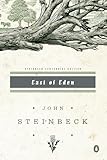
John Steinbeck shares McCarthy’s biblical scope and his deep attention to the American land and its dispossessed. East of Eden, a multi-generational retelling of Cain and Abel in California’s Salinas Valley, has the moral grandeur and mythic structure McCarthy fans will recognise — a more humane but equally ambitious vision.
Annie Proulx — The Spare Landscape
Annie Proulx writes harsh weather, harder lives, and prose pared to the bone. The Shipping News, set on a brutal Newfoundland coast, shares McCarthy’s gift for making landscape a moral force and for finding poetry in the unforgiving. A leaner, swifter read with the same flinty soul.
Ernest Hemingway — The Lineage of Spareness
McCarthy’s stripped-down style descends in part from Ernest Hemingway. The Sun Also Rises is the great early example of his iceberg method — everything essential left unsaid beneath a clean, hard surface. For readers drawn to McCarthy’s economy and restraint, Hemingway is the foundation.
Toni Morrison — The Lyrical Reckoning
Toni Morrison matches McCarthy’s lyrical power and his willingness to stare at American violence, here the violence of slavery and its aftermath. Song of Solomon blends myth, history, and gorgeous prose into a reckoning as profound as anything McCarthy wrote — a different American darkness, told with equal force.
How to Choose Your Next Read
It is worth saying what no read-alike can fully replace. McCarthy’s refusal of conventional punctuation, his fusion of the pulp Western with Old Testament grandeur, and his willingness to deny readers comfort or easy resolution are uniquely his. The writers here approach that singular vision from different directions — Faulkner from the sentence, McMurtry from the genre, Johnson from the violence, Morrison from the moral reckoning — but each offers a complete and major body of work rather than an imitation. Read them not as substitutes but as the company McCarthy kept: the small number of American writers who worked at his altitude, each carving a different path up the same mountain.
If you read McCarthy for the prose, start with William Faulkner. For the mythic West, read Larry McMurtry. For a living writer of equal intensity, go to Denis Johnson. For the American epic, read John Steinbeck. For the spare landscape, read Annie Proulx. For the foundation of his style, read Ernest Hemingway. And for a lyrical reckoning with history, read Toni Morrison.
What unites them is McCarthy’s conviction that fiction can carry the weight of scripture — that a story about violence and survival can also be about everything. For more in this tradition, our best American novels and best fiction books of all time roundups gather many more. Start with whichever McCarthy quality you would miss most, and a shelf of the greatest American writing opens before you.
Frequently Asked Questions
Who writes books like Cormac McCarthy?
The closest authors to Cormac McCarthy are writers of stark, lyrical American fiction. William Faulkner is his great prose ancestor, Larry McMurtry the master of the literary Western, and Denis Johnson the nearest contemporary in hallucinatory violence and grace. John Steinbeck, Annie Proulx, Ernest Hemingway, and Toni Morrison each share part of McCarthy's vision — the biblical sweep, the spare prose, or the unflinching look at American darkness.
What should I read after Blood Meridian?
After Blood Meridian, the natural next reads are Larry McMurtry's Lonesome Dove, for the definitive literary Western, and Denis Johnson's Tree of Smoke, for the same blend of violence and lyricism. William Faulkner's As I Lay Dying shows where McCarthy's dense, biblical style comes from.
Is anyone as bleak as Cormac McCarthy?
Few writers match McCarthy's bleakness, but Denis Johnson comes closest in his unflinching violence shot through with strange grace. Cormac McCarthy's vision of a brutal, indifferent universe is singular, but Faulkner, Morrison, and Steinbeck all reckon with American darkness in ways that resonate deeply with his work.