Ernest Hemingway was an American Nobel laureate whose spare, declarative prose style and themes of masculinity, war, and loss redefined 20th-century fiction.
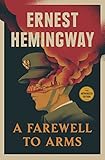
Ernest Hemingway’s influence on the craft of prose fiction is difficult to overstate. His commitment to economy — the famous iceberg theory, in which most of a story’s meaning sits below the surface of the text — produced a style that generations of writers have tried to imitate and rarely matched. The Sun Also Rises, his first major novel, captured the disillusionment of the Lost Generation with a cool restraint that made the grief underneath all the more devastating. A Farewell to Arms brought the same approach to the First World War, producing one of the finest anti-war novels in the language.
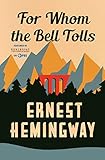
For Whom the Bell Tolls is arguably his most ambitious work, set during the Spanish Civil War and built around a single mission that unfolds over three days. The novel is longer and more emotionally expansive than his earlier work without sacrificing the precision of his style. The Old Man and the Sea, the short novel that won him the Pulitzer Prize and contributed to his Nobel, strips things back to their essence: one man, one marlin, the sea.
Hemingway’s work has faced increasing critical scrutiny over the decades, particularly for its treatment of women — his female characters are often defined in relation to male protagonists rather than on their own terms. The machismo that runs through his fiction can feel dated or tiresome to modern readers. But the prose itself remains instructive, and the best of his novels — especially A Farewell to Arms — continue to hit with genuine force.
Deeper Cuts
Add To Have and Have Not to the list once the best-known books are behind you.
Reading Guides