Ernest Hemingway Books in Order: Complete Bibliography & Best Starting Points
Ernest Hemingway published seven novels, six short story collections, and two memoirs in a career that reshaped the language of American fiction. This guide covers his complete bibliography and the best place to start.

Ernest Hemingway was awarded the Nobel Prize in Literature in 1954 “for his mastery of the art of narrative, recently demonstrated in The Old Man and the Sea, and for the influence that he has exerted on contemporary style.” The second half of that citation matters as much as the first. Hemingway did not simply write good novels: he invented a prose style that became the dominant idiom of twentieth-century American fiction and has influenced virtually every subsequent writer in the language.
The style is defined by what it leaves out. Short sentences. Active verbs. Dialogue that carries meaning through what is said and more through what is not. An almost complete suppression of authorial comment. The reader is never told what to feel: Hemingway constructs a scene with such precision that the emotion arrives without announcement. This is harder than it looks, which is why generations of writers have imitated the surface features of his prose without achieving its effects.
Ernest Hemingway’s Complete Bibliography in Order
Novels
| # | Title | Year | Note |
|---|---|---|---|
| 1 | The Torrents of Spring | 1926 | Satirical novella; minor work |
| 2 | The Sun Also Rises | 1926 | First major novel; Lost Generation |
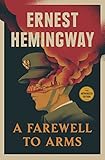
| 3 | A Farewell to Arms | 1929 | WWI; most acclaimed early novel |
| 4 | To Have and Have Not | 1937 | Only American-set novel; minor |
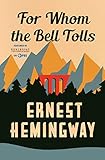
| 5 | For Whom the Bell Tolls | 1940 | Spanish Civil War; epic scope |
| 6 | Across the River and into the Trees | 1950 | Critically dismissed; transitional |
| 7 | The Old Man and the Sea | 1952 | Nobel Prize; essential |
Memoir and Non-Fiction
| Title | Year | Note |
|---|---|---|
| Death in the Afternoon | 1932 | On bullfighting; non-fiction |
| Green Hills of Africa | 1935 | African safari memoir |
| A Moveable Feast | 1964† | Paris memoir; posthumous |
†Posthumous. Hemingway died in 1961.
Where to Start
The Old Man and the Sea (1952)
The place to start. Santiago is an old Cuban fisherman who has gone 84 days without catching a fish. On the 85th day, he hooks the largest marlin he has ever seen. What follows is a three-day struggle at sea, alone, against a fish he cannot bring himself to abandon even after he knows it will destroy him.
At under 130 pages, The Old Man and the Sea is the fastest introduction to what makes Hemingway matter. The prose is at its most transparent — no metaphors, no interpretation, the action recorded with the same attention whether Santiago eats a piece of raw fish or watches the marlin die — and the meaning arrives with the force of something earned rather than explained. Santiago’s dignity in defeat is the subject of the novel; the novel enacts it rather than describing it.
It won the Pulitzer Prize in 1953 and was the specific work cited by the Nobel committee the following year.
A Farewell to Arms (1929)
Hemingway’s most structurally complete novel, and the one that most fully integrates his style with his subject matter. Lieutenant Henry is an American ambulance driver in the Italian campaign of World War I; Catherine Barkley is a British nurse. The novel follows their love affair against the collapse of the Italian front and the Caporetto retreat — one of the most chaotic military disasters of the war.
The novel is in four movements: the summer campaign, the retreat, the flight to Switzerland, the winter in Switzerland. The ending is the most devastating in Hemingway’s work, earned by a narrative that has been building toward it with structural inevitability from the opening pages.
The Other Major Novels
The Sun Also Rises (1926)
Hemingway’s first major novel and the definitive portrait of what Gertrude Stein called “the lost generation” — the American and British expatriates who had survived World War I and found themselves unable to return to ordinary life. Jake Barnes is an American journalist in Paris who was wounded in the war in a way that makes sexual intimacy impossible; Brett Ashley is the woman he loves and cannot have. The novel follows a group of them to Pamplona for the bullfighting festival.
The bullfighting sequences are some of the best sustained non-fiction prose in the novel — Hemingway had real expertise and it shows. The novel requires more patience than The Old Man and the Sea: it is deliberately flat-surfaced and its emotional content is almost entirely submerged.
For Whom the Bell Tolls (1940)
Hemingway’s most ambitious and longest novel, set during the Spanish Civil War. Robert Jordan is an American fighting with Republican guerrillas and ordered to blow up a bridge behind enemy lines. The action covers roughly four days. The scope — the doomed mission, the love affair with María, the weight of political betrayal — is wider than anything else he attempted, and while it is not as tightly controlled as the earlier novels, it contains some of his finest individual passages.
The Short Stories
The essential Hemingway short story collections are:
- In Our Time (1925) — his first collection; introduces Nick Adams, who appears in many of the best stories
- Men Without Women (1927) — contains “Hills Like White Elephants,” “The Killers,” and “In Another Country”
- Winner Take Nothing (1933) — contains “A Clean, Well-Lighted Place,” his most philosophically dense story
- The Snows of Kilimanjaro and Other Stories (1961) — posthumous selection of his best
For a reader who wants the best introduction to Hemingway’s short fiction, Men Without Women is the place to start. “Hills Like White Elephants” is available freely online and demonstrates his technique in under 1,500 words.
Reading Order Recommendations
New to Hemingway: The Old Man and the Sea → A Farewell to Arms → The Sun Also Rises.
Want the short stories first: Read “Hills Like White Elephants” online → Men Without Women → The Old Man and the Sea.
Complete reading: The Sun Also Rises → A Farewell to Arms → For Whom the Bell Tolls → The Old Man and the Sea → A Moveable Feast. This is the order in which his reputation was built.
Frequently Asked Questions
What is the best Ernest Hemingway novel to start with?
The Old Man and the Sea is the best starting point — it is short (under 130 pages), Nobel Prize-winning, and concentrates Hemingway's essential qualities — compressed prose, stoic endurance, the dignity of struggle — into the most accessible form. A Farewell to Arms is the best of his longer novels for new readers. The Sun Also Rises requires more patience with expatriate literary culture but rewards it.
Do Hemingway's novels need to be read in order?
No — all his novels are standalone. The Sun Also Rises, A Farewell to Arms, and For Whom the Bell Tolls share certain themes (war, masculinity, love under pressure) but no characters or plots. Reading in publication order gives you a sense of his development, but there is no narrative continuity between the books.
Is Hemingway's short fiction worth reading?
Absolutely — many critics consider his short stories his most important work. 'Hills Like White Elephants,' 'A Clean, Well-Lighted Place,' 'The Short Happy Life of Francis Macomber,' and 'The Snows of Kilimanjaro' are among the most technically influential short stories in American literature. The iceberg theory — what Hemingway called the principle of omission, in which most of the story exists below the surface of the text — is demonstrated more clearly in the stories than in any novel.
What is Hemingway's iceberg theory?
Hemingway described his prose technique using the iceberg as a metaphor: the dignity of movement comes from seven-eighths of it being under water. In practice, this means writing dialogue and action without explaining the emotion behind it — leaving the reader to infer what is not said. 'Hills Like White Elephants' is the purest example: a couple discusses 'the operation' throughout the story without naming it, but the reader understands everything.
Is A Moveable Feast worth reading?
A Moveable Feast is Hemingway's memoir of Paris in the 1920s — his friendships with Gertrude Stein, F. Scott Fitzgerald, Ezra Pound, and others. It is the most personally revealing of his books and essential for understanding the literary world in which he developed. It is also not reliable biography: Hemingway wrote it late in life and some accounts are self-serving or factually disputed. Read it as memoir-as-literature rather than as documentary history.