John Steinbeck Books in Order: Complete Bibliography & Best Starting Points
John Steinbeck's complete bibliography in order — from Of Mice and Men and The Grapes of Wrath to East of Eden and Cannery Row. Best starting points for new readers.
John Steinbeck was a Nobel laureate (1962) and one of the most widely read American novelists of the twentieth century — a writer whose subject was California, its landscape and its working people, and whose moral vision was shaped by the specific injustices of the 1930s: the Dust Bowl, the Great Depression, the exploitation of migrant agricultural workers. He brought to that subject a documentary instinct (he spent months with migrant workers before writing The Grapes of Wrath), a Biblical moral seriousness (the Cain and Abel story structures his greatest works), and a lyrical attention to the natural world.
His reputation has fluctuated — academic critics have sometimes found him too accessible, too sentimental — but his best novels have continued to be read because they are about things that matter, rendered with a clarity and sympathy that more experimental writers rarely achieve.
Where to Start
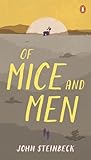
Of Mice and Men (1937)
The best entry point. Two itinerant ranch workers — George Milton and Lennie Small, who is intellectually disabled and enormously strong — dream of buying their own land and living independently. The novella’s tragic structure is established in its first pages: the reader understands before the characters do that the dream cannot survive contact with the world as it is.
At just over 100 pages, it concentrates Steinbeck’s essential qualities — his sympathy for the vulnerable, his landscape prose, his tragic sense — into a form that is both immediately accessible and devastating. It is the most widely taught American novella for good reasons.
The Grapes of Wrath (1939)
The masterpiece. The Joad family’s migration from the Dust Bowl to California is the central narrative, but Steinbeck also constructs a general portrait of the migrant experience through intercalary chapters that move from the specific to the representative. The novel’s final image — Rose of Sharon breastfeeding a starving stranger — is the most controversial and most discussed ending in American fiction, and the one that makes Steinbeck’s moral vision most explicit.
The Monterey Novels
Cannery Row (1945)
Steinbeck’s most genial novel — a portrait of the community that lived around the Monterey sardine canneries: Doc (based on Steinbeck’s friend Ed Ricketts, a marine biologist), the bums who live in a vacant lot, Mack and his boys who scheme cheerfully through life without ever acquiring anything. Where The Grapes of Wrath is tragic and The Pearl is a fable, Cannery Row is a comedy of human affection and improvisation.
A companion to its sequel Sweet Thursday (1954).
The Great Ambition
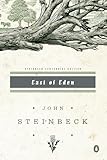
East of Eden (1952)
Steinbeck’s most ambitious novel — the one he called the book he had been working toward all his life. Two families in California’s Salinas Valley, across three generations, replaying the story of Cain and Abel. The novel contains Steinbeck’s most complex characters (including Cathy Ames, who is among the darkest figures in American fiction), his most sustained philosophical inquiry (the question of timshel — human freedom — discussed at length by the Hamilton family patriarch Sam and the Chinese-American servant Lee), and his most personal material (the Hamilton family is based on his own maternal ancestors).
Short Fiction and Fable
The Pearl (1947)
A short novel modelled on Mexican folk story. Kino, a pearl diver, finds a great pearl that he believes will transform his family’s life — and the novel traces the swift destruction of everything he values by the discovery. The Pearl is one of Steinbeck’s most controlled works: a fable about greed, corruption, and the specific danger of hope.
Complete Bibliography in Order
| Title | Year | Note |
|---|---|---|
| Cup of Gold | 1929 | First novel; pirate Henry Morgan |
| The Pastures of Heaven | 1932 | Linked stories; California farm valley |
| To a God Unknown | 1933 | Mystic farmer; California landscape |
| Tortilla Flat | 1935 | Monterey paisanos; comedy |
| In Dubious Battle | 1936 | Agricultural strike; uncompromising |
| Of Mice and Men | 1937 | Essential; start here |
| The Grapes of Wrath | 1939 | Masterpiece; Pulitzer Prize |
| The Pearl | 1947 | Fable; short; powerful |
| Cannery Row | 1945 | Monterey comedy; beloved |
| East of Eden | 1952 | Most ambitious; Cain and Abel |
| Sweet Thursday | 1954 | Sequel to Cannery Row |
| The Winter of Our Discontent | 1961 | Final novel; moral compromise |
| Travels with Charley | 1962 | Travel memoir; late Steinbeck |
The Chronicler of Common People
John Steinbeck was one of the great chroniclers of the lives of common people, a Nobel laureate whose fiction gave voice to the working poor, the dispossessed, and the ordinary men and women of America with a deep compassion and a powerful social conscience. Steinbeck’s fiction is distinguished by its attention to the lives of common people, the working poor, the migrant laborers, the dispossessed, and the ordinary men and women whose lives and struggles he rendered with a deep compassion and a powerful social conscience. He gave voice to those whom literature often ignored, the poor and the marginalized, and his fiction illuminated their lives, their struggles, and their dignity with sympathy and respect. This chronicling of common people is central to Steinbeck’s achievement, for he gave voice to the working poor, the dispossessed, and the ordinary men and women of America with a deep compassion and a powerful social conscience, and his Nobel Prize recognized a body of work devoted to the lives and struggles of common people. His compassion for the poor and the marginalized, and his powerful social conscience, give his fiction its humanity and its moral force. For readers, Steinbeck offers a compassionate chronicle of common people, the lives and struggles of the working poor and the dispossessed rendered with deep sympathy and social conscience. The chronicler of common people, Steinbeck gave voice to the working poor, the dispossessed, and the ordinary men and women of America with a deep compassion and a powerful social conscience.
Social Conscience and the Cry for Justice
At the heart of John Steinbeck’s fiction lies a powerful social conscience, a deep concern with social and economic injustice, particularly the suffering of the poor and the dispossessed, and a passionate cry for justice and human dignity. Steinbeck’s fiction is animated by a profound social conscience, a deep concern with the injustices and hardships endured by the poor, the working class, and the dispossessed, and a passionate commitment to justice and human dignity. His celebrated novel of the Depression and the migrant experience, in particular, renders the suffering of the dispossessed with a power and a moral force that made it a landmark of social conscience, exposing injustice and crying out for justice and human dignity. This social conscience and cry for justice are central to Steinbeck’s achievement, for his fiction exposed social and economic injustice, particularly the suffering of the poor and dispossessed, and cried out for justice and human dignity with a power and a moral force that gave his work its enduring significance. His passionate concern with injustice and his commitment to human dignity give his fiction its moral power. For readers, Steinbeck offers a powerful social conscience and a cry for justice, the suffering of the poor and dispossessed exposed and the demand for justice and human dignity asserted. Social conscience and the cry for justice lie at the heart of Steinbeck’s fiction, his deep concern with social and economic injustice, particularly the suffering of the poor and the dispossessed, and his passionate cry for justice and human dignity.
The Dignity of the Human Spirit
Beneath its social conscience, John Steinbeck’s fiction is animated by a deep faith in the dignity and resilience of the human spirit, an affirmation of the strength, endurance, and capacity for fellowship of even the poorest and most oppressed. Steinbeck’s fiction, for all its unflinching depiction of suffering and injustice, is animated by a deep faith in the dignity and resilience of the human spirit, by an affirmation of the strength, endurance, fellowship, and capacity for hope of even the poorest and most oppressed. His characters, the poor, the dispossessed, and the struggling, are rendered not merely as victims but as human beings of dignity, resilience, and strength, capable of endurance, fellowship, and hope in the face of suffering. This affirmation of the dignity of the human spirit is central to Steinbeck’s vision, for beneath his social conscience lies a deep faith in the strength, endurance, and dignity of even the poorest and most oppressed, and his fiction affirms the resilience and capacity for fellowship of the human spirit. His faith in human dignity gives his fiction its warmth, its hope, and its enduring humanity. For readers, Steinbeck offers an affirmation of the dignity of the human spirit, the strength, resilience, and capacity for fellowship of even the poorest and most oppressed. The dignity of the human spirit animates Steinbeck’s fiction, his deep faith in the dignity and resilience of the human spirit and his affirmation of the strength, endurance, and capacity for fellowship of even the poorest and most oppressed.
Reading Order Recommendations
New to Steinbeck: Of Mice and Men → Cannery Row → The Grapes of Wrath.
The California novels: Of Mice and Men → Grapes of Wrath → East of Eden — the full arc from the brief to the monumental.
Steinbeck’s moral universe: The Pearl → Of Mice and Men → The Grapes of Wrath → East of Eden.
Frequently Asked Questions
What is the best John Steinbeck book to start with?
Of Mice and Men is the best starting point — it is short (100 pages), self-contained, and demonstrates Steinbeck's essential qualities — his sympathy for working people, his precise rendering of the California landscape, his tragic sense — in their most concentrated form. The Grapes of Wrath is his masterpiece but at 500 pages requires more commitment. East of Eden is his most ambitious novel and the one he considered his greatest, but it is best approached after the shorter works.
What is The Grapes of Wrath about?
The Grapes of Wrath follows the Joad family — sharecroppers driven from their Oklahoma land by drought and bank foreclosure during the 1930s Dust Bowl — as they migrate to California following the promise of agricultural work. What they find is exploitation, violence, and the specific cruelty of a society that treats desperate people as disposable labour. Steinbeck alternates the Joad family's story with short chapters describing the migrant experience in general, creating a portrait that is simultaneously specific and representative. It won the Pulitzer Prize in 1940 and remains the definitive American novel about poverty and economic injustice.
What is East of Eden about?
East of Eden is Steinbeck's most ambitious novel — a retelling of the story of Cain and Abel across two California families, the Trasks and the Hamiltons, from the Civil War era through World War I. The novel's central question is whether human beings can choose their own nature — whether the Hebrew word 'timshel' ('thou mayest') means genuine moral freedom. The Trask family repeats the Cain and Abel pattern across generations, while the Hamilton family (based on Steinbeck's own maternal ancestors) provides a counterpoint of creative human decency. Steinbeck called it the book he had been working toward his entire life.
Is Steinbeck considered a great writer?
Steinbeck won the Nobel Prize for Literature in 1962, and his reputation has fluctuated considerably since. During his lifetime he was one of the most widely read American novelists; after his death, academic critics tended to undervalue him as too sentimental and too politically committed to social justice (the two criticisms often functioned as one). In recent decades his reputation has recovered: The Grapes of Wrath and East of Eden are now generally recognised as among the great American novels, and Of Mice and Men is one of the most widely taught American works. His sympathy for working people, which some critics found sentimental, looks more clearly like moral intelligence from the current vantage point.