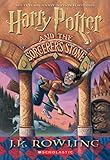
Editors Reads Verdict
The first volume of the most successful children's book series in history is a marvel of world-building and narrative economy — introducing Hogwarts, its inhabitants, and its rules with such specificity and warmth that the world has remained in continuous cultural use for nearly thirty years.
What We Loved
- The Hogwarts world-building is extraordinarily detailed, consistent, and imaginatively rich
- The mystery plot is fairly constructed and entirely solvable on re-reading
- Rowling introduces a cast of characters who feel immediately real and individually voiced
- The thematic concerns — love as protection, prejudice, institutional corruption — are already present
- The pacing is exceptionally managed for a first-time novelist
Minor Drawbacks
- The prose is functional rather than literary — the series' strengths lie elsewhere
- The author's subsequent public statements have complicated many readers' relationship to the work
- The world's logic has gaps that later books struggle to resolve
Key Takeaways
- → Love as a form of protection is not merely metaphorical — it has specific, transmissible power
- → The institutions we build to educate children often reflect adult politics rather than children's needs
- → Prejudice based on birth status is one of the oldest and most destructive human patterns
- → Friendship offers protection that individual courage cannot
- → The most important choices are rarely made in the dramatic moments we anticipate
| Author | J.K. Rowling |
|---|---|
| Publisher | Scholastic |
| Pages | 309 |
| Published | September 1, 1998 |
| Language | English |
| Genre | Fantasy, Young Adult Fiction, Children's Fiction |
| Difficulty | Beginner |
| Best For | Readers of all ages who want to understand one of the most culturally significant fantasy series in history, or who are encountering Hogwarts for the first time. |
How Harry Potter and the Sorcerer's Stone Compares
Harry Potter and the Sorcerer's Stone at a glance against 3 similar books readers weigh alongside it.
| Book | Author | Rating | Best for |
|---|---|---|---|
| Harry Potter and the Sorcerer's Stone (this book) | J.K. Rowling | ★ 4.7 | Readers of all ages who want to understand one of the most culturally |
| A Court of Thorns and Roses | Sarah J. Maas | ★ 4.2 | Fantasy romance readers who enjoy fae mythology, slow-burn romance, and |
| A Wizard of Earthsea | Ursula K. Le Guin | ★ 4.5 | Fantasy readers of all ages who want the most concentrated and psychologically |
| Shadow and Bone | Leigh Bardugo | ★ 4.0 | Young adult fantasy readers drawn to Russian-inspired aesthetics, morally |
A World That Felt Real
J.K. Rowling conceived of the Harry Potter series on a delayed train in 1990. The seven novels that followed — published between 1997 and 2007 — became the most commercially successful book series in history, translated into over 80 languages and generating a cultural empire that includes films, theme parks, theatrical productions, and a global fandom that shows no sign of diminishing.
The Sorcerer’s Stone (published in the UK as The Philosopher’s Stone) succeeds at the foundational task of world-building with unusual completeness. Rowling introduces Hogwarts, its staff, its student body, the house system, Quidditch, Diagon Alley, the wizarding government, and decades of backstory — and she does it without ever stopping the novel’s narrative momentum to deliver an exposition dump. The world is revealed through Harry’s experience of it, and Harry’s experience is structured as a sequence of discoveries that match the reader’s own.
The Mystery Architecture
The first novel is structured as a mystery: what is being guarded on the third floor, and by whom, and why? Rowling constructs the solution fairly — all the clues are present, and a careful re-read reveals how precisely the misdirection was engineered. This mystery structure becomes one of the series’ defining features.
The solution also introduces the series’ central theme: love as the one force that cannot be planned against. Lily Potter’s sacrifice for her infant son creates a protection that dark magic cannot penetrate, because no dark magic recognizes love as power.
The Characters
Harry, Hermione, and Ron are introduced in this first volume with enough individuality that they feel immediately real. Hermione’s academic intensity and social anxiety, Ron’s easy humor and class insecurity, Harry’s combination of genuine heroism and ordinary eleven-year-old uncertainty — these are not archetypes but characters whose specific qualities generate specific story possibilities.
The Cultural Complication
The series’ cultural life has been significantly complicated by Rowling’s public statements about transgender people beginning around 2019, which have led many readers — particularly younger ones who grew up with the books — to reckon with how to hold their childhood attachment to the world alongside their objections to its author’s views. This is a genuine and unresolved tension in the series’ current reception.
Our rating: 4.7/5 — A world-building triumph that introduced one of the most complete and imaginatively rich fictional universes in literary history — whatever the complications of its cultural context.
Reading Guides
- Books Like Percy Jackson: 12 Adventure Series for Fans of Greek Mythology
- Harry Potter Books in Order: Complete J.K. Rowling Reading Guide (2026)
- Twilight vs Harry Potter: Which YA Fantasy Series is Better?
- The Hobbit vs Harry Potter: Which Gateway Fantasy Should You Read First?
- Harry Potter vs Percy Jackson: Which Fantasy Series Should You Read First?
How the Series Came to Exist
J.K. Rowling conceived Harry Potter on a delayed train journey between Manchester and London in 1990. The idea of a boy who did not know he was a wizard arrived largely formed, and she spent the following years — while working as a teacher in Portugal, marrying, having a daughter, separating, and moving to Edinburgh as a single mother on benefits — developing the full seven-book arc before the first volume was written.
Harry Potter and the Philosopher’s Stone was rejected by twelve publishers before Bloomsbury accepted it, reportedly because the editor’s eight-year-old daughter read the opening chapters and demanded more. The book was published in June 1997 in the United Kingdom in a print run of five hundred copies; the American edition, retitled Harry Potter and the Sorcerer’s Stone and published by Scholastic, followed in 1998. The US title change — replacing “Philosopher’s Stone” with “Sorcerer’s Stone” on the assumption that American children would not respond to the word “philosopher” — remains a minor controversy among readers who feel the original title better captures the book’s alchemical logic.
The series sold over 600 million copies worldwide across its seven volumes, making Rowling the first author to become a billionaire primarily through book sales. The eight films, produced between 2001 and 2011, grossed over $7.7 billion worldwide. No other prose fiction franchise of the twentieth or twenty-first century has produced a comparable cultural footprint.
The Hogwarts World-Building Achievement
What makes Rowling’s achievement in The Philosopher’s Stone extraordinary for a first novel is not the prose quality — which is functional rather than literary — but the completeness and internal consistency of the world it introduces. The rules of magic, the economy of the wizarding world (Gringotts, Diagon Alley, Galleons and Knuts), the institutional structure of Hogwarts, the sorting, the Quidditch, the house system — none of this feels invented for narrative convenience. It feels discovered, as though Rowling had been living in this world before she began writing it and was simply reporting what she found.
This quality of inevitability — the sense that Hogwarts had always existed and Rowling was the first to transcribe it — is the hardest thing to manufacture in world-building, and it cannot be fully explained by craft alone. Some of it is the result of the seven years Rowling spent developing the world before committing it to the page. Some of it is a gift.
The Film Adaptations
The 2001 film directed by Chris Columbus, with Daniel Radcliffe as Harry, Emma Watson as Hermione, and Rupert Grint as Ron, was warmly received and established the visual language of Hogwarts that would persist across eight films. The film series’ greatest artistic achievement came with the third installment, Prisoner of Azkaban (2004), directed by Alfonso Cuarón, which brought a visual imagination and tonal maturity to the adaptation that elevated the material above family fantasy into something closer to gothic fable. The later films, particularly the two-part Deathly Hallows adaptation, managed the transition to darker material with reasonable success.
Frequently Asked Questions
What is "Harry Potter and the Sorcerer's Stone" about?
An orphaned boy discovers on his eleventh birthday that he is a wizard, and begins his education at Hogwarts School of Witchcraft and Wizardry.
Who should read "Harry Potter and the Sorcerer's Stone"?
Readers of all ages who want to understand one of the most culturally significant fantasy series in history, or who are encountering Hogwarts for the first time.
What are the key takeaways from "Harry Potter and the Sorcerer's Stone"?
Love as a form of protection is not merely metaphorical — it has specific, transmissible power The institutions we build to educate children often reflect adult politics rather than children's needs Prejudice based on birth status is one of the oldest and most destructive human patterns Friendship offers protection that individual courage cannot The most important choices are rarely made in the dramatic moments we anticipate
Is "Harry Potter and the Sorcerer's Stone" worth reading?
The first volume of the most successful children's book series in history is a marvel of world-building and narrative economy — introducing Hogwarts, its inhabitants, and its rules with such specificity and warmth that the world has remained in continuous cultural use for nearly thirty years.
Ready to Read Harry Potter and the Sorcerer's Stone?
Check the current price on Amazon.
Check Price on Amazon (paid link)Prices and availability are subject to change. See Amazon for current price.
Review last updated: