Editors Reads Verdict
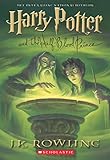
The Half-Blood Prince is the series' most novelistically accomplished entry — intimate, character-driven, and structured around one of the great Shakespearean reveals in modern fantasy. The Horcrux mythology clicks into place with retroactive elegance, and Dumbledore's death changes everything.
What We Loved
- Dumbledore's death is prepared for with extraordinary care and lands with devastating force
- The Horcrux mythology reframes the entire series in one of fiction's finest retroactive designs
- Tom Riddle's backstory chapters are the series' most genuinely literary writing
- The revelation of Snape as the Half-Blood Prince is perfectly set up and executed
Minor Drawbacks
- The teenage romance subplots, while realistic, can feel tonally jarring against the war narrative
- The cave sequence, while tense, raises questions about Dumbledore's judgment
- Some readers find the Slughorn-as-memory subplot slow before its payoff
Key Takeaways
- → Understanding an enemy's history does not excuse them but is essential to defeating them
- → The capacity for love — or its absence — is the series' deepest moral distinction
- → A mentor's death does not erase their teaching; it makes it the student's own responsibility
- → Ambiguity in a character (Snape) can be sustained for six books and still surprise
- → The choice to fragment one's soul for power is the ultimate corruption
| Author | J.K. Rowling |
|---|---|
| Publisher | Scholastic |
| Pages | 652 |
| Published | July 16, 2005 |
| Language | English |
| Genre | Fantasy, Young Adult, Adventure |
| Difficulty | Beginner |
| Best For | Harry Potter readers reaching the penultimate volume; those interested in how Rowling structured her long-game mysteries across the full series. |
The Series’ Most Elegant Architecture
The Half-Blood Prince is where the full scope of Rowling’s plotting reveals itself. The Horcrux mythology — the revelation that Voldemort has split his soul and hidden the pieces — reframes everything that came before it, transforming objects and moments from earlier books into clues that were always there. This retroactive coherence is among the most impressive feats of sustained narrative design in popular fiction.
Harry spends the year in private sessions with Dumbledore, moving through Voldemort’s past via memory in the Pensieve: his origins as Tom Riddle, unloved orphan with extraordinary power; his early fascination with the limits of death; his growing obsession with immortality. These chapters are the series’ most genuinely novelistic writing, and they accomplish something remarkable — they make the reader understand, without sympathizing, exactly how Lord Voldemort was made.
Snape and the Long Game
The identity of the Half-Blood Prince — the gifted, cruel student whose annotations fill Harry’s secondhand Potions textbook — is one of the series’ finest sustained mysteries, and its resolution is calibrated with exceptional precision. Snape’s reveal is simultaneously satisfying (it fits perfectly) and devastating (the context it provides changes the annotation-reading experience retrospectively). Rowling had been playing this long game for six books, and the payoff is complete enough that it rewards re-reading of every prior volume.
Dumbledore’s Death
The book’s emotional and narrative center is the death of Albus Dumbledore on the Astronomy Tower, orchestrated by Snape under circumstances that won’t be fully understood until the final book. What makes the loss devastating is not the spectacle — it is quiet, sudden, and almost undignified — but the preparation. Rowling spends the entire novel giving Harry (and the reader) more of Dumbledore than any previous book: more conversations, more shared memories, more intimacy. She is giving them something to lose, and the loss lands accordingly.
Adolescence Amid Apocalypse
The teenage romance subplots — Harry and Ginny, Ron and Hermione circling each other, Ron and Lavender Brown — are comic and sometimes frustrating. But they serve a structural purpose: Rowling insists that even during a war, sixteen-year-olds remain sixteen-year-olds. The mundane and the catastrophic coexist, as they do in life. This tonal balance is difficult to maintain, and The Half-Blood Prince manages it better than any other entry in the series.
Our rating: 4.7/5 — The most accomplished novel in the series from a craft perspective, building everything that came before into a structure of extraordinary retroactive coherence.
The Robert Galbraith Parallel
In 2013, six years after The Deathly Hallows concluded the Harry Potter series, Rowling published The Cuckoo’s Calling under the pen name Robert Galbraith — a crime novel featuring private detective Cormoran Strike, a war veteran working out of a London office. The novel was published to modest commercial success and genuine critical respect. When a Sunday Times investigation revealed Galbraith as Rowling, sales increased by several thousand percent overnight.
The Cormoran Strike series — which continued with The Silkworm (2014), Career of Evil (2015), Lethal White (2018), and Troubled Blood (2020), among subsequent volumes — demonstrated a range that the Harry Potter series could not have suggested. The Strike novels are adult crime fiction, deeply rooted in contemporary British social reality, without the fantastical elements that define the wizarding world. They are also, structurally, some of the most carefully plotted crime novels published in Britain in their decade.
The Pensieve Chapters and Tom Riddle’s Formation
The six memory sequences in which Dumbledore and Harry observe different periods of Tom Riddle’s life are among the most ambitious passages Rowling ever wrote. They function simultaneously as backstory delivery, character study, and moral argument. The young Tom Riddle — charming, controlled, and already monstrous — is rendered with a specificity that refuses the easy explanation of pure evil. He is a product of his circumstances (orphaned by a love potion, raised in a Muggle orphanage, untouched by any genuine affection) in ways that Rowling acknowledges without using as exculpation.
The question these chapters pose — whether Voldemort could have become something other than what he became, whether the absence of love is sufficient explanation for the choice to become its opposite — is the most genuinely difficult ethical question the series raises. Dumbledore’s answer, implied rather than stated, is that circumstances explain without excusing: Tom Riddle was not helped, but Harry Potter, with equally devastating circumstances, was not lost. The difference is Lily’s love, but it is also a difference within the individuals themselves that neither the series nor its characters can fully account for.
Preparing for the Final Volume
The Half-Blood Prince ends in a position of maximal narrative tension that only the concluding volume can resolve: Dumbledore dead, Snape revealed as the killer and fled with the Death Eaters, Harry in possession of a mission (destroy the remaining Horcruxes) but without a clear plan for how to accomplish it, and the entire institutional safety net of Hogwarts removed. Rowling positions her characters here with the skill of a chess player who has spent five careful moves setting up the decisive combination, and the precision of that setup is precisely what makes The Deathly Hallows’ opening structural gamble — abandoning Hogwarts entirely — feel necessary rather than arbitrary.
The novel also deepens the series’ moral architecture, using Dumbledore’s memories of the young Tom Riddle to argue that evil is made rather than born — a piece of characterisation that sets up the final confrontation to come.
Reading Guides
Frequently Asked Questions
What is "Harry Potter and the Half-Blood Prince" about?
As Voldemort's war spreads beyond Hogwarts, Dumbledore guides Harry through Tom Riddle's past to find the key to destroying him, while a mysterious annotated textbook raises questions about the identity of the Half-Blood Prince. The year ends with Dumbledore's death and the series' darkest turning point yet.
Who should read "Harry Potter and the Half-Blood Prince"?
Harry Potter readers reaching the penultimate volume; those interested in how Rowling structured her long-game mysteries across the full series.
What are the key takeaways from "Harry Potter and the Half-Blood Prince"?
Understanding an enemy's history does not excuse them but is essential to defeating them The capacity for love — or its absence — is the series' deepest moral distinction A mentor's death does not erase their teaching; it makes it the student's own responsibility Ambiguity in a character (Snape) can be sustained for six books and still surprise The choice to fragment one's soul for power is the ultimate corruption
Is "Harry Potter and the Half-Blood Prince" worth reading?
The Half-Blood Prince is the series' most novelistically accomplished entry — intimate, character-driven, and structured around one of the great Shakespearean reveals in modern fantasy. The Horcrux mythology clicks into place with retroactive elegance, and Dumbledore's death changes everything.
Ready to Read Harry Potter and the Half-Blood Prince?
Check the current price on Amazon.
Check Price on Amazon (paid link)Prices and availability are subject to change. See Amazon for current price.
Review last updated: