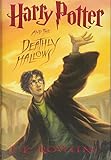
Editors Reads Verdict
The Deathly Hallows is an audacious, largely successful conclusion to the series, trading Hogwarts for a tent-bound road novel before culminating in the Battle of Hogwarts and a revelation about Harry's role in his own destruction. The epilogue divides readers, but the core story is everything the series built toward.
What We Loved
- The revelation that Harry is a Horcrux is one of modern fiction's finest retroactive reveals
- Snape's memories in the Pensieve constitute perhaps the series' most emotionally complex sequence
- The Battle of Hogwarts delivers on years of accumulated investment in the castle and its community
- The sacrifice-and-resurrection structure connects deliberately to the deepest mythological traditions
Minor Drawbacks
- The camping/tent sequences in the middle run too long for many readers
- Several major deaths feel rushed — Fred Weasley's loss is barely processed
- The epilogue is widely considered too neat and too literal
Key Takeaways
- → Sacrifice — chosen, willed, and complete — is the only magic that cannot be countered
- → The truth about a person cannot always be known in their lifetime
- → A mentor may withhold painful knowledge to allow a student to live fully before bearing it
- → The willingness to die for others is love expressed in its most absolute form
- → Home is not a building but the community of people who would fight for each other within it
| Author | J.K. Rowling |
|---|---|
| Publisher | Scholastic |
| Pages | 759 |
| Published | July 21, 2007 |
| Language | English |
| Genre | Fantasy, Young Adult, Adventure |
| Difficulty | Beginner |
| Best For | Readers who have followed the series to its conclusion; those interested in how long-form fantasy series can honor their accumulated mythological weight. |
The Long Road to King’s Cross
The Deathly Hallows begins not at Hogwarts but on the run, and it never goes back — not until the final section. This structural choice is brave and partly successful: by stripping away the school year scaffolding that organized every previous book, Rowling forces her characters (and her readers) to confront the war on its own terms rather than as background to academic life.
The tent sequences — Harry, Ron, and Hermione wandering Britain in search of Horcruxes they cannot find, under the weight of a locket that feeds despair — are intentionally grinding. The middle of the book is the lowest point of the series, and Rowling extends it long enough that readers feel the demoralization alongside her characters. This is psychologically honest even when it is narratively frustrating. The series that began with a magical train and a feast in a Great Hall now follows three teenagers into a cold forest with no plan.
Snape’s Memories
The Pensieve sequence in which Harry witnesses Snape’s entire life — his childhood friendship with Lily Evans, his turn to the Death Eaters, his horror at her death, his double life as Dumbledore’s most essential spy, his impossible role in Harry’s education — is the series’ single most emotionally complex passage. The revelation that Snape has protected and prepared Harry for years, out of love for the mother Harry never knew, reframes six books of apparent antagonism in one sustained reading.
“After all this time?” “Always.” The exchange lands because it has been earned across a decade of fiction. Whatever one thinks of the rest of the series, this moment is a genuine achievement in long-form narrative.
The Horcrux Within
The structural master stroke is Rowling’s revelation that Harry himself is the final Horcrux — a piece of Voldemort’s soul lodged in him as a baby. Harry must die. He walks into the forest knowing this, without weapons, choosing it. The King’s Cross interlude is the series’ most overtly spiritual passage, drawing deliberately on sacrificial mythology while remaining entirely within the world Rowling built. It is the moment the series was always building toward, and the weight of seven books makes it land.
A Conclusion That Mostly Works
The Battle of Hogwarts is the culmination the series needed: every castle corridor and Great Hall and beloved character given its final significance. The losses are real; not everyone who should survive does. Fred Weasley’s death deserved more than it receives. The epilogue, set nineteen years later, has attracted significant criticism for its literal domesticity — the specificity of the children’s names, the too-tidy pairings — but it delivers what the series always promised: an ordinary life on the other side of extraordinary suffering.
Our rating: 4.7/5 — A conclusion of genuine grandeur and emotional depth, with structural ambition that occasionally outpaces its execution but ultimately honors everything the series built.
The Publishing Event
The publication of Harry Potter and the Deathly Hallows on July 21, 2007 was the largest single-day book sale in publishing history at the time of its release, with approximately 11 million copies sold in the first twenty-four hours in the US and UK alone. The cultural significance of the event — bookshop midnight parties, fans in costume, a ten-year series reaching its conclusion — made it a media phenomenon as much as a publishing one.
The intensity of reader investment in the outcome, and the extraordinary lengths publishers and booksellers went to in preventing early leaks, reflected how completely the series had established itself as a shared cultural experience. Readers who had been eight years old when The Philosopher’s Stone was published were now teenagers; those who had been teenagers were in their twenties. The series had grown up with its audience in a way that few children’s franchises had attempted, and the final volume was received by many readers as the conclusion of a chapter of their own lives.
The Deathly Hallows as Symbol System
The three Hallows themselves — the Elder Wand, the Resurrection Stone, the Cloak of Invisibility — function as a parallel mystery structure running alongside the Horcrux hunt and as a symbolic system exploring three responses to death. The Elder Wand is the attempt to conquer death through power. The Resurrection Stone is the attempt to deny death through recovery of what was lost. The Cloak is the acceptance of death — not as defeat, but as the natural condition from which life derives its meaning. Harry’s choice to accept rather than conquer or deny is the series’ central moral thesis, stated here in mythological form.
The Deathly Hallows mythology connects deliberately to the Tale of the Three Brothers embedded in the narrative — a fairy tale within the fairy tale, a story about the same three responses to death played out by the original three Peverell brothers. Rowling’s decision to encode the series’ philosophical heart in a fairy tale within the final volume is among her most elegant structural choices.
The Series in Retrospect
Whatever the complications of the series’ current cultural reception — and they are real, bound up with Rowling’s public statements on transgender issues since approximately 2019 and the genuine difficulty many readers face in separating the work from the author’s subsequent positions — the Harry Potter series’ achievement as a work of children’s and young adult literature is not in serious dispute among scholars of the field. It is the most significant children’s book series of the late twentieth and early twenty-first century, both in terms of commercial scale and in terms of its formal accomplishment: the sustained growth of a world and its characters across seven volumes, ending in a conclusion that largely honors what the series built.
Reading Guides
Frequently Asked Questions
What is "Harry Potter and the Deathly Hallows" about?
Harry, Ron, and Hermione abandon Hogwarts to hunt Voldemort's Horcruxes, confronting betrayal, sacrifice, and the revelation that Harry himself is the final Horcrux. The series concludes with the Battle of Hogwarts and a resurrection that draws on the oldest mythological traditions.
Who should read "Harry Potter and the Deathly Hallows"?
Readers who have followed the series to its conclusion; those interested in how long-form fantasy series can honor their accumulated mythological weight.
What are the key takeaways from "Harry Potter and the Deathly Hallows"?
Sacrifice — chosen, willed, and complete — is the only magic that cannot be countered The truth about a person cannot always be known in their lifetime A mentor may withhold painful knowledge to allow a student to live fully before bearing it The willingness to die for others is love expressed in its most absolute form Home is not a building but the community of people who would fight for each other within it
Is "Harry Potter and the Deathly Hallows" worth reading?
The Deathly Hallows is an audacious, largely successful conclusion to the series, trading Hogwarts for a tent-bound road novel before culminating in the Battle of Hogwarts and a revelation about Harry's role in his own destruction. The epilogue divides readers, but the core story is everything the series built toward.
Ready to Read Harry Potter and the Deathly Hallows?
Check the current price on Amazon.
Check Price on Amazon (paid link)Prices and availability are subject to change. See Amazon for current price.
Review last updated: