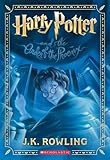
Editors Reads Verdict
The longest and most divisive entry in the series, Order of the Phoenix is also in many ways the most politically sophisticated, depicting institutional denial, authoritarian educational policy, and the maddening experience of being disbelieved. Harry's anger is frustrating by design, and the loss of Sirius is the series' most emotionally consequential death.
What We Loved
- Dolores Umbridge is one of literature's most effectively hateable antagonists
- The political critique of institutional denial and media manipulation is remarkably sharp
- Dumbledore's Army as student resistance is the series' most satisfying collective action
- The loss of Sirius Black lands with full emotional weight because of how much has been invested in him
Minor Drawbacks
- At 870 pages, significant sections could be trimmed without loss
- Harry's constant rage makes him difficult to spend time with in extended stretches
- The Order itself is frustratingly passive for an organization named after resistance
Key Takeaways
- → Institutional self-preservation often matters more to institutions than the truth they claim to serve
- → Being disbelieved when you are telling the truth is a specific and corrosive kind of suffering
- → Student-led resistance to authoritarian pedagogy has a long and necessary history
- → Grief amplified by guilt — for deaths one feels responsible for — is a particular torment
- → The Ministry of Magic's response to Voldemort mirrors real bureaucratic denial of inconvenient threats
| Author | J.K. Rowling |
|---|---|
| Publisher | Scholastic |
| Pages | 870 |
| Published | June 21, 2003 |
| Language | English |
| Genre | Fantasy, Young Adult, Adventure |
| Difficulty | Beginner |
| Best For | Readers continuing the Harry Potter series; those interested in how YA fiction can engage with institutional politics and the psychology of adolescent rage. |
The Year of Being Disbelieved
The Order of the Phoenix is the book in the Harry Potter series that most resembles real political life. Harry returns from the graveyard with Cedric’s body and a testimony that Voldemort is back. The Ministry of Magic’s response is to discredit him — systematically, publicly, with the full weight of institutional authority — because acknowledging the truth would require them to do something about it.
This dynamic, which drives much of the novel’s plot, is rendered with uncomfortable accuracy. Cornelius Fudge is not a straightforward villain; he is a politician who genuinely cannot bear the implications of what Harry is saying, and so arranges reality around his preferred conclusion. Readers who lived through any era of official denial of inconvenient facts will find this depressingly familiar.
Umbridge as Villain
Dolores Umbridge has, in the years since publication, become the series’ most referenced antagonist — more despised by many readers than Voldemort himself. This is not accidental. Voldemort is a monster from outside the system; Umbridge operates within it, using bureaucracy, educational authority, and institutional legitimacy to torture students and suppress truth. She represents something readers recognize from their own lives: the petty authoritarian who inflicts cruelty with a smile and a rulebook.
Her blood quill — forcing Harry to cut “I must not tell lies” into his own hand — is the series’ most physically specific cruelty, deployed not in a dungeon but in a school office with pink kittens on the wall. The horror of Order of the Phoenix is not the dark lord in the distance but the administrator in the next room.
Dumbledore’s Army
Against institutional suppression, the students organize. Dumbledore’s Army — the secret Defense Against the Dark Arts group Harry leads in the Room of Requirement — is the series’ most satisfying collective action, and the one that makes the widest cast of secondary characters feel genuinely capable and important. Neville Longbottom, Luna Lovegood, and Ginny Weasley all receive their first truly meaningful moments here.
Sirius and What His Loss Means
The death of Sirius Black in the Department of Mysteries is the series’ most emotionally costly loss. Not because of the spectacle of the death — it is quiet, almost accidental — but because of what Sirius represented: Harry’s last direct connection to his parents’ world, the closest thing to a family he had. The grief that follows is not resolved quickly or cleanly, which is exactly right. This is the longest book in the series, and in some ways the most honest about what it costs to carry what Harry carries.
Our rating: 4.4/5 — Overlong but extraordinarily rich, a political novel disguised as a children’s fantasy that contains the series’ most resonant antagonist and its most costly loss.
The Longest Book and the Reasons for Its Length
At 870 pages in the UK edition, The Order of the Phoenix is the longest book in the series, and its length is a genuine critical question. The book is not bloated by accidents of plot but by something more deliberate: Rowling wanted to put the reader inside Harry’s experience of being disbelieved, restricted, and increasingly isolated, and that experience requires time. A shorter novel would have allowed the reader to understand Harry’s frustration intellectually without feeling it, which would have defeated the book’s central purpose.
The fifth year is designed to be the most miserable year of Harry’s Hogwarts life, and Rowling makes it miserable at length. The Umbridge sequences, in particular, are extended past the point of readerly comfort by design. A reader who finds The Order of the Phoenix exhausting is, in a controlled sense, experiencing what Harry experiences. This is not a failure of editing but a choice.
Whether the choice fully succeeds is genuinely debatable. Some readers find the extended middle section too punishing to revisit on rereads. Others — particularly those who encountered the book as teenagers during their own experiences of institutional authority — find it the most emotionally accurate entry in the series.
Luna Lovegood and Neville Longbottom
The Order of the Phoenix expands the series’ secondary cast in ways that pay dividends for the remaining two books. Luna Lovegood, introduced here for the first time, immediately became one of the series’ most beloved characters: her serene eccentricity, her willingness to state uncomfortable truths without social calculation, and her refusal to be embarrassed by her own strangeness made her a significant figure for readers who felt similarly marginal.
Neville Longbottom’s development in this volume — from comic-relief student to a genuinely capable and courageous member of Dumbledore’s Army — is the beginning of one of the series’ most satisfying character arcs. The revelation that Neville almost fulfilled the prophecy that marked Harry transforms his apparent incompetence into something more complex: a boy carrying his parents’ tragedy, defined by others as a near-miss rather than as himself. His growth in the final two books pays directly off the investment The Order of the Phoenix makes in him.
The Department of Mysteries
The Ministry of Magic’s Department of Mysteries — the novel’s climactic setting — is one of the series’ most evocative invented spaces: a government department dedicated to studying the forces that cannot be fully understood (love, death, time, space, thought). Its existence, and the Ministry’s anxiety about the unsanctioned study of these forces, is the kind of world-building detail that the series does at its best: self-consistent, philosophically suggestive, and entirely plausible within the logic of a bureaucratic magical institution.
Reading Guides
Frequently Asked Questions
What is "Harry Potter and the Order of the Phoenix" about?
Harry's fifth year is defined by institutional persecution, Voldemort's growing power, and the devastating loss of the person who most represented his connection to his parents. The Ministry of Magic has declared war on the truth, and Dolores Umbridge has come to Hogwarts to enforce it.
Who should read "Harry Potter and the Order of the Phoenix"?
Readers continuing the Harry Potter series; those interested in how YA fiction can engage with institutional politics and the psychology of adolescent rage.
What are the key takeaways from "Harry Potter and the Order of the Phoenix"?
Institutional self-preservation often matters more to institutions than the truth they claim to serve Being disbelieved when you are telling the truth is a specific and corrosive kind of suffering Student-led resistance to authoritarian pedagogy has a long and necessary history Grief amplified by guilt — for deaths one feels responsible for — is a particular torment The Ministry of Magic's response to Voldemort mirrors real bureaucratic denial of inconvenient threats
Is "Harry Potter and the Order of the Phoenix" worth reading?
The longest and most divisive entry in the series, Order of the Phoenix is also in many ways the most politically sophisticated, depicting institutional denial, authoritarian educational policy, and the maddening experience of being disbelieved. Harry's anger is frustrating by design, and the loss of Sirius is the series' most emotionally consequential death.
Ready to Read Harry Potter and the Order of the Phoenix?
Check the current price on Amazon.
Check Price on Amazon (paid link)Prices and availability are subject to change. See Amazon for current price.
Review last updated: