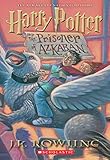
Editors Reads Verdict
Widely considered the finest entry in the series, Prisoner of Azkaban is where Rowling's craft fully matured: the plotting is airtight, the themes around justice and innocence are genuinely moving, and the time-turner resolution is one of the most satisfying in children's literature. It remains a masterclass in how to deepen a world without losing its wonder.
What We Loved
- The time-turner climax is meticulously plotted and emotionally resonant
- Lupin is one of the series' finest supporting characters and teachers
- The themes of false accusation and systemic injustice are handled with real depth
- First book in the series not to feature Voldemort as primary antagonist, revealing the world's complexity
Minor Drawbacks
- The Marauder's Map is introduced with minimal setup
- Peter Pettigrew's escape at the end requires accepting significant contrivance
- Some readers find the Dementors more frightening than the series' usual register
Key Takeaways
- → The justice system can imprison the innocent and free the guilty — institutional trust must be earned
- → Fear itself is often more debilitating than the things we fear
- → Grief and guilt can masquerade as each other for years
- → Mentorship at its best teaches students to face their own worst fears
- → Time is not a clean solution — every action has consequences that ripple forward
| Author | J.K. Rowling |
|---|---|
| Publisher | Scholastic |
| Pages | 435 |
| Published | September 8, 1999 |
| Language | English |
| Genre | Fantasy, Young Adult, Adventure |
| Difficulty | Beginner |
| Best For | Harry Potter fans ready for the series to grow up; readers who enjoy mysteries with elaborate, satisfying resolutions; anyone who considers this their favorite entry in the series. |
The Series Finds Its Mastery
The Prisoner of Azkaban is the novel where J.K. Rowling went from a gifted storyteller to a masterful one. The book is tighter, richer, and more emotionally complex than its predecessors, and it accomplishes something rare: it makes its world feel larger by focusing it more precisely.
The central premise is elegantly misdirecting. Sirius Black has escaped Azkaban — the wizarding prison guarded by soul-devouring Dementors — and everyone believes he is coming for Harry, as Lord Voldemort’s most devoted servant. The truth is more complicated, more painful, and more interesting than any straightforward threat.
Lupin and the Lesson of Fear
Remus Lupin, the new Defense Against the Dark Arts teacher, is one of the series’ most perfectly constructed characters: a man carrying multiple secrets, gentle and brilliant and genuinely caring, whose lessons on the Boggart — a creature that transforms into your deepest fear — provide the book’s emotional spine. The Riddikulus charm, which transforms fear into laughter, is not a dismissal of terror but a tool for managing it. Lupin teaches Harry that facing fear is a technique, not a character trait.
Justice and Its Failures
The novel’s moral core is a sustained meditation on systemic injustice. Sirius Black was imprisoned for a crime he did not commit, without trial, on the testimony of a single manipulator. The book does not present this as exceptional corruption but as the ordinary operation of a system that values the appearance of safety over actual fairness. Hagrid’s imprisonment in Chamber of Secrets echoes the same pattern. Rowling is building a case — quietly, across multiple books — that the institutions meant to protect people often fail the most vulnerable among them.
The Time-Turner Resolution
The book’s final act — using Hermione’s time-turner to rescue both Sirius and a hippogriff — is among the most elegantly constructed climaxes in children’s literature. Every detail planted in the earlier chapters pays off; every apparent coincidence in the timeline is revealed as something the future protagonists caused. The emotional stakes are genuine even as the mechanics click into place with pleasurable precision. That Sirius still cannot be saved — the system’s injustice persists even after all of this — is the book’s most honest note.
Our rating: 4.8/5 — The series’ crown jewel and one of the finest examples of how children’s fantasy can be morally serious, narratively precise, and joyful all at once.
The Cuarón Film and the Series’ Visual Identity
Of the eight Harry Potter films, the 2004 adaptation of Prisoner of Azkaban, directed by Alfonso Cuarón, is most consistently cited by critics and fans as the artistic peak of the film series. Cuarón — working between Y Tu Mamá También and Children of Men — brought a visual imagination to Hogwarts that Chris Columbus’s warmer, more faithful adaptations had not reached. The Hogwarts of Cuarón’s film is autumn-grey and gothic, populated with students who wear their uniforms with teenage individualism, existing in a world with actual weather and a sense of organic time passing.
The film’s willingness to depart from the book’s literal faithfulness in order to capture its emotional truth — the Dementor attack on the Hogwarts Express, the Whomping Willow’s seasonal time-lapse, the bone-cold emptiness of the Dementor sequences — demonstrated what the best adaptations understand: that loyalty to source material means loyalty to what the material is doing, not merely to its plot events.
Lupin and the Pedagogy of Fear
Remus Lupin’s Defense Against the Dark Arts class is, within the internal logic of the Hogwarts curriculum, the best instruction Harry and his classmates receive across seven years. The Boggart lesson — confronting a creature that transforms into your deepest fear, meeting it with laughter and the Riddikulus charm — is a sophisticated piece of pedagogical design. It respects the genuine reality of the students’ fears while providing a practical technique for managing them. It teaches without condescending. It models vulnerability in a professional context (Lupin’s own Boggart, gesturing toward the full moon, is present but unrevealed).
Lupin’s status as the series’ finest teacher is inseparable from his status as its most compromised character. He is a werewolf, stigmatized within the wizarding world, who has spent his career concealing his condition and will eventually lose his position because of it. His pedagogical excellence and his social precariousness are not coincidental: people who have navigated marginalization tend to teach differently than those who have not. Rowling is not heavy-handed with this connection, but it is present.
Dementors and Clinical Depression
The Dementors — soul-consuming creatures that feed on positive emotions and force their victims to relive their worst memories — are among the series’ most widely interpreted symbols. Rowling has confirmed in interviews that the Dementors were a direct response to her own experience of clinical depression: the experience of having all light and warmth extracted from the world, of being unable to imagine that happiness had ever existed or could exist again.
This biographical context does not reduce the Dementors to allegory — they function fully as monsters within the story — but it helps explain why they are the series’ most psychologically convincing threat. They are not externalized evil but internalized despair, which is a different and more unsettling kind of darkness.
Reading Guides
Frequently Asked Questions
What is "Harry Potter and the Prisoner of Azkaban" about?
A convicted murderer has escaped Azkaban prison and is believed to be hunting Harry Potter, forcing Harry to confront the true story of his parents' betrayal and death. The mystery that unravels is more complicated, more painful, and more morally instructive than any straightforward threat.
Who should read "Harry Potter and the Prisoner of Azkaban"?
Harry Potter fans ready for the series to grow up; readers who enjoy mysteries with elaborate, satisfying resolutions; anyone who considers this their favorite entry in the series.
What are the key takeaways from "Harry Potter and the Prisoner of Azkaban"?
The justice system can imprison the innocent and free the guilty — institutional trust must be earned Fear itself is often more debilitating than the things we fear Grief and guilt can masquerade as each other for years Mentorship at its best teaches students to face their own worst fears Time is not a clean solution — every action has consequences that ripple forward
Is "Harry Potter and the Prisoner of Azkaban" worth reading?
Widely considered the finest entry in the series, Prisoner of Azkaban is where Rowling's craft fully matured: the plotting is airtight, the themes around justice and innocence are genuinely moving, and the time-turner resolution is one of the most satisfying in children's literature. It remains a masterclass in how to deepen a world without losing its wonder.
Ready to Read Harry Potter and the Prisoner of Azkaban?
Check the current price on Amazon.
Check Price on Amazon (paid link)Prices and availability are subject to change. See Amazon for current price.
Review last updated: